El embalaje de micelio ya está aquí y estas empresas están demostrando que funciona
By Louis on 04/05/2026
¡El Boom de los Hongos ya está aquí! Los emprendedores están construyendo embalajes, tablas de surf y ataúdes a partir de micelio. Aquí está la situación actual del 'boom de los hongos'.
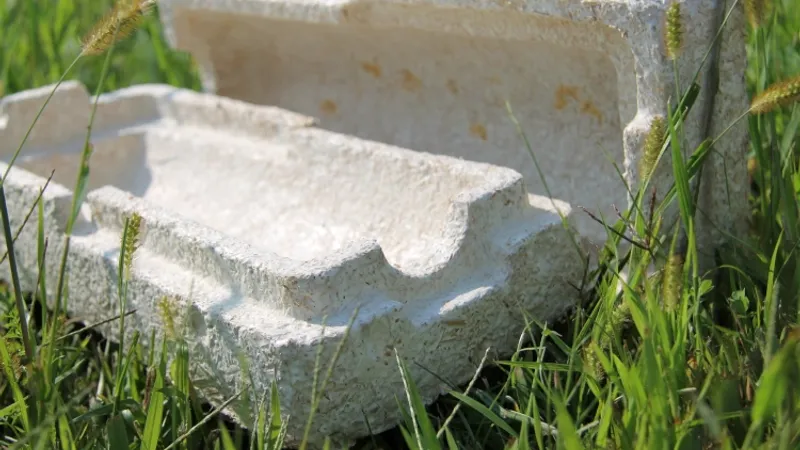
El embalaje de micelio está saliendo del laboratorio y entrando en la cadena de suministro
Se producen más de 400 millones de toneladas de plástico en todo el mundo cada año. Menos del 10 por ciento se recicla. La industria del embalaje sabe desde hace décadas que esto no es sostenible, y las alternativas que ha producido hasta ahora, papel, cartón, bioplásticos, han trasladado en gran medida el problema en lugar de resolverlo. El micelio es una categoría de respuesta completamente diferente, y un número creciente de emprendedores está demostrando que funciona a escala comercial.
Desde un taller en Cork hasta una instalación en el centro de Irlanda y un estudio de diseño en los Países Bajos, el auge de los hongos en materiales sostenibles ya no es un experimento de nicho. Es una cadena de suministro en formación.
Qué es realmente el micelio y por qué funciona para el embalaje
Antes de entrar en los negocios, vale la pena fundamentar el material en sí.
El micelio es el cuerpo vegetativo de un hongo: una densa red de filamentos en forma de hilo que se extiende a través del suelo, la madera y la materia orgánica, descomponiendo materiales complejos y redistribuyendo nutrientes. Si el hongo es el fruto, el micelio es el árbol. Precede a los bosques por cientos de millones de años y sigue siendo uno de los sistemas biológicos más estructuralmente versátiles de la Tierra.
Para aplicaciones de materiales, las propiedades clave del micelio son su capacidad de unión, su capacidad para crecer en formas personalizadas, su resistencia natural en relación con su peso y su completa biodegradabilidad. Si le das un subproducto agrícola, le das un molde para crecer y producirá una estructura rígida y duradera en cuestión de días. Caléntalo para detener el crecimiento, y tendrás un producto terminado que no requiere tratamiento químico adicional y se descompondrá en unos meses en condiciones normales de suelo.
Esa combinación es lo que ha llevado a empresas desde Dell hasta IKEA a prestar atención. Dell comenzó a usar embalaje de micelio para enviar servidores en 2011.A IKEA se comprometeu a eliminar el plástico de todos los envases para consumidores para 2028, con el micelio como un reemplazo principal para el poliestireno. El interés corporativo es real y está creando una apertura comercial para productores más pequeños que han estado desarrollando la tecnología a nivel básico.
Ecoroots: Pionero del embalaje de micelio en Cork
Lavanya Bhandari comenzó como la mayoría de los innovadores de materiales: con prototipos en espacios improvisados. En su caso, eso significó cultivar muestras tempranas debajo de sofás y en un baño en la casa de su hermana en Londres. Hoy, su empresa Ecoroots opera desde una instalación de 750 metros cuadrados en el Parque Comercial Marina de Cork, y el producto que está fabricando allí es un sistema de embalaje de micelio comercialmente viable construido sobre residuos agrícolas irlandeses.
La materia prima son granos usados del sector de cervecerías y destilerías de Irlanda, que Bhandari estima genera alrededor de 200,000 toneladas de material anualmente solo en Irlanda. Esa corriente de desechos, que de otro modo requeriría eliminación o procesamiento, se convierte en el sustrato de crecimiento para el micelio que se moldea en contenedores de embalaje personalizados. El material resultante es resistente al agua durante hasta cuatro semanas, resistente al fuego y se biodegrada en tres meses bajo condiciones normales de humedad y exposición microbiana. La producción genera alrededor de un 90 por ciento menos de CO2 que la fabricación convencional de poliestireno.
La estética del embalaje de micelio merece ser abordada directamente, porque surge en conversaciones comerciales. Bhandari es directa al respecto: la variación natural y el color son inherentes a un material cultivado biológicamente. Las empresas y los consumidores acostumbrados al blanco uniforme del poliestireno moldeado necesitan ajustar sus expectativas. Ese es un desafío de educación del mercado tanto como uno técnico.
En cuanto al costo, el embalaje de micelio actualmente se sitúa en un punto de precio comparable a las alternativas convencionales, pero la posición de Bhandari es que la automatización y la escala reducirán los costos mientras que la resistencia del material disminuye la necesidad de embalajes suplementarios como el plástico de burbujas y el relleno suelto. La comparación de costos netos cambia a medida que aumenta el volumen.
Su mercado objetivo a largo plazo es el embalaje farmacéutico de cadena de frío, una industria importante en Cork. Las empresas farmacéuticas son algunos de los mayores usuarios de embalaje de cadena de frío a nivel mundial, y la huella ambiental de ese sector es sustancial. La línea de tiempo de Bhandari es honesta: de cinco a diez años. Pero el objetivo es claro.
Ethica Planet: Transformando la montaña de cartón de Irlanda en algo útil
Mientras Ecoroots alimenta el micelio con granos de cervecería, la empresa de Brendan Cleary, con sede en Offaly, Ethica Planet ha encontrado un sustrato diferente: cartón. Y Irlanda, como dice Cleary, está nadando en él.
La entrada de Cleary en el micelio fue moldeada por circunstancias que habrían detenido a la mayoría de las personas. Había estado dirigiendo Ethica Foods, desarrollando productos alimenticios fermentados a base de avena, cuando un incendio en la instalación de Glenisk en 2021 destruyó completamente la operación. En lugar de reconstruir en la misma dirección, se pivotó hacia una idea que había estado desarrollando desde 2020: usar micelio para procesar material de desecho en nuevos envases.
Lanzó Ethica Planet con su hijo Pierce, un botánico, como el primer empleado. La empresa ahora emplea a cuatro personas, incluyendo a un microbiólogo y un diseñador, y está basada en una región de Irlanda que tiene vientos políticos significativos: el marco de Transición Justa de la UE, que apoya la diversificación económica en áreas dependientes de industrias intensivas en carbono como la extracción de turba, ha apoyado el desarrollo de la empresa.
El proceso es sencillo en concepto y exigente en ejecución. El cartón se tritura y se utiliza como sustrato de crecimiento para el micelio. El micelio une las fibras y crece en nuevas formas de embalaje. El material resultante es completamente biodegradable y, según las primeras pruebas de Cleary, extiende la vida útil de las fibras de cartón significativamente más allá de lo que permite el reciclaje convencional. El cartón estándar puede reciclarse alrededor de siete veces antes de que las fibras se degraden demasiado. El procesamiento de micelio parece preservar la resistencia de las fibras a través de ciclos adicionales, potencialmente triplicando la vida útil efectiva de la materia prima.
El perfil de carbono del proceso también es notable: Cleary lo describe como negativo en carbono, lo que significa que el proceso secuestra más carbono del que libera. Si esa afirmación se sostiene a plena escala comercial es algo que necesitará verificación, pero la dirección es consistente con lo que los procesos basados en micelio han demostrado en otros lugares.
Más allá del embalaje: tablas de surf y ataúdes
Las mismas propiedades materiales que hacen que el micelio sea atractivo para el embalaje, como la resistencia, ligereza y biodegradabilidad completa, están impulsando experimentos en direcciones que el embalaje por sí solo no sugeriría.
En el sur de Gales, Steve Davies, de 25 años, está trabajando en tablas de surf de micelio, utilizando cama de caballo y paja de la granja de su familia como sustrato de crecimiento y experimentando con recubrimientos protectores naturales, incluyendo cera de abejas, aceite de linaza y resina de origen vegetal. Las tablas de surf convencionales están hechas de poliuretano, resina epoxi y poliéster, materiales que tardan siglos en descomponerse y generan un desperdicio significativo cuando las tablas están dañadas o retiradas. El proyecto de Davies está en una etapa temprana, con la durabilidad y la escalabilidad como desafíos genuinos, pero la aplicación es una ilustración útil de cuán ampliamente se pueden aplicar las propiedades físicas del micelio.
La aplicación más inesperada en el mercado en este momento es probablemente la que también está más desarrollada comercialmente.Loop Biotech, fundada por el diseñador holandés Bob Hendrikx, produce un ataúd de micelio llamado Living Cocoon. Creado en siete días a partir de micelio alimentado con fibra de cáñamo, la estructura en forma de cápsula aborda directamente los problemas ambientales del entierro convencional. Los ataúdes tradicionales frecuentemente incorporan revestimientos sintéticos no biodegradables y se utilizan junto con productos químicos de embalsamamiento como el formaldehído que pueden persistir en el suelo y filtrarse en las aguas subterráneas durante años.
El Living Cocoon se descompone en alrededor de 45 días, y el micelio continúa ayudando activamente con la descomposición del cuerpo durante los siguientes dos a tres años, incluyendo la descomposición de toxinas acumuladas como metales pesados y microplásticos. Los ataúdes están disponibles para envío a Irlanda. El trabajo de Hendrikx le ha valido una charla TED y el premio Human of the Year de la revista Vice para 2020.
Hacia dónde va el Shroom Boom a continuación
Las empresas cubiertas aquí representan diferentes puntos en la curva de madurez. Ecoroots está en producción comercial con una clara ambición de cadena de frío farmacéutica. Ethica Planet está en desarrollo comercial temprano con un fuerte apoyo político y un ángulo técnico interesante sobre la extensión de fibra de cartón. Loop Biotech ya tiene un producto de consumo terminado disponible para su compra. El proyecto de tabla de surf de Davies está en la etapa de I+D.
Lo que las conecta es la lógica subyacente: el micelio puede crecer en flujos de desechos, moldearse en formas funcionales y devolverse al suelo sin dejar un residuo. Eso no es una mejora marginal sobre los materiales existentes. Es un cambio estructural en cómo se puede fabricar el embalaje, y eventualmente una gama mucho más amplia de productos.
Para cualquiera que siga el espacio de los hongos funcionales, el sector de los micomateriales es la parte de la industria que no recibe suficiente cobertura. Los mismos mecanismos biológicos que hacen que los hongos sean tan interesantes para aplicaciones de salud los hacen genuinamente transformadores para la ciencia de materiales. El shroom boom tiene dos vías, y ambas valen la pena seguir.
¿Listo para llevar tu viaje de micología al siguiente nivel? Explora nuestra gama completa de productos de hongos en ShroomSpy.com/mushrooms/products y encuentra todo lo que necesitas para cultivar, recolectar y prosperar.
¡Echa un vistazo a nuestros productos!
Preguntas frecuentes
El micelio es el cuerpo vegetativo de un hongo, una densa red de filamentos en forma de hilo que se extiende a través del suelo, la madera y la materia orgánica para descomponer materiales complejos. Para el embalaje, sus propiedades clave son su capacidad de unión, su capacidad para crecer en formas personalizadas, su resistencia en relación con su peso y su completa biodegradabilidad. Alimentado con un subproducto agrícola y dado un molde, produce una estructura rígida y duradera en cuestión de días, y calentarla detiene el crecimiento, por lo que el producto terminado no necesita ningún tratamiento químico adicional.