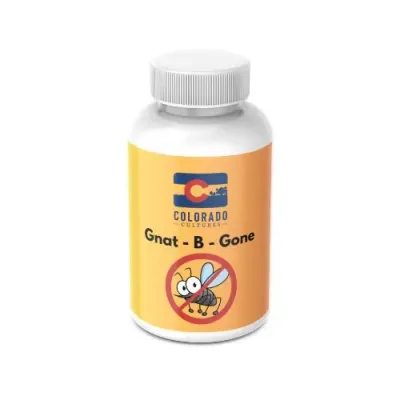
Colorado Cultures Gnat B Gone – Polvo para eliminar mosquitos de Monotub - 1oz
Vendido por Colorado Cultures
Cargando comentarios...
$4.99
Envío estimado en EE.UU. $6.60
Devoluciones en 30 días
Pago seguro — Stripe y PayPal
El envío final se calcula al finalizar la compra.
Garantía de devolución de 30 días

La plaga que todo cultivador de monotub eventualmente enfrenta
Has hecho todo bien. Pasteurizaste tu sustrato. Esterilizaste tu grano. Mantuviste una técnica estéril durante la inoculación. Configuraste tu monotub en un ambiente limpio. La fase de colonización va maravillosamente: el sustrato se está colonizando de blanco y la temperatura de la habitación es perfecta.
Entonces, en el día 18, levantas la tapa para una rápida revisión y docenas de pequeños mosquitos negros salen volando.
Este es el problema de plagas más común en el cultivo de monotub. Los mosquitos de hongo (Bradysia especies) y las moscas de orilla (Scatella especies) son atraídos por la materia orgánica cálida, húmeda y en descomposición que proporciona el sustrato. Se cuelan a través de:
- Los agujeros de intercambio de aire de la tapa durante los ciclos de FAE
- Tapas abiertas durante la inspección y la cosecha
- Ingredientes del sustrato que no fueron completamente pasteurizados
- Plantas adyacentes o materia orgánica en la misma habitación
- Insectos voladores exteriores que encuentran su camino hacia adentro
Una vez que los mosquitos establecen una población en tu monotub, el problema se agrava:
- Los mosquitos adultos ponen huevos en el sustrato
- Los huevos eclosionan en larvas que se alimentan de micelio y pines en desarrollo
- Las larvas maduran en adultos que ponen más huevos
- Un solo cultivo puede producir miles de mosquitos si no se controla
- La infestación se extiende a otros recipientes y crece
Colorado Cultures Gnat B Gone es la solución. Un envase de 1 onza de un polvo 100% orgánico y natural formulado específicamente para el control de mosquitos en monotub. Espolvorea ligeramente tu sustrato y observa cómo la infestación desaparece.
Cómo funciona
Gnat B Gone ataca a los mosquitos en cada etapa de su ciclo de vida:
- Huevos: El polvo recubre la superficie del sustrato, secando y matando los huevos antes de que puedan eclosionar
- Larvas: Las larvas que contactan el polvo son eliminadas por acción mecánica y deshidratante
- Adultos: Los mosquitos adultos que caminan a través del polvo lo recogen en sus cuerpos y patas, lo que lleva a su muerte en pocas horas
El mecanismo es puramente físico y deshidratante, no químico. El polvo:
- Absorbe la humedad del exoesqueleto del mosquito, provocando deshidratación
- Tiene propiedades abrasivas microscópicas que dañan la cutícula protectora del mosquito
- No afecta al micelio — el polvo es benigno para el crecimiento de hongos
- No afecta a los cuerpos fructíferos de los hongos — el polvo es seguro para alimentos en contextos de cultivo
El mecanismo de deshidratación es el mismo principio utilizado por la tierra de diatomeas — un insecticida orgánico bien conocido que se ha utilizado en horticultura durante más de 100 años.
[VERIFICAR: confirmar si Gnat B Gone se basa en tierra de diatomeas, en arcilla de caolín, o en otra formulación específica de polvo orgánico]
Todo orgánico, todo natural
La fórmula de Gnat B Gone es:
- Ingredientes 100% orgánicos — sin insecticidas sintéticos
- Todo natural — sin aditivos químicos
- Seguro alrededor de áreas de preparación de alimentos — no tóxico si se ingiere accidentalmente en pequeñas cantidades
- Seguro para mascotas — no dañará a perros, gatos u otras mascotas domésticas
- Seguro alrededor de niños — no tóxico, sin precauciones de seguridad especiales más allá de los productos químicos domésticos estándar
- Compatible con la lista OMRI [VERIFICAR certificaciones exactas]
- No entra en la cadena alimentaria — aplicado al sustrato, no a los cuerpos fructíferos de los hongos
Para cultivadores que quieren control de plagas sin introducir productos químicos en el entorno de cultivo, este es el producto adecuado. Especialmente para aquellos:
- Cultivar champiñones para consumo (prioridad de seguridad alimentaria)
- Cultivar champiñones medicinales para suplementación diaria
- Alojar niños o mascotas cerca del espacio de cultivo
- Seguir principios de cultivo alineados con la agricultura orgánica
- Preocupado por los efectos de residuos en la cosecha de champiñones
Cuándo lo usarías
El producto está destinado a infestaciones activas de mosquitos en entornos de monotub o cámara de fructificación. Específicamente:
Infestación activa
- Puedes ver mosquitos adultos volando cuando abres la tapa
- Ves larvas en el sustrato (gusanos blancos pequeños)
- Trampas pegajosas amarillas cerca de la cámara muestran 3+ mosquitos por día
- Otros monotubs en la misma habitación también están afectados
Aplica inmediatamente al notar mosquitos.Cuanto antes intervengas, menos crecimiento poblacional tendrás que combatir.
Aplicación preventiva
Para cultivadores que han tenido problemas con mosquitos en cultivos anteriores:
- Aplica al configurar la cámara antes de introducir el spawn
- Pre-trata la superficie del sustrato durante la pasteurización inicial o después de la siembra
- Espolvorea ligeramente el interior de la cámara durante los ciclos de intercambio de aire
La prevención es más efectiva que el tratamiento.Si has tenido mosquitos una vez, espéralos la próxima vez a menos que implementes medidas preventivas.
Operaciones de múltiples cubos
Las configuraciones de Martha y de múltiples cubos son particularmente susceptibles porque:
- Mayor volumen total de sustrato = más hábitat para los mosquitos
- Espacio aéreo compartido = la infestación de un cubo se extiende a todos los cubos
- Aperturas de tapa más frecuentes durante la gestión = más oportunidades de entrada
- Fructificación en múltiples bloques = las larvas compiten con el micelio por el sustrato
Para operaciones de múltiples cubos, la aplicación preventiva regular es el enfoque correcto.
Lo que cubre 1 oz de Gnat B Gone
Un recipiente de 1 onza proporciona suficiente polvo para:
- 8-20 aplicaciones de monotub (dependiendo de la aplicación ligera o pesada)
- 6-12 meses de uso regular para un cultivador doméstico típico
- 2-4 meses de uso regular para cultivadores serios que manejan 3-6 monotubs
La tasa de aplicación de polvo ligero significa que un poco rinde mucho. No apliques en exceso: no estás tratando de enterrar el sustrato; estás creando una delgada capa protectora que apunta a los mosquitos mientras permite que el micelio continúe colonizando.
Aplicación
El flujo de trabajo básico:
- Abre la cámara (tapa o agujero de fructificación)
- Usa un tamiz, salero u otro aplicador de poros finos para distribuir el polvo
- Espolvorea ligeramente la superficie del sustrato — apunta a una cobertura delgada y uniforme de aproximadamente 1/16" de profundidad
- Presta especial atención a:
- Los bordes del sustrato (los mosquitos a menudo ponen huevos a lo largo del perímetro)
- Áreas visibles de larvas de mosquito
- Las paredes interiores de la cámara
- Alrededor de los agujeros de intercambio de aire
- Cierra la cámara y regresa a las condiciones de operación normales
El protocolo completo de aplicación está en la pestaña Cómo usar.
Quién compra esto
- Cultivadores con problemas actuales de mosquitos — el caso de uso de acción inmediata
- Cultivadores que han tenido mosquitos en cultivos anteriores — la aplicación preventiva tiene sentido
- Operadores de multi-tub y carpa Martha — los mosquitos se propagan rápidamente en configuraciones de cultivo múltiple
- Cultivadores con plantas de interior que podrían ser una fuente de mosquitos
- Cultivadores en temporadas o climas donde los mosquitos son activamente estacionales
- Cultivadores cerca de espacios exteriores donde los insectos voladores pueden migrar al interior
- Cultivadores principiantes que desean añadir un seguro contra problemas de plagas
- Cultivadores comprometidos con métodos orgánicos que evitan insecticidas químicos
- Cultivadores sensibles a la exposición química (alergias, niños, mascotas) que necesitan control de plagas no tóxico
Lo que esto NO es
- No es un pesticida para aplicaciones que no sean de hongos. Diseñado específicamente para el cultivo de hongos. Puede no ser efectivo en otros tipos de plagas.
- No es para uso de insecticidas químicos. Este es un producto de acción física/deshidratante. Si necesitas un pesticida de amplio espectro, busca en otro lado.
- No es para uso exterior. Aplicación solo en monotub/cámara interior.
- No es para aplicación directa en el cuerpo del fruto. Aplica en la superficie del sustrato, no en los hongos mismos.
- No es efectivo contra bacterias o moho. Solo mosquitos. Para problemas de bacterias o moho, consulta otros productos de Colorado Cultures (Fungi Fuel para soporte del microbioma del sustrato; protocolos estándar de contaminación).
- No comestible. No consumas intencionadamente; diseñado solo para aplicación en sustrato.
- No es un sustituto de la técnica estéril.La configuración estéril previene muchos problemas de mosquitos antes de que comiencen.
Combinando con otros productos de Colorado Cultures
Gnat B Gone es parte de un kit completo de cultivo:
- Fungi Fuel — soporte para el microbioma del sustrato; complementario, no competitivo (Fungi Fuel apoya a los microbios beneficiosos; Gnat B Gone se dirige a las plagas)
- Humidificador ultrasónico + higrómetro — control del ambiente de la cámara
- Ventiladores Myco a prueba de agua en paquete de 2 — circulación de aire que reduce el hábitat de los mosquitos
- Mascarillas desechables premium + guantes de nitrilo — EPP para la aplicación
- Contenedor de enjuague completo / Cámara de fructificación H2Shroom — cámaras compatibles con el uso de Gnat B Gone
- Trampas adhesivas (vendidas por separado de cualquier suministro de jardín) — herramienta complementaria para atrapar mosquitos adultos
- Bolsas de grano AIO de sorgo + mezcla maestra — insumos preesterilizados que reducen el riesgo de contaminación que crea hábitat para los mosquitos
El conjunto completo de prevención de plagas:
- Esteriliza el grano y el sustrato adecuadamente — elimina el hábitat de cría
- Mantén la humedad de la cámara y el FAE — minimiza las condiciones que atraen plagas
- Aplica Gnat B Gone de manera preventiva — proporciona una barrera continua contra plagas
- Usa trampas adhesivas para atrapar cualquier mosquito que aparezca
- Inspecciona diariamente para una intervención temprana
Expectativas de efectividad
En uso típico, deberías ver:
- Primeras 24-48 horas: Reducción en la actividad visible de mosquitos adultos
- Días 3-7: Las larvas mueren (sin nueva aparición de adultos)
- Días 7-14: Los mosquitos en etapa de huevo dejan de eclosionar
- Días 14-21: Población efectivamente eliminada
Un ciclo completo desde la infestación hasta la eliminación generalmente toma 2-3 semanas con la aplicación de Gnat B Gone. La acción persistente del polvo proporciona protección continua sin necesidad de reaplicación diaria.
Una nota sobre el formato de 1oz
1 onza suena pequeña, pero la tasa de aplicación es una ligera capa, no una aplicación pesada. El formato está diseñado para:
- Cobertura de varios meses para cultivo doméstico típico
- Amigable para viajar — cabe en cualquier caja de herramientas o bolsa de suministros
- Fácil de almacenar — pequeño tamaño, no domina tus suministros de cultivo
- Económico en este formato — comprar formatos más grandes es innecesario para la mayoría de los usuarios
Los cultivadores comerciales o aquellos que enfrentan una presión continua severa de mosquitos pueden querer comprar múltiples contenedores de 1 oz o preguntar sobre precios al por mayor.