
Solo Bin de Doble Descarga
Vendido por Colorado Cultures
Cargando comentarios...
$49.99
Envío estimado en EE.UU. $11.95
Devoluciones en 30 días
Pago seguro — Stripe y PayPal
El envío final se calcula al finalizar la compra.
Garantía de devolución de 30 días

El problema del monotub del que nadie habla
La mayoría de los monotubs son un compromiso. La ruta económica de bricolaje — un contenedor Sterilite, un marcador, un taladro y un rollo de cinta microporosa — funciona, pero tiene fugas en las costuras, se empaña en la tapa y te da una fructificación desigual donde el flujo de aire es bueno y contaminación en todas partes. La ruta cara — filtros de puerto, insertos roscados, sellador de silicona — funciona mejor pero cuesta entre $40 y $80 en accesorios antes de que hayas añadido un solo gramo de spawn. Y cada tub ensamblado tiene la misma debilidad oculta: el movimiento del aire se concentra donde tú decidiste taladrar, dejando zonas muertas donde la humedad se acumula, los side-pins abortan, y Trichoderma encuentra un punto de apoyo.
El Full Flush Bin resuelve esto. Es el resultado de más de una década de iteración sobre la pregunta básica — ¿qué necesita realmente un monotub? — y la respuesta resulta ser más específica de lo que la mayoría de los cultivadores se da cuenta.
Lo que realmente significa "flush completo"
Los hongos en fructificación exhalan CO₂ y demandan un flujo constante de oxígeno fresco. Un contenedor de 30 cuartos en el pico de flush, lleno de micelio de cubensis o hongo ostra perla, puede saturar su columna de aire con CO₂ en menos de 30 minutos. El resultado que ves es el resultado del que se quejan todos los nuevos cultivadores: tallos largos, tapas pequeñas, apertura prematura y hongos que abortan antes de que siquiera se pinchen.
La solución es el flujo de aire. No solo unos pocos agujeros cerca de la tapa, sino un flujo de aire distribuido y equilibrado que toque cada pulgada cúbica de la cámara — las esquinas, la superficie del sustrato, el borde lejano del pastel, el espacio directamente sobre los sitios de pinchado. Eso es lo que el diseño de 12 agujeros en el Full Flush Bin está diseñado para ofrecer. Cada agujero está posicionado y dimensionado para crear corrientes cruzadas en lugar de puntos muertos. El aire entra por un lado, barre sobre el sustrato y sale por el lado opuesto — pasivamente, sin un ventilador, sin que tú abras la tapa para ventilar manualmente.
Lo que obtienes en una caja
- El contenedor de 30 cuartos en sí — dimensionado para el punto óptimo del cultivador doméstico. Lo suficientemente grande para contener de tres a cinco libras de spawn colonizado sobre un sustrato CVG. Lo suficientemente pequeño para caber en una estantería, en un armario o en el gabinete debajo de tu fregadero. [VERIFICAR dimensiones exactas con el proveedor — los contenedores típicos de 30qt miden aproximadamente 24" × 16" × 7" pero las especificaciones del Full Flush pueden diferir.]
- Una tapa con bisagra — y esto importa más de lo que parece. Una tapa con bisagra significa que la inspección, la nebulización y la cosecha ocurren sin quitar y reemplazar la tapa cada vez (lo cual es el vector número 1 para la contaminación aérea durante la fructificación). También significa que la tapa nunca se desalineará, nunca estará torcida y nunca se caerá de una estantería apilada.
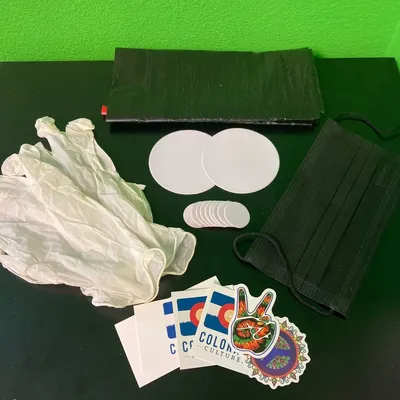
- 12 agujeros de aire pre-perforados con parches de filtro a juego — los agujeros están colocados por diseño, no por conjetura. Los filtros llegan instalados [VERIFICAR: confirmar si se envían preinstalados o en una bolsa sellada para instalación por el propietario].
- Una botella de spray — para nebulizar las paredes de la cámara durante la fructificación y la capa de cobertura entre flushes.
- Un forro para el contenedor — dimensionado para el interior del tub para la carga de sustrato y la limpieza posterior a la cosecha. Coloca el forro, carga el sustrato, fructifica, cosecha, levanta el forro, deshazte del bloque gastado, coloca un nuevo forro. Elimina la peor parte del cultivo de monotub: fregar el interior del contenedor entre cultivos.
- Artículos promocionales de Colorado Cultures — adhesivo, parche o similar [VERIFICAR los artículos incluidos actuales].
Para quién es esto
- Cultivadores primerizos que quieren que una compra cubra todo el lado del recipiente y el flujo de aire de la cultivación. Introduce tu spawn colonizado y sustrato, estás fructificando.
- Cultivadores experimentados que se están reconstruyendo después de una eliminación de contaminación, que quieren un diseño de cámara conocido en lugar de reingeniar desde cero.
- Configuraciones de múltiples cámaras donde quieres que cada recipiente en tu pila sea idéntico — mismo flujo de aire, mismas dimensiones, mismo perfil de humedad — para resultados predecibles y repetibles a través de las genéticas.
- Cualquiera que esté cansado de pegar tiras de microporo sobre agujeros perforados a mano y ver cómo se hunden, se despegan y se contaminan para la tercera semana.
Para quién no es esto
- Cultivadores a escala industrial o comercial que manejan más de 50 recipientes. A esa escala, quieres habitaciones de flujo filtradas por HEPA con gestión activa de CFM — no FAE pasiva basada en contenedores.
- Especies amantes de la madera en bloques de fructificación a granel que necesitan paredes de mayor humedad de la que un recipiente de polietileno de lados lisos puede contener. Reishi, melena de león y trompeta de rey se desarrollan mejor en tiendas de humedad dedicadas.
- Cualquiera que esté fructificando en volúmenes inferiores a una libra — un recipiente de 30 cuartos está sobredimensionado para un cultivo en un frasco pequeño y solo tendrás espacio vacío secando tu capa de sustrato.
El linaje de Colorado Cultures
Colorado Cultures ha estado operando en Denver desde [VERIFICAR año de fundación], y el Full Flush Bin es la culminación de su trabajo de cultivo interno. El diseño no está licenciado de un mayorista ni rebrandeado de un SKU genérico de Amazon — es la misma cámara que el equipo utiliza para sus propias producciones y trabajos de validación de cultivos. Cuando la especificación cambia, cambia porque sus propios cultivadores encontraron un modo de fallo y lo solucionaron. Ese es un bucle de retroalimentación más ajustado que el que obtienes de la mayoría de los vendedores de "kits de cultivo de hongos", y se nota en los detalles: la colocación de los agujeros de aire, la elección del medio filtrante, la geometría de la tapa con bisagra, incluso el tamaño del revestimiento.
Si ya has estado cultivando en un recipiente perforado a mano, la actualización se paga sola la primera vez que no pierdes una cosecha por contaminación lateral. Si recién estás comenzando, elimina la fuente más grande de fallos de principiantes — la contaminación relacionada con la cámara — antes de que pueda suceder.