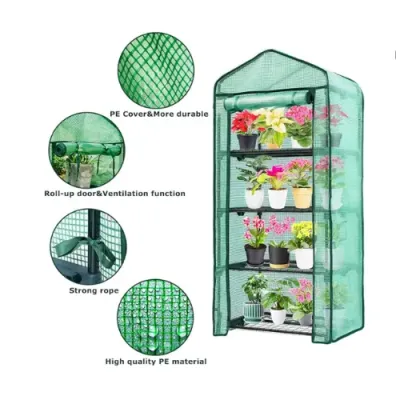
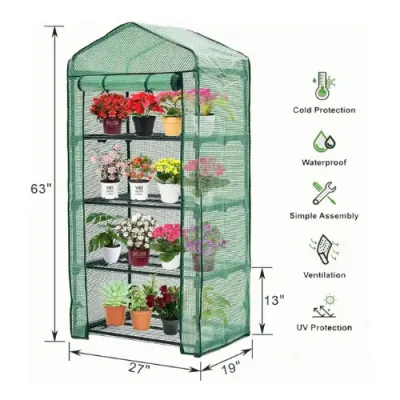
Martha Tent - 4 niveles con cubierta de PE duradera
Vendido por Colorado Cultures
Cargando comentarios...
$49.99
Envío estimado en EE.UU. $148.75
Devoluciones en 30 días
Pago seguro — Stripe y PayPal
El envío final se calcula al finalizar la compra.
Garantía de devolución de 30 días

Cuando un monotub ya no es suficiente
Un solo monotub es la configuración estándar para el cultivo en casa. El Full Flush Bin, la H2Shroom Chamber, un tub Sterilite hecho a mano — cualquiera de estos produce un respetable cultivo en casa de 3-15 onzas de champiñones frescos por ciclo.
Luego llega el momento. Has completado 3-4 cultivos exitosos. Tus amigos están pidiendo parte de la cosecha. Has comenzado a pensar en escalar. Has imaginado cómo sería tener múltiples cultivos en horarios escalonados para que siempre haya una nueva cosecha llegando.
La configuración de un solo monotub se convierte en un cuello de botella.Necesitas una solución de múltiples tubs que te permita realizar varios cultivos en paralelo, con condiciones ambientales compartidas, en un espacio manejable.
El Martha Tent — 4 niveles con cubierta de PE duradera es esa solución. Un invernadero de estilo mini diseñado específicamente para el cultivo de champiñones en múltiples tubs, con 4 estantes, una cubierta de PE (polietileno) de alta resistencia, y el factor de forma estructural que convierte un pequeño rincón de tu hogar en una seria sala de fructificación de múltiples tubs.
El concepto de la tienda Martha
"tienda Martha" es el nombre cariñoso que la comunidad de cultivo le da a un pequeño invernadero de marco de alambre reutilizado para el cultivo de champiñones. El factor de forma — estanterías de múltiples niveles dentro de una cubierta flexible transparente o translúcida — fue diseñado originalmente para la propagación de plántulas en interiores y el cuidado de plantas de interior. Los cultivadores descubrieron que:
- El ambiente cerrado retiene mejor la humedad que las estanterías abiertas
- El diseño de múltiples niveles te permite apilar múltiples monotubs en un pequeño espacio
- La cubierta transparente permite que la luz llegue al sustrato (cubensis necesita algo de luz para la iniciación de pines)
- La cubierta flexible permite un fácil acceso para la nebulización y la cosecha
- Agrega humidificadores, ventiladores y control de temperatura para crear un entorno de cultivo completamente gestionado
Una tienda Martha, debidamente equipada, se convierte en una sala de cultivo a pequeña escala — capaz de producir cosechas dramáticamente mayores que un sistema de un solo recipiente, en un espacio más pequeño que la mayoría de los armarios.
El nombre "Martha" supuestamente proviene de una marca genérica de mini-invernadero popular en la comunidad de cultivo en los años 2000. El nombre se mantuvo incluso cuando los cultivadores pasaron a alternativas de mejor calidad.
Lo que esta tienda ofrece
Las especificaciones de la tienda Martha de Colorado Cultures:
- 4 niveles de estantes de alambre — cada nivel acomoda un monotub estándar (típicamente 1 recipiente por estante, 2 recipientes más pequeños en algunas configuraciones)
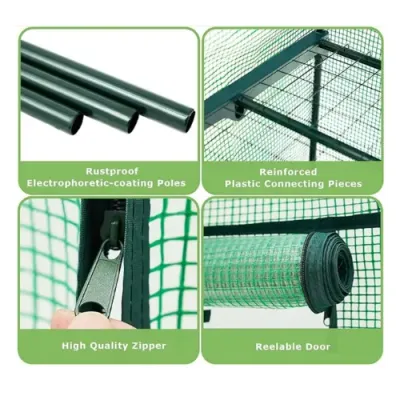
- Cubierta de PE (polietileno) de alta resistencia — duradera, transparente, sellada en las costuras
- Apertura frontal con cremallera — para acceder a todos los niveles sin quitar la cubierta
- Huella compacta — las dimensiones típicas de la tienda Martha son aproximadamente 2'×2' de huella × 5'-6' de altura
- Construcción ligera ensamblada — típicamente bajo 15 lbs ensamblada
La configuración de 4 niveles es el punto ideal para el cultivo serio en casa:
- Nivel 1 (inferior): A menudo utilizado para almacenamiento de suministros, estantes de secado o preparación de sustrato
- Nivel 2-3 (medio): Recipientes de fructificación principales en condiciones óptimas de cultivo
- Nivel 4 (superior): Cultivo de menor prioridad (incubación, secado, cultivos secundarios)
Esta organización vertical te permite operar múltiples etapas de cultivo simultáneamente en un solo espacio.
Lo que puedes hacer con una carpa Martha de 4 niveles
Cultivo en rotación escalonada
El caso de uso más común. Configura 3-4 monotubos en diferentes cronogramas:
- Tubo 1: Actualmente fructificando (Semana 4-6 del ciclo)
- Tubo 2: Acaba de colonizar, a punto de fructificar (Semana 3)
- Tubo 3: A mitad de colonización (Semana 1-2)
- Tubo 4: Inoculación fresca (Semana 0)
Resultado: cosechas continuas cada 1-2 semanas en lugar de una gran cosecha cada 6-10 semanas. Mejor para un suministro constante de hongos.
Comparación de múltiples cepas
Para cultivadores enfocados en genética, cultiva 4 variedades diferentes bajo condiciones idénticas:
- Tubo 1: Golden Teacher
- Tubo 2: Penis Envy
- Tubo 3: B+
- Tina 4: Albino A+ (o otra selección)
Mismo sustrato, mismas condiciones de habitación, mismo horario de nebulización. Comparación genética directa cabeza a cabeza.
Cultivo de múltiples especies
Para cultivadores que se expanden más allá de cubensis:
- Tina 1-2: Cubensis en sustrato CVG
- Tina 3: Setas ostra en Masters Mix
- Tina 4: Melena de león en bloque de madera suplementado
La tienda Martha proporciona un ambiente húmedo que todas las especies aprecian; la variación del sustrato acomoda las necesidades específicas de cada especie.
Producción a escala familiar
Para hogares que consumen hongos regularmente, el sistema de múltiples niveles produce suficiente cosecha para mantener una cocina abastecida con hongos frescos, secos y almacenados — sin dominar ningún espacio de cultivo en particular.
Uso educativo y de talleres
Para educadores en micología, la tienda Martha proporciona un montaje de cultivo visible y organizado que demuestra el proceso de cultivo a estudiantes o participantes de talleres.
La ventaja del entorno compartido
La mayor ventaja práctica de la tienda Martha sobre el funcionamiento de múltiples monotubos separados: condiciones ambientales compartidas.
En una tienda:
- Un humidificador mantiene la humedad para las 4 tinas simultáneamente
- Un ventilador proporciona FAE para todo el recinto
- Una fuente de luz ilumina todos los niveles
- Una temperatura se aplica a todo el entorno
Comparar con el funcionamiento de 4 monotubos separados en 4 ubicaciones diferentes:
- Cada tub necesita su propia consideración de intercambio de aire
- Cada ubicación puede tener diferentes niveles de humedad ambiental
- Cada tub requiere consideración individual de iluminación
- Las variaciones de temperatura entre ubicaciones crean resultados inconsistentes
La tienda unifica el entorno. Configúralo una vez; adminístralo como un solo sistema.
¿Por qué "cubierta de PE duradera"?
El mercado de "tiendas Martha" incluye todo, desde diseños de bolsas de plástico baratas sobre alambres hasta tiendas de cultivo de grado profesional. El material de la cubierta es el principal diferenciador.
PE duradero (polietileno) ofrece:
- Transparencia — la luz pasa a través para la fotosíntesis de las plantas o la formación de setas
- Resistencia al desgarro — significativamente más duradero que el plástico delgado en tiendas económicas
- Facilidad de limpieza — se limpia con IPA entre cultivos
- Resistencia a los UV — no se amarillea ni se agrieta bajo la iluminación interior
- Larga vida útil — las cubiertas de PE duraderas típicas duran de 3 a 7 años de uso regular
- Costuras selladas — mínima fuga de humedad en las juntas
Compara con alternativas económicas:
- PE/polietileno delgado (a menudo encontrado en mini-invernaderos baratos): Se rasga fácilmente, pierde transparencia, falla en 1-2 años
- Cubiertas de PVC: Más pesadas, menos transparentes, a menudo tienen problemas de emisión de plastificantes
- Cubiertas de nylon/lona: A menudo no son impermeables ni están clasificadas para humedad; no son ideales para el cultivo
La tienda Martha de Colorado Cultures utiliza PE de alta resistencia específicamente porque el caso de uso de cultivo es más exigente que la aplicación original de invernadero para plantas de interior.
Lo que necesitarás agregar
La tienda es la estructura. Para convertirla en un espacio de cultivo de múltiples monotubos, normalmente agregarás:
- 3-4 monotubos para la fructificación real (Full Flush Bin o DIY)
- Un humidificador colocado dentro de la tienda o conectado
- Un ventilador pequeño para la circulación de aire (clasificado como impermeable como los ventiladores Myco de Colorado Cultures)
- Una fuente de luz — la luz ambiental de la habitación a veces es suficiente; un LED suplementario puede ayudar
- Un termómetro/higrómetro para monitorear las condiciones
- Regleta y cables de extensión para los componentes eléctricos
Colorado Cultures tiene en stock la tienda y la mayoría de los suministros de soporte; puedes ensamblar un sistema completo de múltiples cubos de un solo proveedor.
¿Quién compra esta tienda?
- Cultivadores experimentados que escalan más allá del cultivo de un solo cubo
- Probadores de genética de múltiples cepas que necesitan condiciones de cultivo paralelas
- Educadores e instructores de talleres que demuestran el cultivo a gran escala
- Residentes de apartamentos con espacio limitado pero que quieren una capacidad de cultivo seria
- Cultivadores que realizan producción a escala familiar o comercial de hobby
- Cualquiera que esté limitado por el tiempo de cosecha de un solo cubo que quiere un suministro continuo
Lo que esto NO es
- No es un entorno de laboratorio estéril. La tienda mantiene condiciones húmedas para la fructificación; no proporciona condiciones de aire estéril para el trabajo de inoculación. Usa una campana de flujo o SAB para la inoculación.
- No es para cultivo industrial. Una tienda de 4 niveles se adapta a la escala de un hogar/aficionado serio. Las operaciones comerciales utilizan habitaciones de cultivo completas con HVAC.
- No está aislada. La tienda comparte la temperatura ambiente de la habitación. Si tu habitación está fría (por debajo de 65°F) o caliente (por encima de 80°F), es posible que aún necesites control de temperatura suplementario.
- No es impermeable desde abajo. El agua estancada en el suelo puede dañar la parte inferior de la tienda. Planifica protección contra salpicaduras si usas un humidificador que pueda gotear o salpicar.
- No está clasificada para terremotos. Una tienda de 4 niveles cargada es inestable con la cubierta. No cargues todos los niveles con cubos de peso máximo simultáneamente sin planificación de estabilidad.
Para todos los que escalan la cultivación más allá de operaciones de un solo contenedor, esto es la forma más eficiente de multiplicar tu huella de cultivo sin comprometerse a una sala de cultivo dedicada. El formato de tienda Martha de 4 niveles está diseñado específicamente para esta transición.