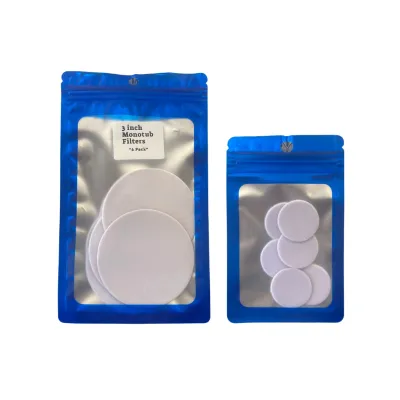
Parche de Filtro para Monotub
Vendido por Colorado Cultures
Cargando comentarios...
Cargando variantes...
Envío estimado en EE.UU. $6.60
Devoluciones en 30 días
Pago seguro — Stripe y PayPal
El envío final se calcula al finalizar la compra.
Garantía de devolución de 30 días

El problema de contaminación que enfrenta cada cultivador de monotub
Estérilizas el sustrato. Inoculas con cultivo líquido limpio. Sellas el tub y te alejas. Dos semanas después, abres la tapa y una ola de aire húmedo y rancio te golpea — y debajo de eso, en la esquina del contenedor, hay un charco de moho de telaraña, un parche de Trichoderma verde, o una franja de floración bacteriana amarilla serpenteando a través de lo que debería haber sido micelio blanco puro.
Casi siempre, el fracaso se remonta a la misma causa raíz: el aire dentro de tu monotub dejó de ser limpio.
Un monotub sellado es una fábrica de hongos en miniatura, y como cualquier fábrica, necesita ventilación. El micelio y los hongos frutales exhalan CO₂. Exigen oxígeno fresco. Liberan humedad que puede acumularse, gotear y criar bacterias. Sin un intercambio de aire controlado, la cámara se convierte en un pantano — húmedo, estancado, y exactamente el ambiente que los contaminantes oportunistas adoran.
Pero el error opuesto — perforar agujeros para "aire fresco" — es igual de fatal. Cada pie cúbico de aire de habitación sin filtrar lleva miles de esporas de moho, partículas de polvo e insectos microscópicos. Un ventilador abierto es una invitación para que toda la comunidad de contaminantes en tu casa venga a asentarse en tu sustrato.
Por qué los parches de filtro adhesivos resuelven esto
Los parches de filtro cierran la brecha. Permiten que el aire entre y salga a través de una membrana transpirable mientras bloquean las esporas, ácaros y moscas de los hongos que de otro modo harían autostop. El medio filtrante clasificado por micrones es lo suficientemente fino como para detener contaminantes comunes de cultivo — Trichoderma, Penicillium, Aspergillus, Cladosporium — pero lo suficientemente poroso como para que realmente ocurra el intercambio de gases.
Los parches de Colorado Cultures están pre-cortados, pre-adhesivos y diseñados específicamente para construcciones de monotub. Perforas o haces agujeros, despegas una etiqueta, la presionas y has terminado. Sin sellador de silicona. Sin cartuchos HEPA. Sin perforar, enroscar o atornillar filtros de puerto en su lugar. Toda la instalación para un tub de seis agujeros toma menos de cinco minutos.
Para qué los compradores los utilizan
Estos parches son la solución FAE preferida para:
- Sterilite, IRIS y otros monotubs de estilo tote estándar — el recipiente de cultivo en casa dominante para cubensis y la mayoría de las especies gourmet
- Cámaras de fructificación tipo shotgun (SGFC) — pequeños contenedores transparentes con drenaje en cuadrícula y capas de revestimiento
- Configuraciones de múltiples tubos estilo Martha-tent — donde cada estante necesita gestión de aire independiente
- Cámaras de incubación DIY — donde deseas un intercambio pasivo de bajo CFM durante la fase de colonización
- Cámaras de preparación de cultivos líquidos y agar — en cualquier lugar donde desees movimiento de aire sin una abertura sin filtrar
Son no la elección correcta para salas de flujo industriales (esas utilizan entrada activa filtrada por HEPA) o para aplicaciones de autoclave (el adhesivo probablemente no sobrevivirá a 250°F+ de calor húmedo — [VERIFICAR la clasificación de temperatura con el proveedor]).
La ventaja de Colorado Cultures
Dos tamaños de paquete cubren cada construcción común:
- El parche de 1" (paquete de 10) es perfecto para pequeños recipientes, cámaras de escopeta y los agujeros de ventilación lateral en los contenedores estándar de 30 cuartos estilo Sterilite.
- El parche de 3" (paquete de 6) está diseñado para recortes de tapa más grandes, configuraciones de ventilación superior y diseños de FAE de alto volumen donde de otro modo necesitarías apilar varios parches pequeños.
Ambos funcionan con el mismo medio filtrante y respaldo adhesivo, por lo que puedes mezclar tamaños en una construcción sin preocuparte por un rendimiento inconsistente. Y como se venden en paquetes precontados, puedes hacer un solo pedido para equipar de dos a cuatro recipientes a la vez — sin complicaciones con rollos a granel, sin cortes con tijeras, sin cinta métrica.
Si has estado perdiendo cosechas por contaminación de pines laterales, luchando contra la acumulación de CO₂ con apertura manual de la tapa, o pagando $15-$25 por filtro de puerto para adaptar un recipiente de $12 — estos parches son la mejora más barata, rápida y a prueba de tontos que puedes hacer en tu cultivo.