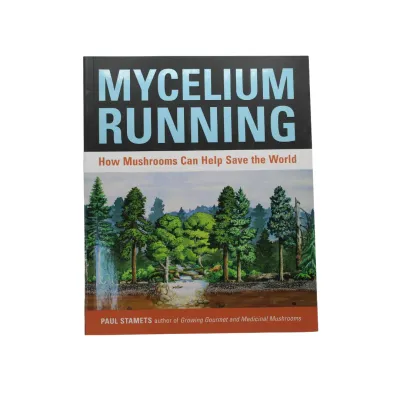
Mycelium Running de Paul Stamets
Vendido por Colorado Cultures
Cargando comentarios...
$44.99
Envío estimado en EE.UU. $12.60
Devoluciones en 30 días
Pago seguro — Stripe y PayPal
El envío final se calcula al finalizar la compra.
Garantía de devolución de 30 días

El libro que cambió nuestra forma de ver el bosque
Cuando Mycelium Running fue publicado en 2005, hizo algo que casi ningún libro de ciencia popular había hecho antes: convenció a una generación de lectores de que los hongos podrían ser los organismos más importantes — y los más subestimados — de la Tierra.
Paul Stamets, el autor, no es un aficionado casual. Es el fundador de Fungi Perfecti, un cultivador de larga data y micólogo de campo, un orador de TED cuyas charlas han sido vistas decenas de millones de veces, y una de las voces más influyentes en la micología moderna. Sus credenciales son científicas; su estilo de comunicación es accesible. La combinación ha hecho que Mycelium Running sea el libro de micología más recomendado del siglo XXI — igualmente en casa en una lista de lectura de posgrado, en la estantería de un agricultor autosuficiente, y en la pila de referencia de un practicante de permacultura.
Este libro no es una guía de cultivo paso a paso. Para eso, consigue The Mushroom Bible de Dr. K. Mandrake. Mycelium Running es algo más grande: un manifiesto, un resumen de investigación y un plan para usar hongos para abordar algunos de los desafíos ambientales más urgentes de nuestro tiempo.
El argumento central
Stamets comienza con una afirmación simple, casi provocativa: cultivar más champiñones puede ser lo mejor que podemos hacer para salvar el medio ambiente.
El argumento que sigue se basa en biología básica y décadas de su propia investigación:
- El micelio — las células microscópicas en forma de hilo que componen el vasto cuerpo subterráneo de cada hongo — es el principal descomponedor de materia orgánica en la Tierra. Cada hoja caída, cada árbol muerto, cada fruta en descomposición eventualmente es descompuesta por hongos de nuevo en los nutrientes constitutivos que alimentan nueva vida.
- El micelio también descompone una lista notable de contaminantes creados por el ser humano — petróleo, pesticidas, plásticos, metales pesados. Especies específicas bajo condiciones específicas pueden descomponer hidrocarburos que ningún otro organismo puede tocar.
- El micelio también filtra agua, controla poblaciones de insectos, defiende los bosques de enfermedades y produce compuestos con valor medicinal medible que ahora se están investigando para su uso contra todo, desde bacterias resistentes a antibióticos hasta cáncer.
- Y todo esto está sucediendo bajo nuestros pies — en gran parte invisible para la mayoría de nosotros, en suelos que pasamos por alto todos los días, con capacidades que apenas comenzamos a entender.
El libro es un llamado a tomar en serio a los hongos — no como una curiosidad, no solo como alimento, sino como una herramienta para abordar problemas ambientales sistémicos a gran escala.
Los cuatro pilares de la micorrestauración
El corazón de Mycelium Running es el marco de Stamets para micorrestauración — utilizando hongos para reparar activamente ecosistemas dañados. Él divide esto en cuatro áreas de aplicación principales:
Micorremediación
Usando hongos para descomponer desechos tóxicos y contaminantes. Stamets detalla protocolos específicos para usar setas ostra para descomponer suelo contaminado con diésel, Phanerochaete especies para descomponer tintes industriales, y varios hongos de descomposición de madera para abordar derrames de petróleo. El capítulo incluye estudios de caso del mundo real, datos de laboratorio y métodos replicables que se han utilizado en proyectos de remediación reales.
Micofiltración
Usando hongos para filtrar agua, escorrentía del suelo y vías fluviales. Stamets describe el uso de astillas de madera inoculadas con micelio e instalaciones de arpillera para atrapar escorrentía agrícola, reducir patógenos en el agua de los arroyos y atrapar sedimentos antes de que lleguen a vías fluviales sensibles. El capítulo ofrece recetas prácticas y guías de instalación para proyectos de filtración de agua a pequeña escala.
Micopesticidas
Usando hongos para controlar poblaciones de insectos — de manera natural y selectiva. Especies específicas de Metarhizium, Beauveria, y hongos entomopatógenos relacionados pueden ser utilizados para controlar plagas de insectos específicas sin el daño ambiental de amplio espectro de los pesticidas químicos. El capítulo explora tanto el despliegue natural como los productos de pesticidas fúngicos cultivados en laboratorio.
Microsilvicultura y Microgardening
Usando hongos para mejorar la salud de los bosques, jardines y la producción de alimentos.Stamets describe la inoculación de tocones de árboles con especies comestibles (convirtiendo desechos forestales en producción de alimentos), sembrando camas de astillas de madera con micelio cultivado para mejorar la estructura del suelo y la resistencia a enfermedades, e integrando hongos en ecosistemas de jardín como descomponedores naturales y recicladores de nutrientes.
Más allá de los cuatro pilares
El libro cubre significativamente más que solo la micorrestauración:
- Propiedades medicinales de los hongos — una sección dedicada a los compuestos terapéuticos en Ganoderma, Trametes, Hericium, Cordyceps, y otros. Este fue un contenido innovador en 2005 y sigue siendo una de las escrituras más accesibles sobre el tema.
- Valor nutricional de los hongos cultivados — qué hace que los hongos sean un alimento singularmente completo.
- Métodos de inoculación — cultivo en troncos, cultivo en tocones, camas de astillas de madera y otros enfoques de cultivo a escala de campo.
- Selección de especies para propósitos ambientales específicos — qué hongos para qué trabajos, con recomendaciones detalladas especie por especie.
- Protocolos de cultivo a escala de granja familiar y pequeña — no la escala de cultivador doméstico de La Biblia de los Hongos, sino la cultivación al aire libre a mayor escala que se adapta a la permacultura, la silvicultura y las operaciones de pequeñas granjas.
Por qué este libro importa más que nunca
Cambio climático. Erosión del suelo. Resistencia a pesticidas. Contaminación por microplásticos. Bacterias resistentes a antibióticos. Pérdida de la capa superior del suelo en la agricultura industrial. Cada uno de estos problemas tiene — en algún lugar de la literatura de investigación global — un ángulo micológico.
Stamets estaba escribiendo sobre estas conexiones en 2005, antes de que la mayoría de estos términos entraran en la conversación general.Veinte años después, el libro se lee menos como un manifiesto de nicho y más como una hoja de ruta de investigación precognitiva.
Las charlas TED basadas en este libro han sido vistas decenas de millones de veces. Los protocolos de especies que Stamets describe se están implementando en proyectos de remediación reales, desde la limpieza de derrames de petróleo hasta el tratamiento de aguas residuales. Los materiales de embalaje a base de micelio que predijo ahora están disponibles comercialmente.El futuro que Stamets describió está, en muchos aspectos, ya aquí.
Quién compra este libro
- Cultivadores que se expanden de la escala doméstica a la escala exterior, de campo y de ecosistema — el libro describe técnicas que van mucho más allá de lo que cubre la cultivación en monotub
- Permacultores y granjeros familiares integrando hongos en sus prácticas de gestión de tierras
- Silvicultores, jardineros y gestores de tierras utilizando micelio para la mejora del suelo, control de plagas y gestión de residuos
- Científicos ambientales y profesionales de la remediación buscando protocolos prácticos de micorremediación
- Cualquiera que esté profundamente interesado en el panorama general del papel de los hongos en los ecosistemas
- Lectores que amaron La Biblia de los Hongos y quieren el contexto más amplio de dónde encaja la cultivación doméstica en el paisaje micológico más amplio
- Fans de las charlas TED que quieren profundizar en los temas específicos que Stamets aborda en sus presentaciones
- Destinatarios de regalos en las comunidades de hongos, medio ambiente, permacultura o curiosos de la ciencia
Lo que este libro NO es
- No es una guía de cultivo en casa paso a paso. Para "Quiero cultivar Golden Teacher en mi armario," consigue La Biblia de los Hongos de Dr. K. Mandrake. Correr con Micelio es el volumen complementario de mayor perspectiva y a mayor escala.
- No es una guía de campo para la identificación de hongos. Es una guía sobre ecología fúngica y aplicaciones, no una referencia de "¿qué es este hongo?".
- No es una lectura ligera. El libro es denso, con muchas referencias, y cubre un terreno científico significativo. Espera leerlo lentamente, tomar notas y volver a leer capítulos.
- No es un protocolo estrictamente práctico. Algunos capítulos están impulsados por recetas; otros son de defensa y resumen. Lee ambos para tener una visión completa.
Combinando con otros libros de Colorado Cultures
La serie de libros de Colorado Cultures forma un currículo de lectura completo para el cultivador serio:
- La Biblia de los Hongos (Dr. K. Mandrake) — cultivo en casa paso a paso
- Correr con Micelio (Paul Stamets) — aplicaciones fúngicas a escala de ecosistemas (este producto)
- El Libro de Cocina del Chef de Hongos — aplicaciones culinarias de hongos frescos y secos
- Rompiendo el Velo: Una Guía sobre Genética de Hongos — trabajo avanzado en cultivo y genética
- Guía de Cultivo de Hongos Mágicos — referencias alternativas de cultivo
Leídas juntas, estos libros cubren todo el arco desde "Quiero cultivar mi primer cubensis" hasta "Estoy llevando a cabo proyectos de remediación a escala ecosistémica" — con la cocina, la genética y el conocimiento tradicional llenando los vacíos.
Mycelium Running es el centro de ese arco. Es el libro que contextualiza todo lo demás — que convierte el cultivo de hongos de un pasatiempo en una ciencia aplicada con implicaciones ambientales, agrícolas y medicinales.
Una nota sobre el autor
Paul Stamets se ha convertido, en las últimas tres décadas, en uno de los rostros más reconocibles en micología. Sus patentes incluyen alternativas de pesticidas a base de hongos. Sus charlas TED han presentado a millones de espectadores la biología fúngica. Sus cameos en Star Trek (sí, de verdad — un personaje de Star Trek: Discovery lleva su nombre) señalan cuán profundamente su trabajo ha entrado en la cultura popular.
Leer este libro es, en un sentido real, leer el material fuente para una parte significativa de la conversación micológica contemporánea. Los marcos, términos y protocolos de Stamets aparecen en innumerables fuentes secundarias — pero se articulan por primera vez, en su forma más completa, aquí.
Si quieres entender por qué los hongos importan a las personas que piensan en ecosistemas, agricultura, medicina y el planeta — comienza con Mycelium Running.