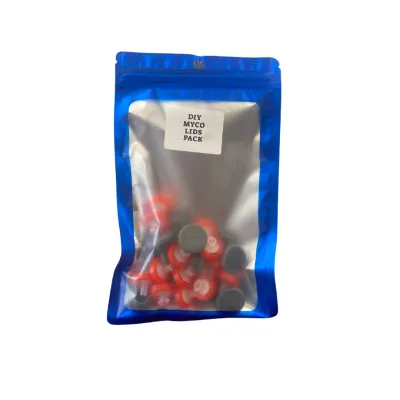
Filtros y Puertos de Tapas de Micología - Paquete Combinado de 24
Vendido por Colorado Cultures
Cargando comentarios...
$12.99
Envío estimado en EE.UU. $6.90
Devoluciones en 30 días
Pago seguro — Stripe y PayPal
El envío final se calcula al finalizar la compra.
Garantía de devolución de 30 días

Piezas de repuesto para el sistema de tapa de micología DIY
Si estás utilizando grano de cultivo en frascos de mason (Tapas de Micología Reutilizables de Colorado Cultures — el producto compañero canónico), eventualmente necesitarás componentes de repuesto.Los filtros se ensucian. Los puertos de inyección se degradan después de docenas de punciones con aguja. Ambos son partes consumibles de un sistema de tapa que, de otro modo, es duradero.
El Paquete combinado de 24 Filtros y Puertos de Micología es el kit de reposición.Un combo de 24 piezas que contiene 12 puertos de inyección + 12 filtros de jeringa PTFE de 13 mm — suficiente para refrescar 12 tapas de micología completas en los componentes que probablemente necesiten ser reemplazados.
O, si estás construyendo tus propias tapas de micología desde cero (perforando agujeros en tapas de conservas estándar), este paquete proporciona los dos componentes más críticos: el puerto de inyección autocompensante y el filtro de PTFE transpirable — en una sola compra.
Qué hay en el paquete
- 12× Puertos de inyección — septos de goma autocompensantes (típicamente de silicona o goma butílica), diseñados para encajar en un agujero perforado estándar de 1/4" o 5/16" en una tapa de micología
- 12× Filtros de jeringa PTFE de 13 mm — hidrofóbicos, permeables al intercambio de gases, bloqueadores de contaminación
Eso es suficiente para refrescar 12 tapas en un solo paquete. Para la mayoría de los cultivadores caseros que utilizan de 4 a 6 tapas, esto es un suministro de 2+ años.
Por qué estos componentes específicamente
El sistema de tapa de micología tiene 5 componentes principales:
- Anillo metálico exterior — duradero, dura indefinidamente
- Tapa interior (plástico o metal) — duradero, dura indefinidamente
- Anillo de silicona — se desgasta con el tiempo, pero lentamente; se reemplaza con menos frecuencia
- Puerto de inyección (goma autoinflable) — se desgasta con cada punción; el componente que se reemplaza con más frecuencia
- Filtro transpirable (PTFE) — se contamina y degrada con el tiempo, especialmente después de múltiples ciclos de esterilización
El paquete combinado cubre los componentes 4 y 5 — las dos partes que se reemplazan con más frecuencia. Los componentes 1, 2 y 3 generalmente duran años de uso regular.
Especificaciones del puerto de inyección
Qué es
Un pequeño disco de goma (típicamente 13 mm o 1/2" de diámetro) que encaja perfectamente en un agujero perforado en una tapa de micología. Es el punto de acceso autoinflable para la inoculación:
- Pre-inoculación: El puerto está intacto, sellado
- Durante la inoculación: Una aguja perfora el puerto para entregar el inoculante
- Post-inoculación: El puerto se autoinflama, manteniendo la integridad estéril
- Múltiples ciclos: Cada puerto soporta más de 50 punciones antes de requerir reemplazo
Material
[VERIFICAR el compuesto de goma exacto — los puertos de micología típicos son:]
- Goma butílica — mejor para resistencia química y longevidad
- Goma de silicona — más suave, más fácil de perforar, más flexible
- Cualquiera funciona para el cultivo doméstico típico; los usuarios comerciales pueden tener preferencias específicas
Tolerancia al calor
- Clasificado para autoclave hasta 250°F+ (pasa la esterilización en olla a presión sin daños)
- Estabilidad a largo plazo a través de ciclos de calentamiento repetidos
Vida útil
Vida útil típica de un solo puerto de inyección:
- Más de 50 punciones de aguja antes de que la integridad del sello se degrade
- 20-30 ciclos de esterilización en una olla a presión
- Reemplazar cuando:
- El puerto muestra grietas visibles
- Fugas de líquido durante la inoculación
- El puerto no se sella completamente después de retirar la aguja
- El puerto se vuelve duro o quebradizo
Especificaciones del filtro de jeringa de PTFE de 13 mm
Qué es
Un pequeño filtro cilíndrico, típicamente de 13 mm de diámetro, hecho de PTFE (politetrafluoroetileno) — un plástico hidrofóbico que permite que los gases pasen mientras bloquea líquidos y partículas.
Por qué PTFE
PTFE es el estándar de la industria para filtros de cultivo de hongos porque:
- Hidrofóbico — el vapor de agua pasa; el agua líquida no (por lo que el goteo no compromete el filtro)
- Inerte químicamente — no reacciona con los gases del sustrato, subproductos microbianos o productos químicos de esterilización
- Alta tolerancia al calor — soporta temperaturas de olla a presión (250°F+)
- Larga vida útil — si se mantiene adecuadamente, dura muchos ciclos de esterilización
- Barrera bacteriana — el tamaño de poro de 0.2-0.5 micrones bloquea bacterias y la mayoría de esporas fúngicas
- Permeable a CO₂/O₂ — intercambio de gases suficiente para la respiración del micelio de hongos
Tamaño de poro
[VERIFICAR tamaño exacto de poro de estos filtros — los filtros de micología típicos son:]
- 0.22 µm — grado quirúrgico, bloquea todas las bacterias
- 0.45 µm — el más común para micología; bloquea bacterias y la mayoría de esporas
- 0.5 µm — intercambio de gas ligeramente más rápido, aún adecuado para la mayoría de las especies
Un filtro de 0.22-0.45 µm es apropiado para cubensis y la mayoría de las especies de hongos cultivados.
Tolerancia al calor
- Clasificado para autoclave hasta 250°F+
- Ciclos de esterilización repetidos no degradan el material del filtro en sí, pero pueden reducir lentamente la tasa de flujo con el tiempo
Vida útil
Vida útil típica:
- 3-10 ciclos de esterilización dependiendo del tipo de sustrato y la carga de contaminación
- Reemplazar cuando:
- El filtro esté visiblemente descolorido
- El filtro muestre suciedad (residuos de sustrato, acumulación de polvo)
- El filtro esté físicamente dañado o perforado
- El intercambio de gas parece insuficiente (el sustrato se ralentiza o se detiene durante la carrera de siembra)
- El filtro esté muy sucio debido a un evento de contaminación anterior
Casos de uso
Reacondicionamiento de las tapas de micología de Colorado Cultures existentes
Si ya posees de 4 a 12 tapas de micología y han sido utilizadas para varios lotes:
- Desmonta cada tapa entre lotes
- Inspecciona el filtro y el puerto actuales
- Si está degradado: cambia por componentes frescos de este paquete
- Si aún está bien: vuelve a ensamblar y reutiliza
El paquete de 24 piezas admite la reacondicionamiento 12 tapas en los componentes que probablemente necesiten ser reemplazados.
Construyendo tus propias tapas de micología desde cero
Si quieres hacer tus propias tapas de micología usando tapas de conservas estándar:
- Compra tapas y anillos de conservas estándar (disponibles en cualquier tienda de suministros de cocina)
- Perfora 2 agujeros en cada tapa — uno para el puerto de inyección (1/4" de diámetro típico) y uno para el filtro (1/2" de diámetro típico)
- Usa una pequeña cantidad de masilla de silicona para sellar el puerto y el filtro en su lugar
- Agrega una junta tórica o una junta de silicona para el sello del borde del frasco
- Esteriliza antes del primer uso
Este enfoque de bricolaje es más barato por tapa que comprar tapas de micología completas, pero es más laborioso y puede producir calidad de sellado variable. Para una pequeña operación, el bricolaje está bien; para un cultivo serio, las tapas de micología preconstruidas son típicamente la mejor opción.
Tener repuestos para reemplazo de emergencia
Si un filtro se obstruye o un puerto falla a mitad de lote, no querrás apresurarte. Mantén un paquete sellado de 24 repuestos a mano para que puedas cambiar y continuar sin demora.
Compatibilidad
Con las tapas de micología de Colorado Cultures
- Reemplazo directo para los componentes del filtro y del puerto
- No se requiere herramienta para el reemplazo — los componentes se ajustan o encajan en la tapa
- Mismos materiales y tolerancias que los componentes originales
Con tapas de micología de bricolaje
- Filtros de PTFE se pueden instalar en cualquier tapa con un alojamiento de filtro de 13 mm de diámetro
- Puertos de inyección se ajustan a cualquier agujero perforado de aproximadamente 1/4" (6.35 mm) de diámetro; diseñados para expandirse y crear un sello hermético
- Puede requerir adhesivo o sellador de silicona para instalación permanente en tapas de bricolaje
Con aplicaciones no micológicas
- Los componentes son de grado alimenticio y de grado de laboratorio
- Compatibles con usos generales de filtración (trabajo de laboratorio, elaboración de cerveza, etc.)
- No certificados para aplicaciones médicas o farmacéuticas
Almacenamiento
- Embalaje sellado: [VERIFICAR vida útil — típicamente 2-5+ años desde la fabricación]
- Una vez abierto: Usar dentro de 6-12 meses para mejores resultados; almacenar en un recipiente seco y libre de polvo
- Evitar: Luz solar directa, temperaturas superiores a 100°F, condiciones húmedas
- Esterilidad: Los componentes están limpios pero no estériles. Esteriliza la tapa ensamblada en una olla a presión antes del primer uso.
Qué hay en la caja
- 12× Puertos de inyección (septos de goma)
- 12× Filtros de jeringa de PTFE de 13 mm
- [VERIFICAR: cualquier instrucción de instalación incluida]
- Embalaje sellado
Qué NO hay en la caja
- Tapas de micología completas (las tapas ensambladas se venden por separado como el producto de Tapas de Micología Reutilizables)
- Anillos metálicos exteriores (tus anillos existentes funcionan; si es necesario, consíguelo de cualquier suministro de conservas)
- Tapas interiores (tus tapas interiores existentes funcionan)
- Juntas tóricas (las juntas tóricas en las tapas existentes suelen durar más que los filtros y puertos; reemplaza por separado si es necesario)
- Adhesivo o sellador de silicona para instalación DIY (solo necesitarías esto para construir tapas desde cero)
- Tarros de conservas
Precios
- Paquete combinado de 24 piezas: [VERIFICAR precio minorista actual]
- Descuentos por paquetes múltiples: [VERIFICAR disponibilidad para cultivadores de alto volumen]
Economía de costo por reemplazo
Un paquete combinado de 24 piezas a [VERIFICAR precio minorista] rinde:
- Por puerto de inyección: [VERIFICAR cálculo, típicamente $0.50-1.50 por puerto]
- Por filtro: [VERIFICAR cálculo, típicamente $0.50-2.00 por filtro]
- Por renovación de tapa: Costo combinado de un puerto + un filtro
- Por frasco de siembra durante 1 año: Negligible — estos componentes soportan de 5 a 10+ ciclos de siembra cada uno
El costo por siembra de tener componentes de tapa de micología confiables y frescos es menos de $1 distribuido a lo largo de toda la vida útil de la tapa.
Quién compra esto
- Cultivadores que actualmente utilizan las tapas de micología de Colorado Cultures — ciclo de reposición natural
- Constructores de tapas de micología DIY — obtienen los dos componentes que necesitan
- Cultivadores de alto volumen — el reemplazo frecuente de componentes es parte del mantenimiento rutinario
- Cultivadores que se recuperan de sustos de contaminación — filtros frescos reducen el riesgo de repetición de contaminación
- Cultivadores de múltiples proveedores — estos componentes también funcionan con diseños de tapas que no son de Colorado Cultures
- Cultivadores principiantes — tener componentes de repuesto a mano reduce el pánico durante un evento de contaminación o falla
- Cultivadores mayoristas y comerciales — apoyando operaciones a mayor escala con piezas al por mayor
Lo que esto NO es
- No son tapas completas. Este es un kit de componentes de reemplazo. Compra las tapas de micología completas por separado si necesitas el ensamblaje completo.
- No están autoclavadas/esterilizadas. Los componentes están limpios pero no preesterilizados. Esteriliza la tapa ensamblada antes del primer uso.
- No es para aplicaciones quirúrgicas o médicas. Estos son componentes de grado para cultivo de hongos, no de grado quirúrgico.
- No son compatibles con todos los diseños de tapas de bricolaje. Confirma que el diseño de tu tapa acepte filtros estándar de 13 mm y puertos de 6 mm/1/4" antes de hacer el pedido.
Emparejamiento en toda la línea de Colorado Cultures
- Tapas de Micología Reutilizables (Boca Regular y Ancha) — caso de uso principal para componentes de reemplazo
- Jeringas Esterilizadas (10 mL Luer-Lock) — herramienta principal de inoculación a través del puerto de inyección
- Escalpeles Desechables Estériles #11 — para abrir frascos colonizados
- Caja de Aire Estático Portátil — espacio de trabajo estéril
- Olla a presión / autoclave — para esterilizar las tapas ensambladas antes de su uso
Una nota sobre la esterilidad del filtro
Los filtros de PTFE en este paquete son limpios pero no preesterilizados. El material del filtro es inherentemente bajo en carga biológica, pero para el trabajo con sustrato de grano, debes siempre esterilizar la tapa ensamblada en una olla a presión antes del primer uso (15 PSI, 60-90 min).
Después de la esterilización, el filtro sigue siendo efectivo durante múltiples ciclos. Reemplaza al primer signo de contaminación, decoloración o daño físico.