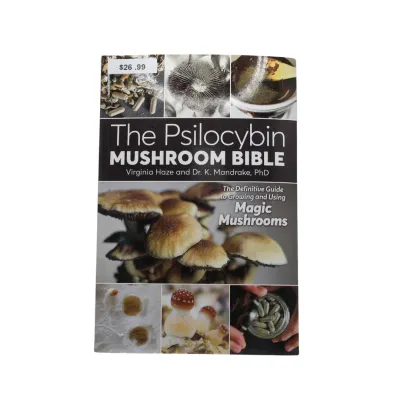
La Biblia de los Hongos
Vendido por Colorado Cultures
Cargando comentarios...
$34.99
Envío estimado en EE.UU. $11.05
Devoluciones en 30 días
Pago seguro — Stripe y PayPal
El envío final se calcula al finalizar la compra.
Garantía de devolución de 30 días

La referencia enciclopédica sobre el cultivo de hongos
La Biblia de los Hongos es el libro más grande y completo jamás escrito sobre el cultivo de hongos en casa — cada paso del proceso desglosado con la profundidad que convierte a los cultivadores aficionados en operadores. Desde los fundamentos de la técnica estéril hasta el trabajo con agar, la preservación de cultivos, la producción de spawn, la ciencia del sustrato, los teks de monotub, la fructificación, la cosecha y el almacenamiento — esta es la referencia de escritorio que mantienes en la estantería de la sala de cultivo, con las páginas dobladas en los lugares que más importan para tu cultivo.
Cómo se diferencia del Libro de Guía para Cultivadores de Hongos Mágicos
Colorado Cultures tiene dos libros en esta categoría, y satisfacen diferentes necesidades. El Libro de Guía para Cultivadores de Hongos Mágicos es el manual práctico de pasos simples para el cultivo a granel — el libro que lleva a un principiante a través de una exitosa carrera de monotub en pasos medibles y replicables. La Biblia de los Hongos es la inmersión enciclopédica — el porqué detrás del qué, la ciencia detrás de los pasos, y la referencia completa para cada técnica que la mayoría de los cultivadores intentarán alguna vez.
Si recién estás comenzando y quieres un monotub funcional para fin de mes, el Libro de Guía para Cultivadores es el camino más rápido. Si deseas una única referencia que explique todo, desde la biología celular del micelio hasta el trabajo avanzado con agar y la producción a escala comercial, la Biblia de los Hongos es el libro que lo hace.
Qué hay dentro
• Fundamentos de la técnica estéril — campanas de flujo, cajas de guantes, trabajo con agar, manejo de cultivos • Diagnóstico y recuperación de contaminación — el árbol de diagnóstico que la mayoría de los principiantes nunca aprenden • Métodos de producción de spawn — grano, aserrín, caminos de cultivo líquido • Ciencia del sustrato — formulaciones, pasteurización vs. esterilización, objetivos de humedad y pH • Teks de cultivo a granel — casing, monotubs sin casing, carpas Martha, cámaras de fructificación • Libros de jugadas para solucionar problemas — cuando algo sale mal, aquí está exactamente qué verificar • La biología: por qué el micelio se comporta de la manera en que lo hace y cómo trabajar con él en lugar de en su contra
Una referencia a la que volverás durante años
Esto no es un manual para principiantes que superas en un mes. La Biblia de los Hongos es el libro que los cultivadores serios mantienen al alcance de la mano en la sala de cultivo: el que sacas de la estantería la tercera vez que enfrentas un problema de contaminación que no puedes diagnosticar, la primera vez que escalas a una tienda Martha, y el día que decides comenzar a trabajar con una especie que nunca has cultivado antes.