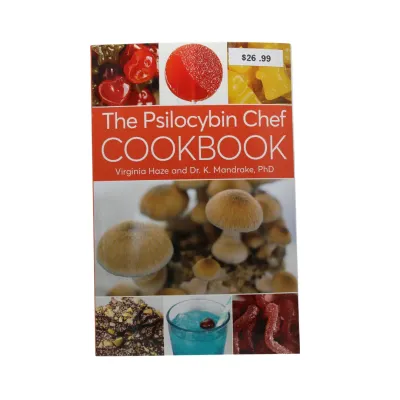
El libro de cocina del Chef Hongo
Vendido por Colorado Cultures
Cargando comentarios...
$26.99
Envío estimado en EE.UU. $11.05
Devoluciones en 30 días
Pago seguro — Stripe y PayPal
El envío final se calcula al finalizar la compra.
Garantía de devolución de 30 días

La otra mitad del dominio de los hongos
La mayoría de los cultivadores pasan años aprendiendo el cultivo — preparación del sustrato, técnica estéril, FAE, cosecha en la posición correcta del velo. Se vuelven buenos produciendo libras de fruta al año. Luego cosechan una cosecha y la miran en la encimera de la cocina y se hacen la pregunta que todo cultivador eventualmente se hace:
"Está bien, pero ¿cómo puedo usar esto?"
Sécalo y trágate el cuerpo de fruta en polvo en té. Mastica sombreros secos poco apetitosos. Rellena cápsulas con un molinillo barato.O — finalmente — aprende a cocinar con hongos como lo hacen los chefs entrenados.
El libro de cocina del Chef de Hongos (también comercializado bajo el título El libro de cocina del Chef de Psilocibina en algunas ediciones [VERIFICA qué título aparece en la copia física que recibas]) es la respuesta a esa pregunta.Más de 50 recetas, 8 métodos de extracción y un capítulo entero sobre la ciencia y la práctica del microdosing, escrito por los mismos autores que produjeron el best-seller La Biblia de los Hongos Psilocibina: La Guía Definitiva para Cultivar y Usar Hongos Mágicos (también disponible de Colorado Cultures).
Donde La Biblia de los Hongos te enseña a cultivar, este libro de cocina te enseña a preparar, extraer y consumir — con la misma precisión y profundidad.
¿Qué hay en el libro?
La colección de recetas abarca toda la gama de aplicaciones culinarias de los hongos:
Cócteles y bebidas
- Tinturas infusionadas con hongos adecuadas para añadir a bebidas mezcladas
- Preparaciones de té para el consumo tradicional con biodisponibilidad optimizada
- Chocolate caliente, latte y bebidas a base de leche que enmascaran la textura y mejoran la absorción
- Preparaciones de café frío y heladas para uso en climas cálidos
- Preparaciones de lemon-tek y extracción ácida que reducen el tiempo de inicio
Postres
- Trufas de chocolate, fudge y barras — la preparación canónica de "chocolate de hongo", hecha correctamente
- Galletas y brownies con cuidadosa distribución de dosis por porción
- Glaseados, rellenos y cremas infusionadas para incorporación en postres estándar
- Preparaciones congeladas (helado, paletas, yogures congelados) que enmascaran el sabor
Gomitas estilo dispensario
- Gomitas a base de pectina y gelatina con distribución de dosis limpia por pieza
- Variaciones ácidas y dulces para enmascarar el sabor
- Preparaciones de múltiples dosis (gomitas de 5mg, 10mg, 25mg) para un control de dosis consistente
- Formulaciones estables en estante que no degradan los compuestos activos
Aplicaciones culinarias
- Preparaciones selladas y salteadas de cuerpos frutales frescos para uso culinario directo
- Salsas, sopas y caldos incorporando tanto especies funcionales como psicoactivas
- Marinadas y glaseados que aprovechan el umami del hongo
- Guarniciones y platos principales construidos en torno a los hongos como ingrediente central
Métodos de extracción (8 documentados)
Aquí es donde el libro se separa de los tratamientos típicos de aficionados. Los ocho métodos de extracción cubren:
- Extracción a base de agua (caliente, fría y ambiente)
- Extracción mediada por ácido (limón, vinagre, ácido cítrico)
- Extracción de alcohol/etanol (para tinturas y concentrados)
- Extracción a base de grasa (aceites, mantequillas, ghees infusionados con hongos — análogos a la mantequilla de cannabis)
- Extracción en fase dual (agua + alcohol para la recuperación de compuestos de espectro completo)
- Preparación de concentrado sublingual (tinturas de inicio rápido)
- Técnicas de extracción por congelación (preservando compuestos termolábiles)
- [VERIFICAR 8º método — posiblemente una técnica avanzada sin CO₂ o solventes]
Cada método se presenta con la ciencia detrás de él (por qué ciertos compuestos son extraídos por ciertos solventes), el procedimiento práctico y los resultados relativos de inicio/duración/intensidad.
Microdosis
Un capítulo entero dedicado a la práctica de la microdosis — tomar dosis sub-perceptuales de psilocibina en un horario regular para beneficios cognitivos, de estado de ánimo o creativos:
- Protocolos de dosificación (Fadiman, apilamiento de Stamets, protocolos cada dos días)
- Líneas de tiempo de inicio y eliminación
- Manejo de la tolerancia a lo largo de períodos de dosificación de varios meses
- Técnicas de seguimiento y registro para evaluar la respuesta personal
- Consideraciones de seguridad y contraindicaciones
- Estrategias de combinación (microdosis con melena de león, cordyceps, niacina)
¿Quién escribió esto?
Los mismos autores que La Biblia de los Hongos Psilocibina: La Guía Definitiva para Cultivar y Usar Hongos Mágicos. Su pedigree incluye:
- Años de trabajo en cocinas profesionales — las recetas han sido realmente cocinadas, servidas y refinadas.
- Años de experimentación con psilocibina: la guía de dosificación refleja conocimiento práctico, no palabrería teórica
- Metodología basada en evidencia: citas a investigaciones revisadas por pares donde sea aplicable
- Enfoque conservador hacia la seguridad: cada receta incluye orientación sobre el control de dosis
Este no es un libro de cocina escrito por alguien que experimentó una vez y decidió que era un experto. Los autores tienen décadas de experiencia combinada en la cocina y en la utilización de enteógenos.
Por qué importa un enfoque de libro de cocina
Los métodos de consumo predeterminados para los hongos — secar y comer, preparar té, rellenar cápsulas — son derrochadores, desagradables e inconsistentes.
Secar y comer:
- Duro para el estómago (la quitina en las paredes celulares se digiere lentamente)
- Inicio impredecible (1-2 horas típico, más tiempo con el estómago lleno)
- Sabor y textura desagradables
- La distribución de la dosis es desigual en el cuerpo del hongo
Té preparado:
- Mejor que secar y comer para la digestión
- Aún con un perfil de sabor desagradable
- Extrae solo compuestos solubles en agua (pierde bioactivos solubles en grasa)
- El inicio sigue siendo lento (45-90 minutos típico)
Cápsulas:
- Sin problema de sabor
- Pero con la misma lentitud digestiva que secar y comer
- Y la distribución de la dosis por cápsula depende de qué tan bien moliste y mezclaste el polvo
Preparación culinaria — hecha correctamente:
- Enmascarar el sabor con ingredientes familiares
- Optimizar para un inicio más rápido y predecible
- Distribuir la dosis de manera uniforme en las porciones de la receta
- Hacer que el consumo sea un placer, no un obstáculo
- Extraer un espectro más amplio de compuestos bioactivos a través del solvente adecuado
El libro de cocina es la diferencia entre permanecer en el consumo de hongos y disfrutar de ello.
Combinando con el cultivo de Colorado Cultures
Para los cultivadores que también son clientes de Colorado Cultures, este libro de cocina completa el ciclo: cultiva tu propio → prepara tu propio. La cosecha de tu monotub se convierte en la materia prima para las recetas de este libro. Algunas combinaciones funcionan particularmente bien:
- Frutos de cubensis recién cosechados → salteados a la parrilla o tinturas de extracción fresca
- Frutos deshidratados (a través del deshidratador CC) → polvo molido para cápsulas, chocolates, gomitas
- Frutos de especies funcionales (de cultivos líquidos gourmet) → caldos, sopas, salsas, extractos de suplementos diarios
- Recortes y tallos → tinturas y recetas de extracción (las partes que no comerías enteras aún contienen los bioactivos)
¿Quién compra esto?
- Cultivadores que producen su propia cosecha que quieren mejores opciones de consumo que secar y comer
- Cualquiera que prepare hongos para microdosis que necesita preparaciones controladas por dosis y estables en estante
- Chefs caseros que quieren integrar hongos — tanto funcionales como de otro tipo — en la cocina diaria
- Fabricantes de tinturas que quieren protocolos de extracción documentados y basados en evidencia
- Lectores que buscan La Biblia de los Hongos — el libro canónico de "cultivarlo" + el libro canónico de "utilizarlo" es un conjunto de referencia completo
- Amigos que no cultivan pero quieren orientación sobre consumo de calidad — gran parte del libro se aplica independientemente de si cultivaste los hongos o los obtuviste de otra fuente
- Anfitriones de bodas/eventos/reuniones que quieren preparar lotes cuidadosamente dosificados para experiencias compartidas con amigos
- Practicantes de microdosis a largo plazo que quieren cambiar de cápsulas de polvo crudo a preparaciones de mayor calidad
Lo que esto NO es
- No es una guía de cultivo. Para eso, consulta La Biblia de los Hongos Psilocibios (mismos autores, también disponible de Colorado Cultures).
- No es un sustituto de la guía legal de cultivo. Las leyes sobre psilocibina varían según la jurisdicción. El libro documenta métodos de preparación; el estado legal de los hongos subyacentes es tu responsabilidad verificar y cumplir localmente.
- No es un libro de "guía de viaje" para experiencias psicodélicas. Esta es una referencia centrada en la cocina y la extracción. Para orientación sobre experiencias y set/setting, busca en otro lugar.
- No es una colección solo de recetas. La ciencia y la metodología se enfatizan junto con las recetas prácticas. Si deseas una colección de recetas puras sin el contexto de química/biología subyacente, este puede ser más libro de lo que necesitas.
- No está respaldado por ninguna autoridad de salud gubernamental. Las recetas utilizan una sustancia que sigue siendo legalmente restringida en la mayoría de las jurisdicciones. El libro trata esto como un hecho que requiere conciencia del usuario, no como una barrera para la información en sí.
Una nota sobre el título
El libro ha sido publicado bajo ambos El Libro de Cocina del Chef Psilocibio y El libro de cocina del Chef de Hongos títulos a través de ediciones. Ambos se refieren al mismo contenido [VERIFICAR: confirmar la edición enviada por Colorado Cultures]. La diferencia en el título refleja consideraciones del canal de venta (algunos canales restringen la palabra "psilocibina" en las portadas de los libros); el contenido es idéntico.
Formato físico
- [VERIFICAR: tapa dura vs. tapa blanda]
- [VERIFICAR: número de páginas — típicamente 200-400 páginas para libros de cocina de este alcance]
- [VERIFICAR: dimensiones — típicamente 7.5" × 9" o 8.5" × 11"]
- [VERIFICAR: edición y año de publicación]
- Fotografías a color de recetas completadas [VERIFICAR presencia]
- Diagramas y tablas para protocolos de extracción
- Índice, glosario y sección de referencias
Este es un verdadero libro de cocina — diseñado para vivir en la encimera de la cocina, resistir ingredientes derramados y servir como una referencia de trabajo en lugar de decoración de mesa de café.