Última actualización:
Cortinarius rubellus
"Deadly Webcap, Deadly Cort"
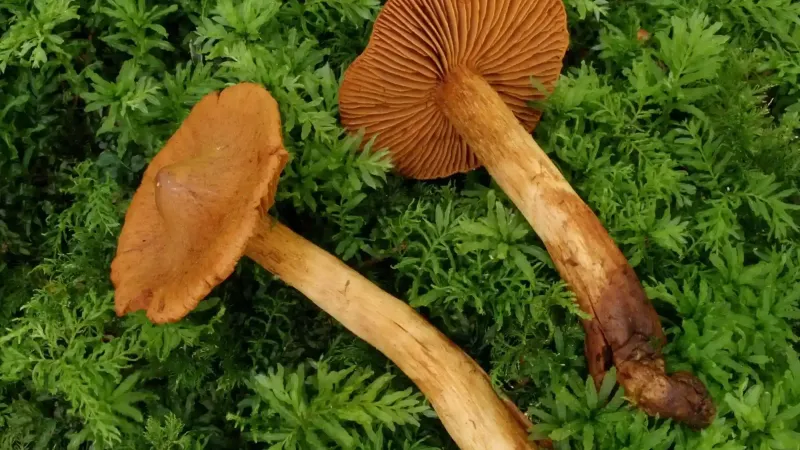
Cortinarius rubellus fruiting bodies
Clasificación Científica
Reino:Fungi
División:Basidiomycota
Clase:Agaricomycetes
Orden:Agaricales
Familia:Cortinariaceae
Género:Cortinarius
Preguntas Frecuentes
- ¿Qué es la especie Deadly Webcap?
- La especie Deadly Webcap (Cortinarius rubellus) pertenece a la familia Cortinariaceae. Se estudia por sus características biológicas y está documentada en la base de datos micológica de ShroomSpy.
- ¿Es comestible la especie Deadly Webcap?
- MORTALMENTE VENENOSO: nunca lo consuma. Contiene orellanina, una potente nefrotoxina que provoca insuficiencia renal grave y, con frecuencia, irreversible. Los síntomas se retrasan de forma peligrosa y suelen aparecer entre 3 días y 2-3 semanas después de la ingestión, por lo que el envenenamiento pasa desapercibido hasta que el daño renal está avanzado. Muchas víctimas necesitan diálisis prolongada o un trasplante de riñón, y se han producido muertes. No existe antídoto específico.
- ¿Cuál es la clasificación científica de Deadly Webcap?
- La especie Deadly Webcap pertenece al reino Fungi, división Basidiomycota, clase Agaricomycetes, orden Agaricales, familia Cortinariaceae, género Cortinarius. Su nombre científico es Cortinarius rubellus.
Acerca de
Cortinarius rubellus, el Webcap Mortal, es un hongo de color naranja oxidado a marrón rojizo propio de los bosques de coníferas y mixtos, reconocible por su velo parcial similar a una telaraña y su esporada de color pardo herrumbroso. Fructifica a finales del verano y en otoño como simbionte micorrízico de coníferas y, a veces, de árboles caducifolios. A pesar de su aspecto poco llamativo, es uno de los hongos más peligrosos del mundo: contiene orellanina, una potente nefrotoxina que causa insuficiencia renal grave y, con frecuencia, irreversible. No existe antídoto específico.
Historia
El potencial mortal de los webcaps pasó inadvertido durante siglos porque durante mucho tiempo se creyó que Cortinarius era un género inofensivo. La nefrotoxicidad de la orellanina se identificó por primera vez en la década de 1950, tras un envenenamiento masivo en Polonia en el que decenas de personas desarrollaron insuficiencia renal asociada a webcaps recolectados en un mismo lugar. C. rubellus (antes conocido como C. speciosissimus, y también descrito como C. ranierensis o C. orellanoides) se confirmó después como parte del complejo letal de Cortinarius orellanus.
Descripción general
Desde el punto de vista ecológico, Cortinarius rubellus establece relaciones micorrízicas con árboles forestales y participa en el ciclo de nutrientes. No tiene valor culinario ni medicinal y nunca se cultiva. Su peligro radica en la toxicidad tardía: tras la ingestión, los síntomas como malestar gripal, dolor de cabeza y vómitos suelen retrasarse entre 3 y 20 días, momento en el que la nefritis intersticial grave y el daño renal irreversible pueden estar ya avanzados. Muchas víctimas necesitan diálisis prolongada o un trasplante de riñón, y se han producido muertes. Los recolectores corren el riesgo de confundirlo con rebozuelos y con otros webcaps del mismo complejo tóxico, por lo que cualquier hongo de color pardo herrumbroso con velo en telaraña debe dejarse en paz.
Características Físicas
Sombreros:
The cap is convex to broadly bell-shaped, measuring 3-10 cm in diameter, with a smooth, moist surface that is reddish-brown to orange-brown in color.
Láminas:
Gills are attached to the stem, closely spaced, and initially pale yellow to orange, becoming darker with age.
Calificaciones de Hongos
0.0
Basado en 0 Reseñas
5
★4
★3
★2
★1
★Comparte tus pensamientos
Si has consumido este hongo, comparte tus pensamientos con nuestra comunidad