Última actualización:
Hydnellum Peckii
"bleeding tooth fungus, strawberry tooth fungus, Strawberries and Cream mushroom"
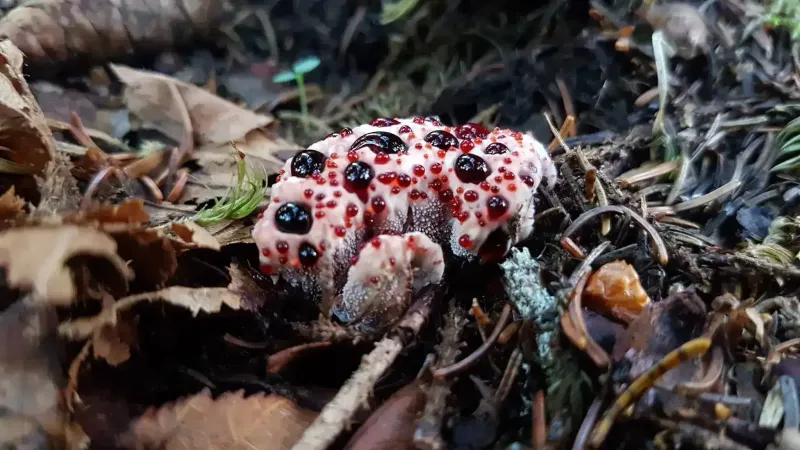
Hydnellum peckii fruiting bodies
Clasificación Científica
Reino:Fungi
División:Basidiomycota
Clase:Agaricomycetes
Orden:Thelephorales
Familia:Bankeraceae
Género:Hydnellum
Preguntas Frecuentes
- ¿Qué es la especie bleeding tooth fungus?
- La especie bleeding tooth fungus (Hydnellum Peckii) pertenece a la familia Bankeraceae. Se estudia por sus características biológicas y está documentada en la base de datos micológica de ShroomSpy.
- ¿Es comestible la especie bleeding tooth fungus?
- No comestible. Hydnellum peckii no es toxico, pero no es comestible debido a su carne extremadamente dura y leñosa y a su sabor intensamente amargo. No se utiliza como hongo comestible.
- ¿Cuál es la clasificación científica de bleeding tooth fungus?
- La especie bleeding tooth fungus pertenece al reino Fungi, división Basidiomycota, clase Agaricomycetes, orden Thelephorales, familia Bankeraceae, género Hydnellum. Su nombre científico es Hydnellum Peckii.
Acerca de
Hydnellum peckii, conocido comunmente como "hongo diente sangrante" o "hongo fresas con crema", es un hongo distintivo y de aspecto llamativo, nombrado por las gotas rojas, semejantes a sangre, que exuda de la superficie de su sombrero aterciopelado de color palido a rosado. La parte inferior presenta espinas (dientes) en lugar de laminas. Es una especie ectomicorrizica que forma una asociacion simbiotica con las raices de coniferas como el pino y el abeto, y se encuentra en America del Norte y partes de Europa. Aunque es muy vistoso, H. peckii es demasiado duro y amargo para comerse; no es toxico, simplemente no es comestible.
Historia
Hydnellum peckii fue descrito cientificamente por primera vez en 1886 por el micologo estadounidense Howard James Banker, quien lo nombro en honor al micologo Charles Horton Peck. Su llamativa apariencia "sangrante" lo ha convertido durante mucho tiempo en un sujeto favorito para naturalistas y fotografos. Con el tiempo, la especie ha pasado de ser una curiosidad a un tema de interes cientifico, especialmente por los pigmentos coloreados que produce, estudiados como tintes naturales.
Descripción general
Hydnellum peckii se reconoce mejor por dos rasgos: la parte inferior espinosa (dentada) de su sombrero y las gotas rojas de gutacion que rezuman de los cuerpos fructiferos jovenes y humedos. Como hongo ectomicorrizico depende de una conifera viva en lugar de materia en descomposicion, por lo que no se cultiva comercialmente. Se puede distinguir de otras especies de Hydnellum, como Hydnellum aurantiacum, que carece del caracteristico exudado rojo "sangrante". Su aspecto sorprendente lo convierte en un hallazgo fascinante tanto para micologos aficionados como profesionales.
Características Físicas
Sombreros:
The cap is irregularly shaped, typically 2-10 cm in diameter, with a color ranging from pale pink to reddish-brown. It has a velvety to slightly sticky texture.
Láminas:
None - this species does not have gills but instead has spines or teeth on the underside of the cap.
Constituyentes Químicos
Química Medicinal
Calificaciones de Hongos
0.0
Basado en 0 Reseñas
5
★4
★3
★2
★1
★Comparte tus pensamientos
Si has consumido este hongo, comparte tus pensamientos con nuestra comunidad