Última actualización:
Hygrophoropsis aurantiaca
"False Chanterelle, Orange Chanterelle"
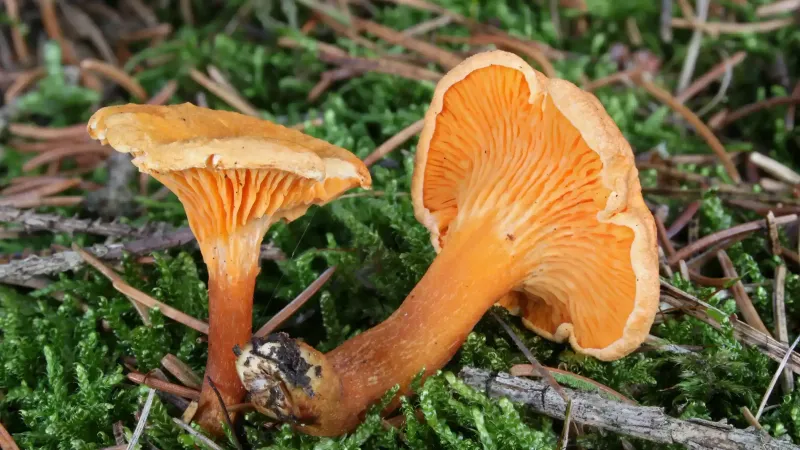
Hygrophoropsis aurantiaca fruiting bodies
Clasificación Científica
Reino:Fungi
División:Basidiomycota
Clase:Agaricomycetes
Orden:Boletales
Familia:Hygrophoropsidaceae
Género:Hygrophoropsis
Preguntas Frecuentes
- ¿Qué es la especie False Chanterelle?
- La especie False Chanterelle (Hygrophoropsis aurantiaca) pertenece a la familia Hygrophoropsidaceae. Se estudia por sus características biológicas y está documentada en la base de datos micológica de ShroomSpy.
- ¿Es comestible la especie False Chanterelle?
- No se recomienda su consumo. Hygrophoropsis aurantiaca se considera ocasional o dudosamente venenosa: suele causar malestar gastrointestinal (náuseas, vómitos, diarrea) y algunos autores describen reacciones alucinatorias o neurológicas alarmantes tras ingerirla. No es mortal, pero NO debe comerse. Su mayor peligro es el parecido con el rebozuelo comestible (Cantharellus cibarius) y con la tóxica seta de Halógeno o de olivo (Omphalotus spp.); distinga siempre por sus láminas verdaderas, finas y repetidamente bifurcadas, frente a los pliegues gruesos y romos del rebozuelo verdadero.
- ¿Cuál es la clasificación científica de False Chanterelle?
- La especie False Chanterelle pertenece al reino Fungi, división Basidiomycota, clase Agaricomycetes, orden Boletales, familia Hygrophoropsidaceae, género Hygrophoropsis. Su nombre científico es Hygrophoropsis aurantiaca.
Acerca de
Hygrophoropsis aurantiaca, el falso rebozuelo, es una seta de color naranja-amarillo a albaricoque de los bosques de coníferas y caducifolios que se confunde fácilmente con el preciado rebozuelo comestible. No se recomienda su consumo: suele causar malestar gastrointestinal y algunos informes describen reacciones alucinatorias o neurológicas alarmantes, por lo que conviene dejarla en el bosque. Aunque antes se agrupaba con los rebozuelos por su color y láminas decurrentes, difiere en casi todo lo demás y hoy se sitúa en el orden Boletales.
Historia
El falso rebozuelo fue descrito por Elias Fries y recibió su combinación actual de la mano de René Maire. El nombre del género Hygrophoropsis significa "que se parece a Hygrophorus", y aurantiaca alude a su color naranja. Antes se incluyó en Cantharellus por su color, su esporada blanca y sus láminas decurrentes, pero los micólogos reconocieron después que su anatomía se asemeja más a la de Paxillus que a la de los rebozuelos verdaderos. Los estudios moleculares la han trasladado al orden Boletales, familia Hygrophoropsidaceae.
Descripción general
Hygrophoropsis aurantiaca es un hongo saprofito que crece en grupos sobre el suelo y la madera en descomposición, sobre todo en bosques de pinos y otras coníferas, brezales y pastos de montaña. Sus rasgos clave son el sombrero naranja con margen ondulado e incurvado y sus láminas verdaderas finas, apretadas, de color naranja intenso y repetidamente bifurcadas que descienden por el pie, frente a los pliegues gruesos y romos del rebozuelo verdadero. Distinguirla importa: el comestible Cantharellus cibarius tiene pliegues bajos en forma de cresta, mientras que la tóxica Omphalotus spp. tiene láminas de borde agudo y sin bifurcar. El falso rebozuelo carece de valor culinario o medicinal reconocido; tómese el nombre al pie de la letra y no lo coma.
Características Físicas
Sombreros:
The cap is broadly convex to flat, measuring 3-10 cm in diameter, with a smooth, sticky surface that is orange to yellow-orange in color.
Láminas:
Gills are closely spaced, decurrent, and yellow to orange in color, with a slightly forked appearance.
Calificaciones de Hongos
0.0
Basado en 0 Reseñas
5
★4
★3
★2
★1
★Comparte tus pensamientos
Si has consumido este hongo, comparte tus pensamientos con nuestra comunidad