Última actualización:
Marasmius rotula
"pinwheel mushroom, collared parachute, collared horsehair, little wheel toadstool"
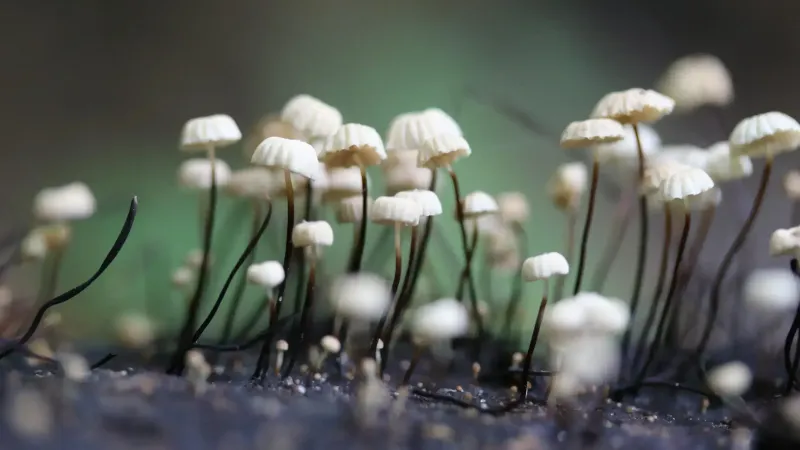
Marasmius rotula fruiting bodies
Clasificación Científica
Reino:Fungi
División:Basidiomycota
Clase:Agaricomycetes
Orden:Agaricales
Familia:Marasmiaceae
Género:Marasmius
Preguntas Frecuentes
- ¿Qué es la especie pinwheel mushroom?
- La especie pinwheel mushroom (Marasmius rotula) pertenece a la familia Marasmiaceae. Se estudia por sus características biológicas y está documentada en la base de datos micológica de ShroomSpy.
- ¿Es comestible la especie pinwheel mushroom?
- No comestible. Marasmius rotula no es tóxico, pero es amargo y demasiado pequeño, fino y correoso para tener valor culinario.
- ¿Cuál es la clasificación científica de pinwheel mushroom?
- La especie pinwheel mushroom pertenece al reino Fungi, división Basidiomycota, clase Agaricomycetes, orden Agaricales, familia Marasmiaceae, género Marasmius. Su nombre científico es Marasmius rotula.
Acerca de
Marasmius rotula es un hongo saprófito diminuto y delicado, reconocible por su sombrero blanco, profundamente plegado en forma de paracaídas, y por un collar alrededor del pie al que se unen sus laminillas muy espaciadas. Crece en grupos sobre ramitas, ramas y restos leñosos de madera dura muerta, y está ampliamente distribuido en las latitudes templadas del norte. Amargo y demasiado pequeño para comer, es un descomponedor no tóxico, sin valor comestible ni medicinal.
Historia
Marasmius rotula fue descrito por primera vez por Giovanni Antonio Scopoli y luego sancionado por Elias Magnus Fries, quien lo situó en el género Marasmius. El nombre del género proviene del griego marasmos, "marchitarse", lo que refleja la capacidad de estos hongos de secarse y revivir cuando vuelve la humedad. El epíteto rotula es latín para "rueda pequeña", describiendo la disposición radial de las laminillas alrededor del collar que da al hongo su nombre común.
Descripción general
Marasmius rotula es un saprófito de la madera que descompone ramas y ramitas muertas, contribuyendo al ciclo de nutrientes en los bosques templados. El minúsculo sombrero blanco rara vez supera los 2 cm de diámetro y se sostiene sobre un pie delgado, alambrado y de base oscura. Su rasgo distintivo es el collar: un anillo libre en la parte superior del pie desde el cual irradian las pocas laminillas espaciadas, sin tocar el pie. Como otras especies de Marasmius, puede marchitarse en períodos secos y rehidratarse tras la lluvia. No tiene uso culinario ni medicinal y se considera no comestible, aunque no es venenoso.
Características Físicas
Sombreros:
The cap is small, typically 1-3 cm in diameter, with a convex shape that becomes flat with age. It is brown to reddish-brown, often with a slightly sticky texture when moist.
Láminas:
Gills are free from the stem, closely spaced, and pale cream to light brown in color.
Calificaciones de Hongos
0.0
Basado en 0 Reseñas
5
★4
★3
★2
★1
★Comparte tus pensamientos
Si has consumido este hongo, comparte tus pensamientos con nuestra comunidad