Última actualización:
Ophiocordyceps sinensis
"Hongo oruga chino, Dong Chong Xia Cao, Yartsa Gunbu"
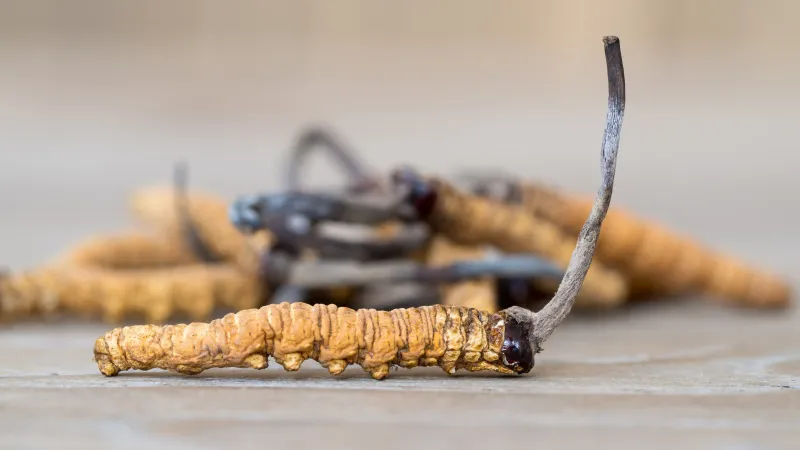
Ophiocordyceps sinensis fruiting bodies
Clasificación Científica
Reino:Fungi
División:Ascomycota
Clase:Sordariomycetes
Orden:Hypocreales
Familia:Ophiocordycipitaceae
Género:Ophiocordyceps
Preguntas Frecuentes
- ¿Qué es la especie Hongo oruga chino?
- La especie Hongo oruga chino (Ophiocordyceps sinensis) pertenece a la familia Ophiocordycipitaceae. Se estudia por sus características biológicas y está documentada en la base de datos micológica de ShroomSpy.
- ¿Es comestible la especie Hongo oruga chino?
- Comestible - tónico tradicional, extremadamente caro
- ¿Qué efectos produce la especie Hongo oruga chino?
- La especie Hongo oruga chino se asocia con los siguientes efectos: Energía, Resistencia, Calma. Las experiencias individuales varían según la dosis, el estado de ánimo y el entorno.
- ¿Cuál es la clasificación científica de Hongo oruga chino?
- La especie Hongo oruga chino pertenece al reino Fungi, división Ascomycota, clase Sordariomycetes, orden Hypocreales, familia Ophiocordycipitaceae, género Ophiocordyceps. Su nombre científico es Ophiocordyceps sinensis.
Acerca de
Ophiocordyceps sinensis, comúnmente conocido como el hongo oruga chino o dong chong xia cao ("gusano de invierno, hierba de verano"), es uno de los organismos más preciados en la medicina tradicional china y tibetana. Este hongo entomopatógeno parasita las larvas de las polillas fantasmas (Thitarodes spp.) en los prados alpinos de la meseta tibetana a elevaciones entre 3,000 y 5,000 metros. El cuerpo fructífero — un estroma delgado y marrón oscuro — emerge del huésped oruga momificada, lo que lo convierte en uno de los hongos más visualmente distintivos y caros que existen.
Historia
Ophiocordyceps sinensis ha sido utilizado en la medicina tradicional china durante más de 2,000 años, con el primer registro escrito apareciendo en el Clásico de Hierbas del Divino Labranza aproximadamente en el año 200 d.C. Conocido en el Tíbet como yartsa gunbu, históricamente fue reservado para la corte imperial y la nobleza adinerada debido a su extrema rareza.
En la cultura tibetana, la antigua creencia de que este organismo se transformaba de animal a planta con el cambio de estaciones dio lugar a su nombre poético "gusano de invierno, hierba de verano." Hoy en día, su precio supera los $20,000 por kilogramo, lo que lo convierte en el hongo más caro del mundo.
Descripción general
Ophiocordyceps sinensis desempeña un papel ecológico único como parásito especialista de las larvas de polillas fantasmas en ecosistemas de pastizales de gran altitud. A diferencia de su pariente cultivable Cordyceps militaris, O. sinensis ha demostrado ser extremadamente difícil de cultivar comercialmente. Los principales compuestos bioactivos incluyen cordycepin, ácido cordicepico, polisacáridos y adenosina.
Características Físicas
Sombreros:
Cabeza estromática alargada de color marrón oscuro en forma de clava
Láminas:
Ninguno - produce peritecios
Efectos Cognitivos
EnergíA
Tradicionalmente utilizado para combatir la fatiga y aumentar la energía al apoyar la producción de ATP celular.
Resistencia
Puede mejorar la resistencia física y la stamina, valorado históricamente por atletas en el Tíbet.
Calma
Propiedades adaptogénicas que pueden ayudar a manejar las respuestas al estrés.
Farmacología
Ayuda Con
Fatiga
Tradicionalmente utilizado como un tónico contra la fatiga y la letargia.
Sistema inmunológico
Los polisacáridos han mostrado actividad inmunomoduladora en estudios preliminares.
Estrés
Utilizado como un adaptógeno para resistir el estrés físico y mental.
Respiración Pulmonar
Uso tradicional para condiciones respiratorias; puede apoyar la función pulmonar.
Función renal
Considerado un tónico renal en la medicina tradicional china.
Inflamación
Investigaciones preliminares sugieren propiedades antiinflamatorias.
Estrés oxidativo
Los extractos han demostrado actividad antioxidante in vitro.
Libido
Uso tradicional como afrodisíaco; puede influir en la función reproductiva.
Posibles Efectos Secundarios
Alergias
Reacciones alérgicas raras; la acumulación de metales pesados en especímenes silvestres es una preocupación.
Náuseas
El consumo excesivo puede causar molestias gastrointestinales leves.
Constituyentes Químicos
Química Medicinal
Calificaciones de Hongos
0.0
Basado en 0 Reseñas
5
★4
★3
★2
★1
★Comparte tus pensamientos
Si has consumido este hongo, comparte tus pensamientos con nuestra comunidad