Última actualización:
Panaeolus foenisecii
"Mower's Mushroom, Haymaker's Mushroom"
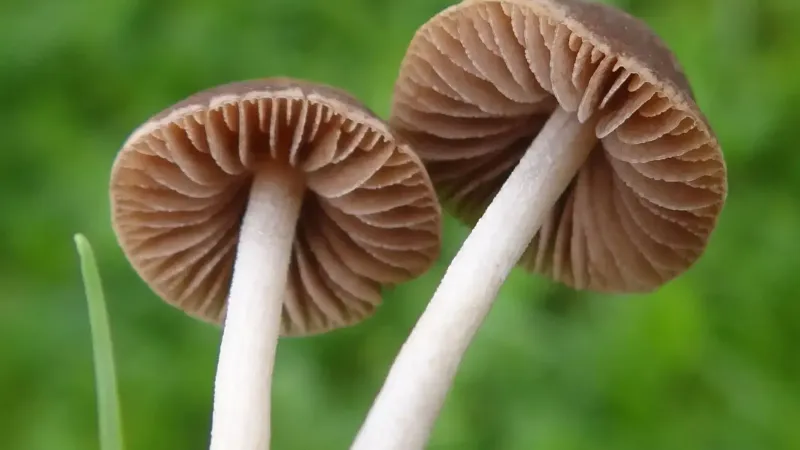
Panaeolus foenisecii fruiting bodies
Clasificación Científica
Reino:Fungi
División:Basidiomycota
Clase:Agaricomycetes
Orden:Agaricales
Familia:Panaeolaceae
Género:Panaeolus
Preguntas Frecuentes
- ¿Qué es la especie Mower's Mushroom?
- La especie Mower's Mushroom (Panaeolus foenisecii) pertenece a la familia Panaeolaceae. Se estudia por sus características biológicas y está documentada en la base de datos micológica de ShroomSpy.
- ¿Es comestible la especie Mower's Mushroom?
- No comestible. Panaeolus foenisecii es un hongo común de céspedes y pastizales que no se considera comestible: pequeñas cantidades ingeridas crudas se han descrito como tóxicas para niños pequeños, y su ingestión puede causar malestar gastrointestinal. También se ha documentado que provoca trastornos digestivos y ataxia en perros. A pesar de su antigua fama popular como 'hongo mágico', los análisis químicos repetidos de ejemplares de Norteamérica, Europa y Australia no han encontrado de forma fiable psilocibina ni psilocina; la especie solo contiene de manera constante serotonina y 5-hidroxitriptófano, que son inactivos por vía oral. Debe considerarse no comestible y se confunde fácilmente con hongos de césped realmente tóxicos o con psilocibina, por lo que se desaconseja firmemente recolectarlo para cualquier fin.
- ¿Cuál es la clasificación científica de Mower's Mushroom?
- La especie Mower's Mushroom pertenece al reino Fungi, división Basidiomycota, clase Agaricomycetes, orden Agaricales, familia Panaeolaceae, género Panaeolus. Su nombre científico es Panaeolus foenisecii.
Acerca de
Panaeolus foenisecii, comúnmente llamado hongo del segador o del cortacésped, es un hongo saprótrofo pequeño y frágil que fructifica disperso o en grupos en céspedes, pastizales y otras zonas herbosas de todo el mundo templado, sobre todo tras la siega del heno. Tiene un sombrero campanulado a convexo de 1-3 cm, de color pardo ahumado a castaño apagado y muy higrófano, que palidece a tonos canela o grisáceos al secarse, a menudo con una banda anular más oscura en el margen. Sus láminas se vuelven moteadas de color pardo a medida que las ásperas esporas pardo-purpúreas maduran de forma desigual, y el pie esbelto y quebradizo es pálido y ligeramente retorcido hacia el ápice. No es comestible y debe considerarse un hongo de césped tóxico, no recreativo.
Historia
La especie fue descrita por primera vez por Persoon y sancionada por Elias Magnus Fries, y más tarde recombinada por Kuhner; el epíteto foenisecii es latín y significa 'del segador', en alusión a su costumbre de aparecer en la hierba cortada tras la siega del heno. Como no crece sobre estiércol, fructifica tras la siega y produce esporas ásperas pardo-purpúreas en lugar de negras, a menudo se ha separado en el género Panaeolina. Su historia taxonómica es enredada: se ha situado en distintos momentos en Psilocybe, Psathyrella, Panaeolus y Panaeolina, y trabajos recientes de ADN han ubicado el género cerca de las Galeropsidaceae. Durante gran parte del siglo XX tuvo fama de 'hongo mágico' alucinógeno, basada sobre todo en los informes de mediados de siglo de Ola'h, que lo describían como productor 'latente' de psilocibina.
Descripción general
La química moderna no ha respaldado esa fama. Estudios de ejemplares de ocho países en tres continentes, y análisis de más de cien recolecciones alemanas, no lograron detectar repetidamente psilocibina, psilocina ni baeocistina; autores respetados como Stamets y Gartz concluyen que la especie no es activa. Lo que sí contiene de forma fiable son indoles 5-sustituidos, en concreto serotonina y su precursor 5-hidroxitriptófano, ambos inactivos por vía oral y que pueden confundirse con la psilocina en pruebas antiguas. El verdadero riesgo es gastrointestinal: pequeñas cantidades ingeridas crudas se han descrito como tóxicas para niños pequeños, y el hongo ha intoxicado a perros. Ecológicamente es un descomponedor inofensivo de la hojarasca de los pastizales, pero crece junto a parientes que sí contienen psilocibina, como Panaeolus subbalteatus y Panaeolus cinctulus, por lo que es una fuente fácil y potencialmente peligrosa de confusión.
Características Físicas
Sombreros:
Convex to bell-shaped, 1-5 cm in diameter, light brown to grayish-brown, smooth texture with a slightly striate margin.
Láminas:
Free, close to crowded, white to grayish, turning black with age.
Calificaciones de Hongos
0.0
Basado en 0 Reseñas
5
★4
★3
★2
★1
★Comparte tus pensamientos
Si has consumido este hongo, comparte tus pensamientos con nuestra comunidad