Última actualización:
Pleurotus ostreatus
"Oyster Mushroom, Tree Oyster"
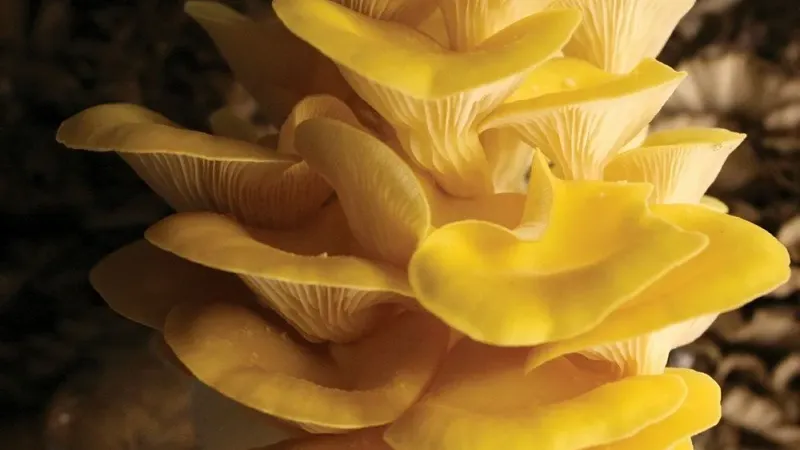
Pleurotus ostreatus fruiting bodies
Clasificación Científica
Reino:Fungi
División:Basidiomycota
Clase:Agaricomycetes
Orden:Agaricales
Familia:Pleurotaceae
Género:Pleurotus
Preguntas Frecuentes
- ¿Qué es la especie Oyster Mushroom?
- La especie Oyster Mushroom (Pleurotus ostreatus) pertenece a la familia Pleurotaceae. Se estudia por sus características biológicas y está documentada en la base de datos micológica de ShroomSpy.
- ¿Es comestible la especie Oyster Mushroom?
- edible - widely consumed and considered safe when properly cooked
- ¿Qué efectos produce la especie Oyster Mushroom?
- La especie Oyster Mushroom se asocia con los siguientes efectos: Energía, Resistencia, Enfoque. Las experiencias individuales varían según la dosis, el estado de ánimo y el entorno.
- ¿Cuál es la clasificación científica de Oyster Mushroom?
- La especie Oyster Mushroom pertenece al reino Fungi, división Basidiomycota, clase Agaricomycetes, orden Agaricales, familia Pleurotaceae, género Pleurotus. Su nombre científico es Pleurotus ostreatus.
Acerca de
Pleurotus ostreatus, commonly known as the oyster mushroom, is a widely recognized edible fungus notable for its distinctive oyster-shaped cap, which can vary in color from white to gray to brown. This species typically features a smooth, fan-shaped cap with a slightly wavy margin and gills that run down the stem. P. ostreatus is found in a variety of habitats, particularly on decaying wood, and plays a crucial ecological role in wood decomposition. Its significance extends beyond its ecological contributions, as it is highly valued for its culinary uses and potential health benefits, including antioxidant properties and cholesterol-lowering effects.
History
Historically, Pleurotus ostreatus has been consumed for centuries, particularly in Asian cuisines, where it is prized for its delicate flavor and texture. It has also been used in traditional medicine for its purported health benefits, including immune support and anti-inflammatory properties. The species was first described scientifically in 1775 by the mycologist Giovanni Antonio Scopoli, and its name derives from the Latin words "pleuro," meaning side, and "ostrea," meaning oyster, reflecting its shape. Over time, human understanding of this species has expanded, leading to its cultivation and commercial production, which began in the late 19th century in Europe.
In recent decades, research has focused on the nutritional and medicinal properties of P. ostreatus, revealing its potential as a functional food. The mushroom's popularity has surged, not only for its culinary applications but also for its health-promoting compounds, making it a staple in both gourmet and health-conscious diets.
Overview
Ecologically, Pleurotus ostreatus plays a vital role as a decomposer, breaking down lignin and cellulose in wood, which contributes to nutrient cycling in forest ecosystems. It is commonly found in temperate and tropical regions, thriving on a variety of substrates, including hardwoods and agricultural waste. The species is now extensively cultivated worldwide, making it one of the most commercially significant mushrooms, available in grocery stores and farmers' markets.
Key distinguishing features of P. ostreatus include its unique cap shape, which resembles an oyster, and its gills that are closely spaced and run down the stem. It can be confused with other species such as Pleurotus pulmonarius, but P. ostreatus typically has a more pronounced oyster shape and a more robust flavor. Its ease of cultivation and adaptability to various substrates have made it a favorite among mushroom growers, further solidifying its status as a staple in both culinary and medicinal applications.
Características Físicas
Sombreros:
The cap is fan-shaped to oyster-shaped, typically 5-25 cm wide, with a smooth to slightly velvety texture. Color ranges from white to pale cream, light gray, or tan.
Láminas:
Gills are closely spaced, decurrent (running down the stem), and white to cream in color, becoming darker with age.
Efectos Cognitivos
EnergíA
P. ostreatus contiene ergotionina y vitaminas del grupo B que pueden apoyar la energía mental sostenida y reducir la fatiga asociada con el estrés oxidativo.
Resistencia
Los beta-glucanos y polisacáridos en los champiñones ostra pueden apoyar la resistencia física al modular las respuestas inmunitarias durante el esfuerzo prolongado.
Enfoque
La ergotionina, un potente antioxidante concentrado en los champiñones ostra, puede apoyar la función cognitiva y la atención al proteger las neuronas del daño oxidativo.
Farmacología
Ayuda Con
Sistema inmunológico
La pleurán, un beta-1,3/1,6-glucano encontrado en P. ostreatus, puede apoyar la modulación inmunitaria al activar macrófagos y células asesinas naturales.
Colesterol
P. ostreatus contiene naturalmente lovastatina (mevinolina), un inhibidor de la HMG-CoA reductasa que puede ayudar a reducir los niveles de colesterol LDL.
Inflamación
Los polisacáridos y compuestos fenólicos en los champiñones ostra pueden exhibir actividad antiinflamatoria al modular las vías de NF-kB y citoquinas.
Estrés oxidativo
La ergotionina y otros antioxidantes en P. ostreatus pueden ayudar a combatir el estrés oxidativo al eliminar especies reactivas de oxígeno.
Soporte Cardiovascular
La combinación de lovastatina, beta-glucanos y potasio en los champiñones ostra puede apoyar la salud cardiovascular en general.
Diabetes
Los extractos de P. ostreatus pueden ayudar a regular los niveles de glucosa en sangre, con estudios que sugieren una mejor sensibilidad a la insulina.
Cáncer
Las fracciones de polisacáridos de P. ostreatus pueden exhibir propiedades antiproliferativas in vitro, aunque la evidencia clínica sigue siendo preliminar.
Supresión Bacteriana
P. ostreatus produce ostreatina y otros compuestos que pueden exhibir actividad antibacterial contra ciertas bacterias Gram-positivas y Gram-negativas.
Posibles Efectos Secundarios
Alergias
La exposición a esporas durante el cultivo o en entornos mal ventilados puede desencadenar reacciones alérgicas, particularmente hipersensibilidad respiratoria, en individuos susceptibles.
Productos de Oyster Mushroom
Explora productos de Oyster Mushroom de vendedores independientes
Constituyentes Químicos
Química Medicinal
Información Nutricional
Tamaño de Porción100
Cantidad por Porción
Calorías364
% Valor Diario*
Grasa Total 1.6 g2%
Grasa Saturada 0 g0%
Grasa Trans 0 g
Colesterol 0 mg0%
Sodio 18 mg1%
Carbohidratos Totales 57 g21%
Fibra Dietética 11.5 g41%
Azúcares Totales 0 g
Proteína 31 g62%
Vitamina A 0 µg 0%•Tiamina B1 0 mg 0%
Riboflavina B2 0 mg 0%•Niacina B3 0 mg 0%
Vitamina B6 0.11 mg 6%•Folato B9 38 µg 10%
Vitamina B12 0 mg 0%•Vitamina C 0 mg 0%
Vitamina D 29 µg 145%•Vitamina E 0 mg 0%
Vitamina K 0 µg 0%•Calcio 3 mg 0%
Cobre 0.24 mg 27%•Hierro 1.3 mg 7%
Magnesio 18 mg 4%•Manganeso 0.11 mg 5%
Fósforo 120 mg 10%•Potasio 420 mg 9%
Selenio 2.6 µg 5%•Zinc 0.77 mg 7%
Vit A 0 µg 0%•B1 0 mg 0%
B2 0 mg 0%•B3 0 mg 0%
B6 0.11 mg 6%•B9 38 µg 10%
B12 0 mg 0%•Vit C 0 mg 0%
Vit D 29 µg 145%•Vit E 0 mg 0%
Vit K 0 µg 0%•Calcio 3 mg 0%
Cobre 0.24 mg 27%•Hierro 1.3 mg 7%
Mg 18 mg 4%•Mn 0.11 mg 5%
Fósf. 120 mg 10%•Pot. 420 mg 9%
Selenio 2.6 µg 5%•Zinc 0.77 mg 7%
* Los porcentajes de valores diarios están basados en una dieta de 2,000 calorías.
Calificaciones de Hongos
0.0
Basado en 0 Reseñas
5
★4
★3
★2
★1
★Comparte tus pensamientos
Si has consumido este hongo, comparte tus pensamientos con nuestra comunidad