Última actualización:
Ramaria formosa
"beautiful coral fungus, Ramaria formosa"
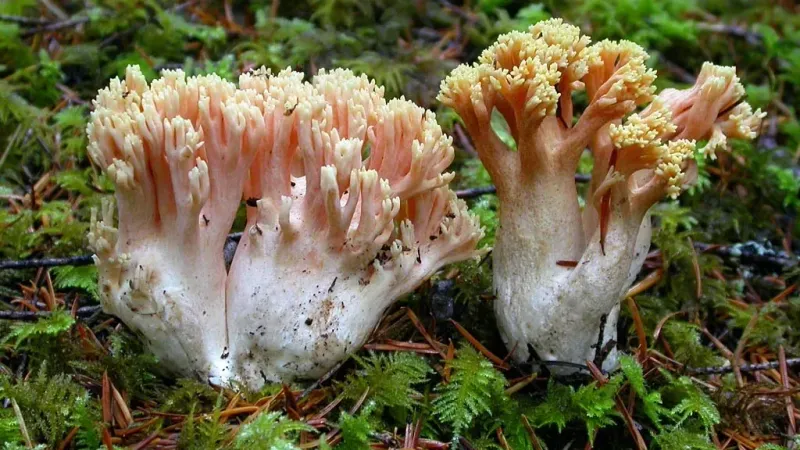
Ramaria formosa fruiting bodies
Clasificación Científica
Reino:Fungi
División:Basidiomycota
Clase:Agaricomycetes
Orden:Gomphales
Familia:Ramariaceae
Género:Ramaria
Preguntas Frecuentes
- ¿Qué es la especie beautiful coral fungus?
- La especie beautiful coral fungus (Ramaria formosa) pertenece a la familia Ramariaceae. Se estudia por sus características biológicas y está documentada en la base de datos micológica de ShroomSpy.
- ¿Es comestible la especie beautiful coral fungus?
- Venenoso - no consumir. Ramaria formosa se considera ampliamente un hongo coral tóxico. Su ingestión provoca intoxicación gastrointestinal con náuseas, vómitos, cólicos abdominales y un marcado efecto laxante/diarreico en pocas horas. El compuesto responsable no está totalmente caracterizado. No es comestible en ninguna preparación.
- ¿Cuál es la clasificación científica de beautiful coral fungus?
- La especie beautiful coral fungus pertenece al reino Fungi, división Basidiomycota, clase Agaricomycetes, orden Gomphales, familia Ramariaceae, género Ramaria. Su nombre científico es Ramaria formosa.
Acerca de
Ramaria formosa, el hongo coral hermoso, es un llamativo hongo ramificado con forma de coral que fructifica en el suelo de bosques de coníferas y mixtos. A pesar de su atractivo aspecto, es una especie venenosa: comerla provoca malestar gastrointestinal con náuseas, vómitos, calambres abdominales y diarrea. Nunca debe recolectarse como alimento.
Historia
El epíteto formosa proviene del latín que significa hermoso, en referencia a su forma ornamentada similar a un candelabro. Ramaria formosa se cita desde hace tiempo en las guías de campo como ejemplo de un hongo vistoso pero no comestible, a menudo mencionado junto a corales comestibles como Ramaria botrytis para advertir a los recolectores de que no todos los hongos coral son seguros.
Visión general
Ramaria formosa forma cuerpos fructíferos erguidos y muy ramificados que surgen de un grueso pie basal, con las puntas a menudo de color distinto al de las ramas principales. Ecológicamente actúa como descomponedor de la hojarasca y los restos leñosos del bosque, contribuyendo al ciclo de nutrientes. No se cultiva. Dado que varias especies de Ramaria son difíciles de distinguir en el campo y algunas son tóxicas, conviene tratar todo el género con precaución.
Características Físicas
Sombreros:
The fruiting body resembles a coral structure, with branches that can reach up to 10 cm tall. The color is typically a pale yellow to cream, sometimes with a hint of pink, and the surface is smooth.
Láminas:
None - this species does not have gills, as it produces spores from the surface of its branched structure.
Calificaciones de Hongos
0.0
Basado en 0 Reseñas
5
★4
★3
★2
★1
★Comparte tus pensamientos
Si has consumido este hongo, comparte tus pensamientos con nuestra comunidad