Última actualización:
Trametes hirsuta
"Hairy Bracket, Hairy Turkey Tail, Woolly Polypore"
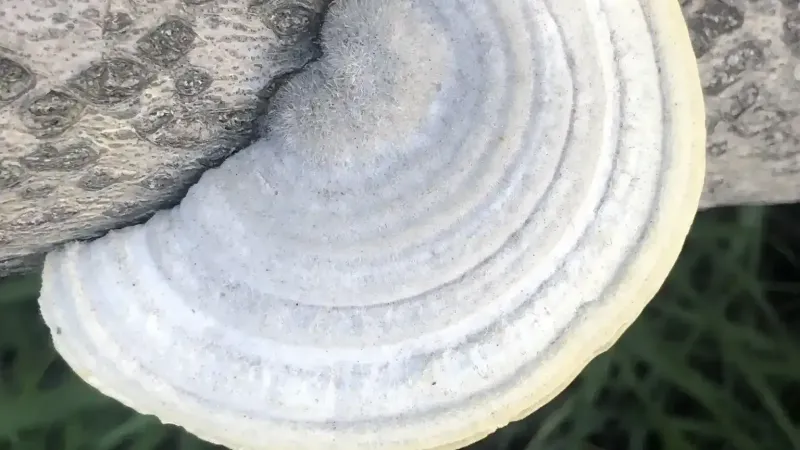
Trametes hirsuta fruiting bodies
Clasificación Científica
Reino:Fungi
División:Basidiomycota
Clase:Agaricomycetes
Orden:Polyporales
Familia:Polyporaceae
Género:Trametes
Preguntas Frecuentes
- ¿Qué es la especie Hairy Bracket?
- La especie Hairy Bracket (Trametes hirsuta) pertenece a la familia Polyporaceae. Se estudia por sus características biológicas y está documentada en la base de datos micológica de ShroomSpy.
- ¿Es comestible la especie Hairy Bracket?
- non-edible - while not toxic, it is tough and not suitable for consumption.
- ¿Qué efectos produce la especie Hairy Bracket?
- La especie Hairy Bracket se asocia con los siguientes efectos: Energía. Las experiencias individuales varían según la dosis, el estado de ánimo y el entorno.
- ¿Cuál es la clasificación científica de Hairy Bracket?
- La especie Hairy Bracket pertenece al reino Fungi, división Basidiomycota, clase Agaricomycetes, orden Polyporales, familia Polyporaceae, género Trametes. Su nombre científico es Trametes hirsuta.
Acerca de
Trametes hirsuta, commonly known as the hairy bracket fungus, is a wood-decaying fungus characterized by its distinctive hairy or velvety surface and concentric zones of color, typically ranging from white to brown. This species is commonly found growing on decaying hardwoods in temperate forests across the globe. T. hirsuta plays a crucial ecological role as a decomposer, breaking down lignin and cellulose in wood, which contributes to nutrient cycling in forest ecosystems. While not considered edible, it has garnered interest for its potential medicinal properties, including antioxidant and antimicrobial activities.
History
Trametes hirsuta has been recognized in traditional medicine for its potential health benefits, although it has not been widely utilized in cuisine due to its tough texture and lack of palatability. The species was first described scientifically in 1789 by the mycologist Christiaan Hendrik Persoon, and its name is derived from the Latin word "hirsutus," meaning "hairy," which aptly describes its appearance. Over time, the understanding of T. hirsuta has evolved, with modern research focusing on its biochemical properties and ecological importance rather than culinary uses.
In recent years, studies have highlighted the potential of T. hirsuta in bioremediation and its role in sustainable forestry practices. The exploration of its compounds for pharmaceutical applications has also increased, as researchers investigate its ability to produce enzymes that can break down complex organic materials.
Overview
Ecologically, Trametes hirsuta is a saprophytic fungus that plays a vital role in wood decomposition, aiding in the breakdown of dead trees and contributing to soil health. It is primarily found in the wild, thriving on decaying hardwoods, and is not cultivated commercially due to its tough texture and limited culinary appeal. Key distinguishing features include its hairy surface, which sets it apart from similar species like Trametes versicolor, which has a smoother texture and more vibrant coloration.
Commercially, while T. hirsuta is not a primary target for mushroom cultivation, its potential applications in biotechnology and environmental science are being explored. Its ability to produce various enzymes makes it a subject of interest for biotechnological innovations, particularly in waste management and sustainable practices.
Características Físicas
Sombreros:
The cap is shelf-like, typically 2-10 cm wide, with a hairy or velvety texture. It is often brown to grayish in color, with concentric zones.
Láminas:
None - this species has a pore surface instead of gills.
Efectos Cognitivos
EnergíA
Los polisacáridos de Trametes hirsuta pueden apoyar la recuperación de energía mediada por el sistema inmunológico al reducir la inflamación crónica de bajo grado que contribuye a la fatiga.
Farmacología
Ayuda Con
Sistema inmunológico
Los complejos de polisacáridos-proteínas de T. hirsuta muestran actividad inmunoestimulante contra el sarcoma S180 en modelos murinos; similar a la actividad de T. versicolor (PSK/PSP).
Cáncer
Los extractos crudos de polisacáridos de T. hirsuta inhiben la proliferación de líneas celulares de cáncer de hígado y cuello uterino humanos in vitro.
Supresión Bacteriana
Las enzimas lacasas producidas por T. hirsuta tienen actividad antibacteriana y antifúngica documentada, activas contra Staphylococcus aureus y Candida albicans.
Constituyentes Químicos
Química Medicinal
Calificaciones de Hongos
0.0
Basado en 0 Reseñas
5
★4
★3
★2
★1
★Comparte tus pensamientos
Si has consumido este hongo, comparte tus pensamientos con nuestra comunidad