How to Start a Mushroom Business: Market Research & Strategy Guide - Phase 3
By Josh Shearer on 12/03/2025
Design a scalable mushroom extraction and processing facility. Get cost estimates, layout ideas, and essential equipment lists to support functional ingredient production.
Processing Infrastructure & Facility Zones
✅ Core Facility Zones to Plan
Zone | Purpose | Key Equipment | Notes |
|---|---|---|---|
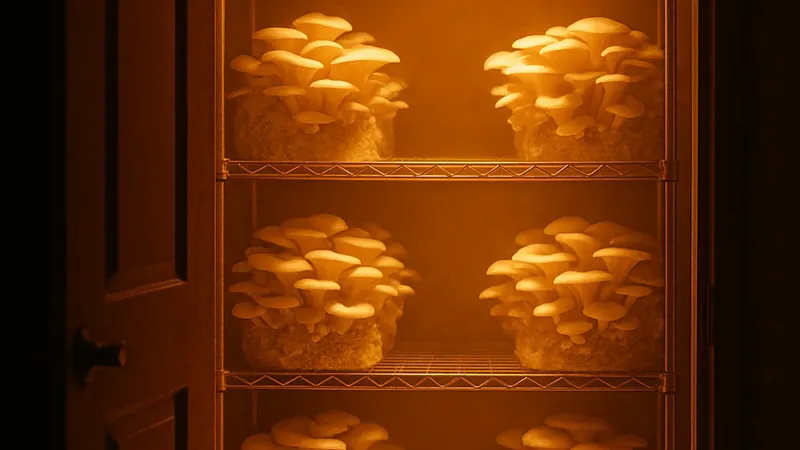
Cultivation | Lab, Fruiting and Incubation | Lab Equipment, Racks, humidifiers, HVAC | 8,500–12,000 sq ft starting footprint |
Drying | Reduce water content pre-processing | Tray dryers, dehumidifiers | May need >100 sq ft for each batch cycle |
Extraction Lab | Convert mushrooms into liquid or powder extracts | Hot water extractors, alcohol tanks, ultrasonic?, filters | Controlled for heat, alcohol |
Purification / Filtration | Clarify extracts or isolate components | Buchner filters, centrifuge, filtration columns | Optional at phase 1 |
Lab & Testing | Verify active content (e.g., beta-glucans) | Microscope, pH meters, drying oven | Partner with third-party lab at first |
Formulation & Packaging | Final product prep | Capsule fillers, tincture bottlers, labeling machine | Needed for white-label or DTC |
Storage | Hold dried mushrooms, extracts, and packaging | Racks, climate-controlled storage | Separate dry vs alcohol handling |
Admin/Compliance | Records, testing logs, certifications | Workstation, secure data storage | Part of SOP/GMP systems later |
🧪 Step 3.1: Core Equipment Breakdown
Cultivation & Drying
- Cultivation Lab: ~$4000
- Sterilization/Pasturization Equipment: ~ $3000
- Fruiting tents/racks: ~$5,000–$10,000
- Humidifiers, dehumidifiers: ~$3,000
- Tray or shelf dryers (40–80 trays): $3,000–$6,000
Extraction Lab
- Hot Water Extractor (20–50L): $5,000–$10,000
- Dual Extract (with ethanol): +$3,000–$7,000
- Vacuum filtration, Buchner funnel: $500–$1,500
- Alcohol recovery system (rotovap or distiller): $2,000–$6,000
Formulation / Productization (Optional)
- Capsule machine (semi-auto): $2,000–$5,000
- Tincture bottler: $1,000–$2,000
- Labeler + shrink sleeve: $800–$1,500
🏗️ Step 3.2: Suggested Phase 1 Facility Layout (within 8,500–10,000 sq ft)
Zone | Approx. Sq Ft | Description |
|---|---|---|
Cultivation Area | 5,000–6,000 | Fruiting tents, incubation, air control |
Drying + Storage | 800–1,000 | Near cultivation for fast hand-off |
Extraction Room | 800–1,200 | Hot water + alcohol extractor, filter |
Packaging & Formulation | 500–800 | Optional in Phase 1 |
Admin / Lab / Testing | 300–500 | Data, records, future certification |
This layout fits within your first-phase budget (~$200K capex) depending on material cost and labor availability. Optimize for flow: cultivation → drying → extract → output.
⚙️ Step 3.3: Modular Scaling Strategy
Phase | Size | Output Focus | Notes |
|---|---|---|---|
Pilot | 8,500 sq ft | 3-4 species, drying + dual extract | Proof of concept, build relationships |
Phase 2 | 20,000 sq ft | Add packaging, in-house lab | Expand SKUs, serve ingredient market |
Phase 3 | Full acreage | Vertical integration + branded lines | Full capacity utilization, multiple markets |
This strategy supports a "grow to match demand" model, minimizes waste, and helps you scale without outpacing cash flow.
Explore Our Equipment and Supplies
Frequently Asked Questions
The guide outlines eight core zones: Cultivation (lab, fruiting, and incubation), Drying, Extraction Lab, Purification/Filtration, Lab & Testing, Formulation & Packaging, Storage, and Admin/Compliance. Each zone has a defined purpose and associated equipment. It suggests separating dry handling from alcohol handling in storage and partnering with a third-party lab for testing at first.