The 'Tiny People' Mushroom Has No Known Psychedelic
By Louis on 07/10/2026
A mushroom sold in China makes people see tiny humans, but scientists found no psilocybin or ibotenic acid in it. The cause is still a mystery.
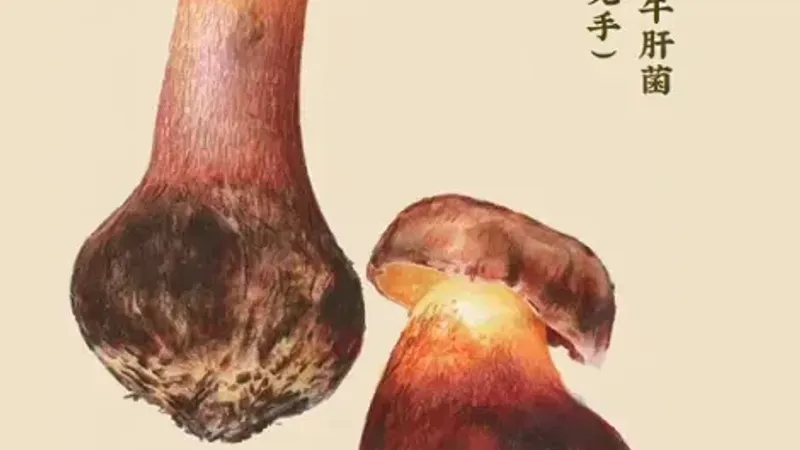
The Mushroom That Makes You See Tiny People Has No Known Psychedelic in It
In the markets of Yunnan, in southwestern China, you can buy a prized wild mushroom that occasionally makes people see tiny humans. Eat it undercooked and you might find yourself watching miniature figures stroll across the floor, an effect so distinctive that doctors have a name for it. You would be forgiven for assuming the culprit is a familiar psychedelic, the same kind of compound found in magic mushrooms. Scientists just checked, and it isn't. The mushroom that makes you see tiny people appears to contain no known hallucinogen at all, which has left researchers with a real mystery on their hands.
A delicacy that comes with side effects
The mushroom in question is Lanmaoa asiatica, known locally as jian shou qing. It's a bolete, prized as a regional delicacy and sold widely in Yunnan markets. Cooked thoroughly, it's food. Cooked poorly, it's an experience. Undercooked L. asiatica can trigger vivid visions of miniature people, along with dizziness, auditory hallucinations, and outright physical sickness. The tiny-people visions are simply the most memorable symptom.
This is not a rare quirk or an urban legend. Hospitals in Yunnan see dozens of these poisoning cases every year, common enough that the phenomenon is documented in the local medical literature. So while the visuals sound charming in a storybook way, the reality is a mushroom that regularly lands people in the emergency room. That distinction matters, and we'll come back to it.
The plot twist: no psilocybin, no ibotenic acid
Here's where it gets strange. To find the source of the visions, mycologists Colin Domnauer and Bryn Dentinger at the University of Utah sequenced the genomes of 53 mushroom samples from across the wider Lanmaoa genus. They went looking specifically for the genetic machinery that produces the two best-understood mushroom hallucinogens: psilocybin, the active compound in magic mushrooms, and ibotenic acid, the one found in fly agaric.
They found neither. The genome held no close matches to the genes known to build either compound. Whatever is producing these hallucinations, it isn't the usual suspect. The researchers concluded that a novel, still-unidentified metabolite is most likely responsible, some compound science has not yet characterized. That fits earlier clinical observations, which had already noted that L. asiatica poisoning looks and feels quite different from a psilocybin or ibotenic acid experience. The genetics now back up what the hospital reports were hinting at.
[Internal link: The Fungi Files explainer on how magic mushrooms make psilocybin]
Wait, what exactly are Lilliputian hallucinations?
Seeing tiny people has a proper clinical name: Lilliputian hallucinations, borrowed from the miniature inhabitants of Lilliput in Gulliver's Travels. It describes a specific type of visual hallucination where a person perceives small human or animal figures, often moving around and sometimes described as oddly pleasant rather than frightening.
The phenomenon isn't unique to this mushroom. Lilliputian hallucinations show up in a range of medical situations, from certain intoxications to some neurological conditions. What makes the L. asiatica version scientifically interesting is how consistently and specifically it produces this exact effect, which suggests the mystery compound is acting on the brain in a targeted way rather than a scattershot one. Pin down how it works and you might learn something about how the brain conjures figures that aren't there in the first place.
A bonus haul: new species and a cleaner family tree
The study did more than rule things out. By comparing 1,515 corresponding genes across the samples, the team built a much clearer definition of what makes a mushroom part of the genus Lanmaoa. That work bumped the count to 17 recognized species, including four that had never been identified before. The researchers formally named two of them here, Lanmaoa fallax and Lanmaoa carbonilivor.
This is where the fun science meets a genuinely serious point. Lanmaoa mushrooms are traded and eaten around the world, and they share physical features with other species, including toxic ones. Mistaking a wild mushroom for an edible lookalike is a well-documented and sometimes deadly problem, which is why the scientists frame better taxonomy as a public food-safety issue rather than an academic footnote. The takeaway for the rest of us is unglamorous but important: this is not a mushroom to go hunting for, and any wild mushroom you can't identify with total certainty is never worth the risk.
Why a mystery mushroom is worth the attention
An unidentified brain-altering compound is exactly the kind of loose thread scientists love to pull. The researchers note that their genomic groundwork could support future drug-discovery efforts and deeper study of the bioactive chemistry hiding across the Lanmaoa genus. That's a real possibility, not a promise. Isolating an unknown compound and understanding what it does is slow work, and most such leads never become anything you'd find in a pharmacy.
Still, the bigger picture is a familiar one for anyone who follows fungi. Four new species from a single genus, a hallucinogen that doesn't match any known pathway, and a compound nobody has named yet all point to the same conclusion: the fungal kingdom is still mostly uncharted, and even a mushroom people have been eating for generations can hide a genuine scientific unknown.
The bottom line
A mushroom eaten as a delicacy in China makes people see tiny figures, and scientists have now shown it does so without any of the psychedelics we understand. The cause is a mystery compound waiting to be identified, and chasing it down could teach us something about both fungal chemistry and the human brain. The story is a good reminder that "we know what's in it" and "we've eaten it for years" are not the same thing, and that the most interesting mushrooms are often the ones still keeping secrets.
Check out our legal Products!
Frequently Asked Questions
The study by Colin Domnauer and Bryn Dentinger was published in the journal Mycologia in 2026. It also formally named two new Lanmaoa species, Lanmaoa fallax and Lanmaoa carbonilivor.