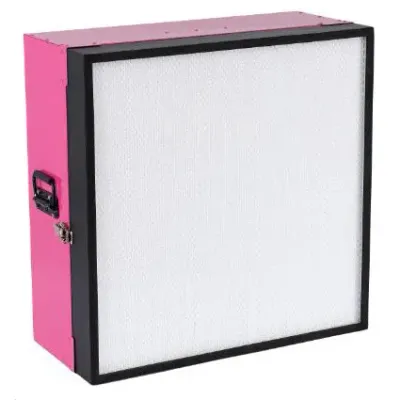
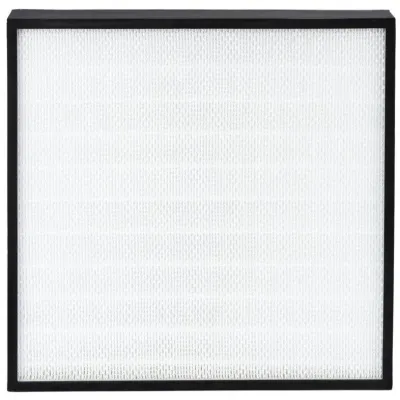
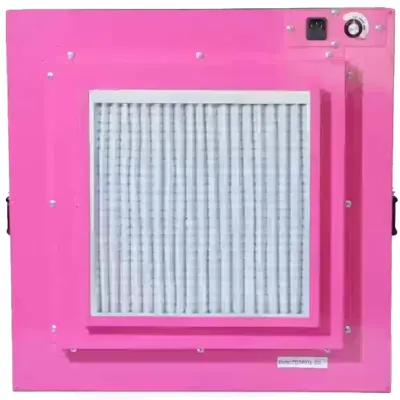
2' x 2' Laminar Flow Hood
Sold by Colorado Cultures
Loading feedback...
$499.99
Out of stock — get an email the moment it’s back.
Estimated US shipping $185.00
30-day returns
Secure checkout — Stripe & PayPal
Final shipping is calculated at checkout.
30-day money-back guarantee

When you've outgrown the still air box
A still air box (SAB) is the right tool for casual mycology — agar transfers, liquid culture work, occasional inoculation. Cheap, portable, no electricity required. The Colorado Cultures Portable Still Air Box (sister product) is excellent for that work.
But there's a ceiling. When your cultivation practice grows past hobbyist scale — when you're doing multiple agar plates per session, running parallel genetic experiments, inoculating dozens of LC jars and grain bags per week, breeding your own cultivars — the SAB's limitations become real:
- Slow workflow — you can't move quickly without re-stirring the air
- Limited workspace — 2-3 cubic feet of interior volume cramps multi-step transfers
- Sensitive to operator technique — every awkward arm motion contaminates a culture
- One operator at a time — no collaboration
- No protection against operator-introduced contaminants — breath, skin flora, gloves all carry into the work area
The 2' x 2' Laminar Flow Hood from Gro Magik is the upgrade. A 2-foot by 2-foot HEPA-filtered work surface that delivers continuous sterile-grade airflow across your work area, enabling sterile mushroom growing prep work in nearly any space.
What "laminar flow" actually means
The technology is older than mycology — laminar flow hoods have been laboratory standard equipment since the 1960s, used for:
- Pharmaceutical production
- Tissue culture work
- Semiconductor manufacturing
- Microbiology research
- Cleanroom assembly
The principle is simple but elegant:
- A blower fan draws ambient room air into the hood
- A HEPA filter (typically 99.99% efficient at 0.3 µm) catches airborne particulates — spores, mold, dust, bacteria
- The clean air exits the filter in a smooth, non-turbulent stream
- The smooth stream flows across the work surface at a constant velocity (typically 0.4-0.5 m/s)
- Any contaminants entering from the operator side (breath, skin, gloves) are pushed AWAY from the work area by the continuous outflow
The result: the work surface is a continuously-refreshed sterile zone — much cleaner than even the cleanest SAB. The flow hood doesn't trap air; it constantly replaces it with filtered air. Even if you sneeze in front of the hood, the contaminants are immediately swept downstream of your work area.
Why Gro Magik
The flow hood market includes several tiers:
- DIY plywood-and-fan builds — $100-$300, variable quality
- Mid-tier commercial hoods — $500-$1,500, professional construction
- Lab-grade hoods — $1,500-$5,000+, certified clinical standards
The 2'×2' format is purpose-chosen:
- Large enough for full mycology workflows — agar work, LC inoculation, tissue culture, spore syringe filling
- Small enough to fit in a standard kitchen, garage, basement, or spare bedroom
- Light enough for one person to move and reposition
- Affordable compared to larger 3'×3' or 4'×4' commercial hoods
What this enables
With a flow hood on your bench, you can do work that's effectively impossible (or impractically slow) with a SAB:
Multi-plate isolation sessions
Lay out 6-12 agar plates, perform genetic isolation work across all of them in one continuous session. Sub-isolate from the best colonies, transfer to fresh plates, photograph, label — without re-stirring air between each plate.
High-throughput LC inoculation
Inoculate 10-30 LC jars per session from a single colonized agar plate. Each transfer happens in a continuously-clean environment, dramatically reducing per-jar contamination rates.
Grain bag inoculation at scale
Inoculate 20+ grain spawn bags per session. The flow hood maintains sterility through the entire batch — something nearly impossible with a SAB.
Tissue culture from fresh mushrooms
Capture genetics from your own fruited mushrooms or wild specimens. Cut tissue, transfer to agar, in one continuous fluid workflow.
Multi-strain comparative work
Side-by-side genetic comparison studies — running multiple cultivars through identical preparations in parallel.
Indoor or outdoor — both work
Unlike a SAB (which works anywhere) or a lab-grade hood (which often requires permanent installation), the Gro Magik 2'×2' hood is designed for portable indoor or outdoor use:
- In a home kitchen or workshop: standard use
- In a garage or workshop: professional cultivator setup
- At a farm or outdoor cultivation site: for tissue culture from fresh specimens
- At a research field site: for biological sample work
- At a workshop or educational event: demonstrations and group instruction
What you can do with this that you can't with anything else
The flow hood is the single biggest equipment upgrade in serious mycology after the initial cultivation kit and substrate supplies. With it, you can:
- Run a real cultivation lab at home
- Develop and maintain your own genetic strain library
- Test contamination rates approaching zero (typical SAB grows: 5-15% contamination; typical flow hood grows: <1%)
- Work at speed — sessions go from "careful 30 minutes" to "comfortable continuous work"
- Train others — the larger workspace accommodates teaching, demonstration, and shared work
- Photograph and document your work with consistent visibility and lighting
For anyone who has lost grows to contamination, who has wanted to scale up genetics work, or who has been frustrated by SAB limitations — the flow hood is the answer.
Who buys this
- Serious hobbyist cultivators scaling beyond casual mycology into structured cultivation practice
- Genetics breeders and selectors doing single-spore isolation, multi-strain comparisons, and ongoing strain library work
- Mycology educators and workshop instructors running classes that need a sterile workspace for student work
- Researchers and graduate students doing fungal biology research outside of a formal lab
- Cultivators in legal-cultivation jurisdictions running small-commercial operations
- Mycological societies and groups sharing the cost of a flow hood for collective use
- Anyone whose contamination rate has hit a plateau with SAB-only work
What this is NOT
- Not a lab-grade certified hood. The Gro Magik is professionally constructed but not necessarily certified to clinical-laboratory standards. For research requiring formal lab certification, source a clinically-certified hood.
- Not a substitute for sterile technique. A flow hood maintains a sterile workspace; you still need clean gloves, mask, proper tool sterilization, and good technique to keep cultures clean.
- Not autoclavable. The hood housing is not designed for sterilization cycles. Wipe with 70% IPA for routine sanitation.
- Not free electricity. The hood draws power whenever it's running. Plan for a few cents per day of electricity cost during active use.
- Not the right scale for industrial cultivation. Commercial mushroom farms use larger hoods (3'-4' wide) or full cleanrooms.
For serious home cultivators committed to long-term mycology practice, this is the right tool to invest in. The yield improvements from reduced contamination alone typically pay for the hood within 1-2 years of regular use.
Sister product comparison
Colorado Cultures stocks both the SAB and the Flow Hood:
| Feature | Portable Still Air Box | 2'×2' Laminar Flow Hood |
|---------|----------------------|------------------------|
| Sterility class | Good (passive, depends on technique) | Excellent (active HEPA filtration) |
| Workspace volume | 2-3 cubic feet | 8+ cubic feet of work area |
| Power required | None | Standard outlet |
| Best for | Occasional sessions, agar transfers | Frequent sessions, multi-plate work |
| Portability | High (folds flat) | Moderate (carries but takes space) |
| Price tier | Entry-level | Mid-tier investment |
| Workflow speed | Slow (work slowly to avoid stirring) | Fast (continuous clean airflow) |
| Sessions per day | 1-2 typical | 4-6+ possible |
Many serious cultivators own both:
- SAB for travel, casual sessions, and field work
- Flow Hood for the main bench, intensive sessions, and genetics work
The two tools complement each other rather than competing.