50 cc/ml Centrifuge Slants with Multi Color Lids - 25 Pack
Sold by Colorado Cultures
Loading feedback...
$29.99
Estimated US shipping $6.90
30-day returns
Secure checkout — Stripe & PayPal
Final shipping is calculated at checkout.
30-day money-back guarantee

The lab tubes that organize your culture library
If you're doing serious cultivation work — multi-strain genetics, ongoing LC propagation, agar isolation, long-term culture preservation — you accumulate a lot of small fluid samples and culture stocks. Without organized storage, your work degenerates into a chaos of unlabeled mason jars, mismatched containers, and "I think this is the Golden Teacher from October but I'm not sure."
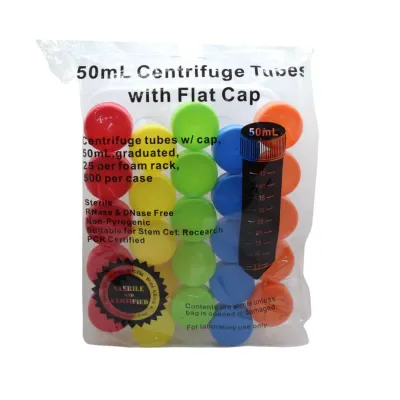
The Colorado Cultures 50 cc/ml Centrifuge Slants with Multi-Color Lids — 25 Pack solve this. Standard 50 ml centrifuge tubes — the lab-equipment workhorse — repurposed for mycology slant culture preservation and small-volume work.
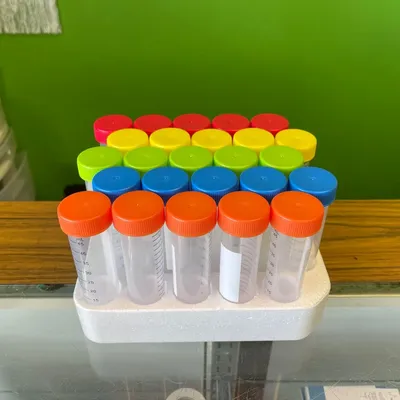
The 25-pack provides enough tubes to build a serious culture library, run a multi-strain isolation project, or stock your lab for ongoing work.
What centrifuge tubes are
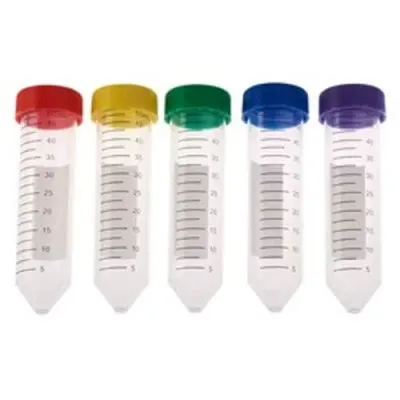
Centrifuge tubes are graduated plastic tubes with screw-on caps, originally designed for use in laboratory centrifuges (machines that spin samples to separate fluids and solids). The standard "50 ml" or "50 cc" volume is the most common size in research and clinical labs worldwide.
For mycology applications, the tubes' design is incidentally perfect for culture work:
- Translucent body — see contents without opening
- Bold volume graduations with ±2% accuracy — measure samples precisely
- Screw-on caps — sealed against contamination, easy to open/close
- Stackable storage — fit in racks, drawers, or refrigerators
- Lab-tested durability — survive normal handling, dropped accidentally, etc.
- Sterile if specified — typical lab-grade tubes are pre-sterilized
The "centrifuge" in the name reflects the tubes' original purpose; for mycology cultivators, the centrifuge function is irrelevant. The tubes are used as small storage containers, slant culture vessels, or sample-handling tools.
Why "multi-color lids"
The 25-pack ships with multi-colored screw-on caps — typically red, blue, green, yellow, white, and other distinct colors. This is more than aesthetic.
For organized cultivation work:
- Color-code by cultivar: All Golden Teacher samples in red-capped tubes, all Penis Envy in blue, etc.
- Color-code by stage: Active LC in green, slant cultures in white, samples to test in yellow
- Color-code by date: Monthly rotation (red for January, blue for February, etc.)
- Color-code by destination: Different colors for different projects or labs
For multi-strain genetics work, this organizational benefit is significant — you can identify dozens of cultures at a glance from the cap color alone. Without color-coding, you depend entirely on labels, which can wear, fall off, or get mistakenly applied to the wrong tube.
Why "boldly graduated"
Centrifuge tubes typically include molded volume markings on the side:
- Major markings at every 5 or 10 ml
- Minor markings between major lines
- Bold contrast (white printing on translucent tubes) for easy reading
This ±2% accuracy is significantly better than improvising measurements with mason jars or plastic containers — you can measure precise volumes for LC preparation, dilutions, or sample handling.
The graduations let you:
- Measure LC samples for inoculation
- Prepare consistent dilutions for spore concentration adjustment
- Track volume changes over time (evaporation, sample uptake)
- Verify volumes when preparing test samples
What you can do with these tubes
Slant culture preservation (primary application)
A "slant" is a small amount of agar in a tube, allowed to harden at an angle so the surface area for mycelium is maximized. Slants are the standard method for long-term refrigerated culture preservation:
- Pour 5-10 ml of agar (heated, sterile) into the tube
- Allow to harden with the tube tilted at 30-45°
- Inoculate the slant surface with a small piece of mycelium-on-agar
- Cap and refrigerate
- The culture lives in dormancy for 12-18 months
- Re-isolate to fresh slants when needed
A 25-pack supports a serious culture library — 25 different strains preserved simultaneously, each in a color-coded tube.
LC sub-sample storage
For cultivators who want to store small samples of LC stocks:
- Pour 10-20 ml of fresh LC into a tube
- Cap and refrigerate
- Use later for inoculating fresh grain spawn or new LC jars
The tubes provide sealed, sterile storage that mason jars can't match.
Sample collection during cultivation
For documenting cultivation work:
- Collect a small sample from each grow at specific stages
- Store in a tube with date/strain label
- Compare samples across grows for cultivar tracking
Sterile water preparation
For LC preparation work:
- Fill tubes with distilled water
- Sterilize the water (or use pre-sterilized water)
- Use as needed for dilutions, rinses, or sample preparation
Multispore syringe preparation
For preparing custom spore syringes:
- Combine dried spore print with sterile water in the tube
- Cap and let solubilize
- Transfer to syringe for inoculation use
Soil and substrate sample testing
For cultivators experimenting with new substrates:
- Collect samples from a grow
- Store in tubes for testing or comparison
- Color-code by substrate type or experiment
Why 25-pack makes sense
The 25-pack reflects realistic cultivation use:
- Casual cultivators: 25 tubes lasts 6-18 months for occasional use
- Active cultivators with culture library: 25 tubes covers most strain preservation needs
- Multi-strain isolation projects: 25 tubes supports a serious isolation workflow
- Long-term genetics work: 25 tubes is the right starting point for building a strain library
For high-volume cultivators or commercial operations, multiple 25-packs may be needed; for hobbyists, one 25-pack often lasts a year or more.
Who buys these
- Cultivators building culture libraries — preserving favored strains long-term
- Genetics testers and breeders — running multi-strain isolation projects
- Multispecies cultivators — organizing diverse cultivars and species
- Researchers and educators — documenting and sharing samples
- LC propagation enthusiasts — sub-storing samples of various LCs
- Anyone doing serious mycology work that requires organized small-volume storage
What this is NOT
- Not a fruiting chamber. Tubes are for storage and preservation, not for growing mushroom fruit bodies.
- Not an autoclave-sterilized product unless specifically certified. Standard centrifuge tubes are sterile from the manufacturer for laboratory use; verify sterilization status with the supplier.
- Not for large-volume work. 50 ml is small. For larger volume storage, use mason jars or larger lab tubes.
- Not pressure-rated. Don't use for pressure-cooker sterilization unless specifically rated for autoclave use. Verify before subjecting to high-pressure conditions.
- Not biodegradable. Plastic tubes — dispose properly in regular trash; not compostable.
For cultivators wanting organized, color-coded, lab-grade small-volume storage for ongoing cultivation work, these tubes are the right standard purchase. The multi-color organization alone justifies the price; the lab-grade precision is the bonus.
The lab-supply quality
Centrifuge tubes are a standard laboratory product sold by major lab suppliers (Corning, BD, VWR, Falcon, etc.) for use in research, clinical, and industrial laboratories worldwide. The Colorado Cultures version is sourced from this lab-supply chain, meaning:
- Manufacturing tolerances are tighter than typical consumer products
- Material quality is laboratory-grade
- Sterility validation is part of the manufacturing process
- Compatibility with downstream lab equipment is verified
You're not buying a generic plastic tube; you're buying a product designed for serious lab work that happens to be perfect for mycology applications.
Pairing with cultivation supplies
The tubes work as part of an organized cultivation workflow:
- Pre-Poured Agar Plates — for the source agar for slants
- Liquid cultures — for sub-sample storage
- Sterile water — for sample preparation and dilution
- Sterile transfer tools — pipettes, sterile loops, scalpels
- Labels and markers — for clear documentation
- Storage rack or holder — for organized refrigerator storage (sold separately)
A complete genetics-work setup includes the tubes plus the destination media and tools.