5lbs Masters Mix for Wood Loving Varieties
Sold by Colorado Cultures
Loading feedback...
$14.99
Estimated US shipping $49.50
30-day returns
Secure checkout — Stripe & PayPal
Final shipping is calculated at checkout.
30-day money-back guarantee

The substrate for wood-loving species
Cubensis is the canonical "first species" for most home cultivators. The substrate workflow for cubensis is well-documented: grain spawn → CVG bulk substrate → monotub fruit. Simple, reliable, accessible.
But once you move past cubensis to gourmet and medicinal species, CVG stops being the right substrate. Oyster mushrooms (Pleurotus ostreatus), lion's mane (Hericium erinaceus), shiitake (Lentinula edodes), reishi (Ganoderma lucidum), and most other gourmets are wood-loving species — they evolved to decompose dead trees, not manure or grain.
For wood-loving cultivation, you need a wood-based substrate. The standard formulation is masters mix: hardwood sawdust + soy hulls + minor amendments. It's the difference between "tried to grow oysters and got minimal flushes" and "grew dense, beautiful flushes of gourmet mushrooms."
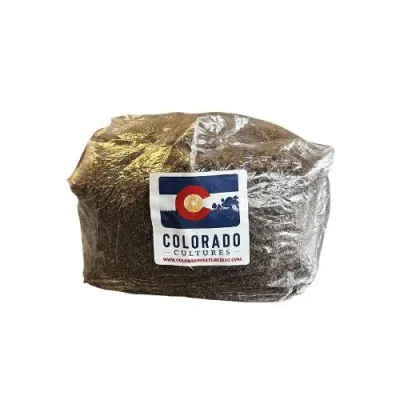
The Colorado Cultures 5lb Masters Mix is exactly this — a professionally-formulated, pre-sterilized 5-pound block of bulk substrate designed for gourmet and medicinal mushroom cultivation. Open the bag, inoculate, fruit. No formulation, no sterilization, no hassle.
What's in the mix
The Colorado Cultures masters mix is a proprietary blend including:
- Hardwood sawdust — primary carbon source; wood-loving species' natural food
- Soy hulls — nitrogen-rich supplement that accelerates mycelium establishment and boosts yields
- No added antibiotics or pesticides
The base ratio (typical masters mix formulations):
- 50% hardwood sawdust
- 50% soy hulls
- + trace amendments for pH and mineral balance
This combination delivers a deep, leafy, slightly veggie aroma when the bag is opened — the signature scent of high-quality soy-hull-supplemented substrate. This isn't a marketing claim; it's an actual quality indicator. Cheap or stale masters mix smells off or unpleasantly woody. Fresh, properly-formulated mix smells "alive" — like rich earth before mycelium has even arrived.
Why this specifically (and not cubensis-style CVG)
Wood-loving species depend on enzymatic breakdown of complex lignin and cellulose — the structural components of wood. Their evolutionary food source is dead trees, not the grain-and-manure substrates that cubensis prefers.
Three key differences:
Factor | Masters mix | CVG |
|---|---|---|
Nutrition | Lignin and cellulose from hardwood, plus protein from soy hulls | Bulk cellulose with deliberately minimal nutrition |
Suits | Wood-loving species that digest dead trees | Compost and manure species such as cubensis |
Heat treatment | Full sterilisation — the nutrition that feeds mycelium also feeds contaminants | Pasteurisation is usually sufficient |
Using CVG to grow oyster mushrooms produces poor yields. Using masters mix to grow cubensis produces poor yields. Match the substrate to the species.
Pre-sterilized = ready to use
This is the critical point. Sterilizing wood-based substrate is significantly harder than sterilizing CVG. Wood-based substrates need longer sterilization times (90-120 minutes at 15 PSI vs. 60-90 minutes for CVG), more aggressive moisture management, and careful pH balancing. Most home cultivators don't have the equipment or experience to sterilize masters mix consistently.
Colorado Cultures has done that work for you. The 5lb block arrives fully sterilized, in a sealed, filter-equipped bag, ready to inoculate the moment it arrives.
The implications:
- No pressure cooker needed for the substrate (you still need it for grain spawn if you make your own)
- No 4-hour sterilization marathon before each grow
- Predictable, repeatable substrate quality across grows
- Contamination risk reduced — commercial sterilization technology produces more reliable results than home pressure cookers
- Faster cycle time — from "want to start a grow" to "actually growing" can be the same day
Yield economics
A 5lb block produces:
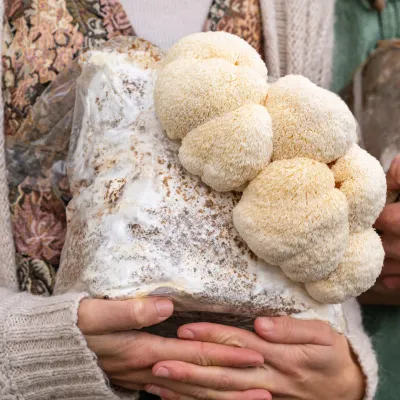
- One large fruiting block suitable for 4-8 flushes of oysters
Many cultivators report 2-5x return on substrate cost in fresh-mushroom yield from a single 5lb block. The math justifies itself within one or two grow cycles.
Compatible species
The masters mix supports virtually all wood-loving cultivated mushrooms:
- Pleurotus ostreatus (Pearl Oyster) — fastest-growing, most beginner-friendly
- Pleurotus eryngii (King Oyster)
- Pleurotus citrinopileatus (Yellow Oyster)
- Pleurotus djamor (Pink Oyster)
- Pleurotus ostreatus columbinus (Blue Oyster) — heavy yields in cooler temps
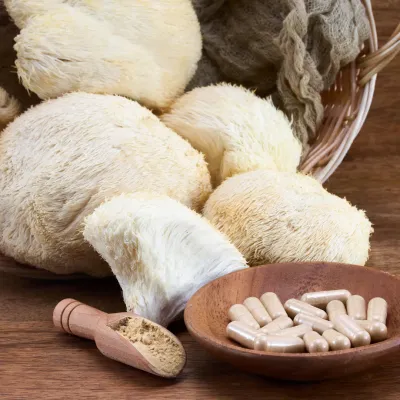
- Hericium erinaceus (Lion's Mane)
- Lentinula edodes (Shiitake) — slightly slower; consider supplemented formulations
- Ganoderma lucidum (Reishi) — slower-growing; check temperature requirements
- Trametes versicolor (Turkey Tail) — useful for medicinal use cases
- Other gourmet/medicinal wood-decomposing species
For specialty applications (specific commercial strains), a custom formulation may yield slightly better results. For most home gourmet cultivation, this masters mix is appropriate.
Use cases
Fruiting directly from the bag
The simplest workflow:
- Receive the 5lb block — sealed, sterilized, ready
- Inoculate by injecting liquid culture or transferring grain spawn through the bag's injection port
- Incubate at 70-78°F for 14-21 days for full colonization
- Cut a fruiting hole in the bag once colonized
- Place in a fruiting environment (Martha tent, indoor greenhouse, custom fruiting chamber)
- Mist regularly to maintain 85-95% humidity
- Harvest as mushrooms develop — typically 2-7 days from pinning to mature fruit
Loading a Martha tent
Multi-block setup for serious gourmet production:
- Buy multiple 5lb blocks (3-6 blocks for a 4-tier Martha tent)
- Inoculate all blocks within the same session
- Incubate simultaneously
- Cut fruiting holes when all blocks are colonized
- Run as a synchronized fruiting batch
Coordinated batches produce dramatic visual flushes and efficient labor — you spend one day setting up and one day harvesting per cycle.
Outdoor or indoor greenhouse cultivation
Some gourmet species can be fruited outdoors in proper climate:
- Pleurotus species — tolerate outdoor temperatures from 50-80°F
- Shiitake — outdoor on hardwood logs (different workflow, but the bag-block approach also works indoors)
- Lion's mane — primarily indoor cultivation due to humidity requirements
The 5lb block is sized for indoor fruiting chambers; outdoor cultivation typically uses larger blocks or log-based systems.
Who buys this
- Cultivators graduating from cubensis to gourmet species — masters mix is the substrate that makes gourmet cultivation accessible
- Home cooks who want gourmet mushrooms — fresh oysters and lion's mane from your own kitchen-corner setup
- Restaurant operators or chefs — small-batch local production of gourmet varieties
- Cultivators with limited time for substrate prep — pre-sterilized blocks save 4-6 hours per grow vs. DIY sterilization
- Medicinal mushroom users — reishi, turkey tail, lion's mane for daily supplementation
- Cultivators with multiple species interests — masters mix works across the gourmet lineup
- Beginners to wood-loving cultivation — removes the substrate-formulation learning curve
- Commercial cultivators — predictable substrate quality at scale
What this is NOT
- Not for cubensis. Use CVG or manure-based substrates for cubensis. This is wood-loving species only.
- Not pre-inoculated. This is sterile bulk substrate; you provide the grain spawn or liquid culture.
- Not for grain spawn directly. Use the Colorado Cultures Sorghum AIO or Binky Bags for grain spawn; this is bulk substrate for the fruiting stage.
- Not autoclave-safe for re-sterilization. The bag is single-sterilization. Don't try to re-sterilize after inoculation.
- Not suitable for log-cultivation species like outdoor shiitake on actual logs.
- Not infinite. A 5lb block is sized for one major fruiting cycle (4-8 flushes); after exhaustion, compost the spent substrate and start fresh.
Pairing across the Colorado Cultures lineup
The masters mix is part of the wood-loving cultivation stack:
- Sorghum AIO bags / Binky Bags / Unicorn Bags — produce grain spawn that you'll use to inoculate the masters mix
- Liquid culture (sold separately as Gourmet/Medicinal LC 10ml) — alternative inoculant
- Sterile Disposable Scalpels #11 — for cutting fruiting holes in the bag
- Sterilized Syringes (10mL Luer-Lock) — for inoculant injection
- Portable Still Air Box / Laminar Flow Hood — sterile workspace for inoculation
- Martha Tent 4-Tier — fruiting environment for multiple blocks
- Ultrasonic Humidifier + Hygrometer — chamber environment management
- 5-Level Food Grade Dehydrator — post-harvest preservation
A complete gourmet cultivation kit using these products supports continuous oyster/lion's mane/shiitake production for months.
A note on the aroma
The "leafy, deep veggie aroma" of fresh masters mix is genuinely a quality marker. Don't be alarmed when you open a fresh bag and it smells like rich, dark soil mixed with sweet decomposing leaves. That's the soy hulls combined with the hardwood at peak activity.
If the bag smells sour, rotten, ammoniated, or off — that's a contamination indicator and the bag should be discarded and reported to Colorado Cultures. Quality control should catch this before shipment, but in rare cases batches can degrade in transit or storage.
A note on storage before use
The 5lb block arrives sterile and sealed. Once you receive it:
- Use within 30 days of receipt for best results
- Store at room temperature (50-75°F) in a dry location
- Avoid heat or freezing
- Keep the bag sealed until inoculation
- Inspect before inoculation — any visible mold, bag damage, or off-odor = discard and contact supplier
The bag's filter patch allows minimal gas exchange but doesn't introduce contaminants. Properly stored, the substrate remains sterile and usable for the listed shelf life.