6" Sterile Cotton Wood Swabs
Sold by Colorado Cultures
Loading feedback...
$4.99
Estimated US shipping $6.60
30-day returns
Secure checkout — Stripe & PayPal
Final shipping is calculated at checkout.
30-day money-back guarantee

The right swab for the species nobody else can print
For the average cultivator, spore prints from a mature mushroom cap on foil or paper is sufficient — drop a print, scrape the spores into a syringe of sterile water, and you have a spore syringe. Standard, easy, well-documented.
But for some species, this approach doesn't work. Specifically:
- Albino cultivars that produce minimal or no detectable spores from natural sporulation
- Tough non-sporulating species that resist print methods
- Specimens captured before full maturity that haven't yet released their spore load
- Species with delicate or sparse gills where standard print techniques damage the fruit body
- Field-collected specimens where you can't transport them to a controlled print environment
For these cases, the standard tool is the 6" sterile cotton wood swab — a long, thin, surgical-grade swab specifically designed to collect spores directly from the gills of mushrooms that won't print conventionally.
What these are
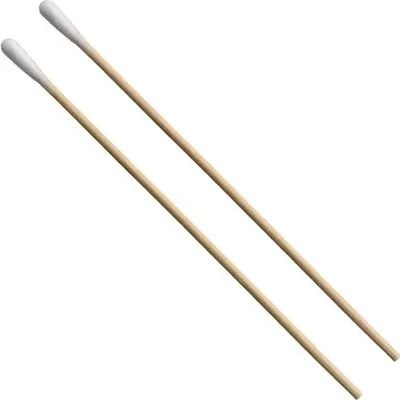
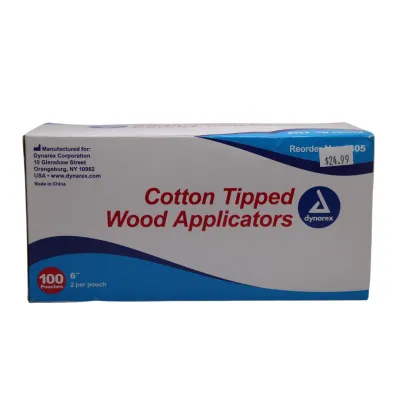
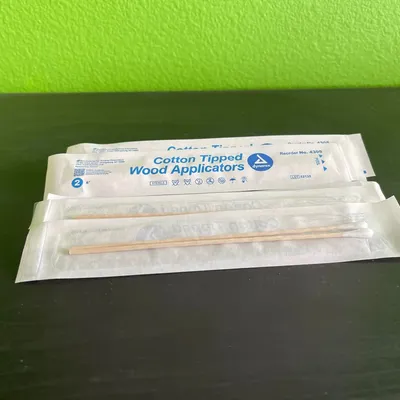
The Colorado Cultures 6" Sterile Cotton Wood Swabs are surgical-grade cotton-tipped swabs, individually sealed and pre-sterilized, with 6-inch wooden handles that give you the reach and precision needed to access mushroom gill surfaces without damaging the cap structure.
Available in two pack sizes:
- 10-pack — for occasional spore collection or testing
- Full box of 100 — for active genetics work, multi-species collection, or bulk supply
How albino spore collection differs from standard prints
A standard mushroom spore print works like this:
- Cap is harvested at peak sporulation
- Cap is placed gills-down on foil or paper
- Cap is covered with a bowl to maintain humidity
- Spores fall naturally from the gills onto the substrate
- The print is scraped into a syringe of water
This works because most mushroom species shed spores in large quantities when conditions are right.
Albino cultivars and some specialty species break this pattern:
- Albino Psilocybe cultivars often have severely reduced or absent spore production
- Some non-sporulating wild specimens never release detectable spores from natural drops
- Specimens captured in non-optimal conditions may produce sparse, incomplete prints
- Some species (lion's mane, certain oysters) have very delicate spore production
For these specimens, direct contact with the gill surface is the only way to collect viable genetic material. A 6" swab is the right tool because:
- The cotton tip captures whatever spore material is present, even in trace amounts
- The 6" length gives you reach to access cap interiors without contaminating the swab on the cap exterior
- The pointed tip can penetrate between gills without damaging them
- Sterile packaging ensures the swab arrives with no biological background contamination
What you collect from a swab
The material gathered from a swab includes:
- Spores (the genetic payload — primary target)
- Cap tissue fragments (also viable for culture work, sometimes more so than spores)
- Mycelium fragments (if any are present in the cap interior)
This mixed sample is then transferred to:
- An agar plate — direct streaking for spore germination
- A liquid culture jar — swirled into LC medium
- A microscope slide — for spore identification and counting
- A spore syringe — by depositing the swab in sterile water
The flexibility of the swab makes it suitable for multiple downstream applications — not just spore syringe creation.
Why cotton + wood specifically
The combination of materials matters:
Why cotton
Cotton fiber has the right balance of:
- Absorbency — captures spores, tissue fragments, and any moisture from the mushroom
- Release — releases captured material onto agar, into LC, or onto microscope slides when transferred
- Softness — doesn't damage delicate gill structures during contact
- Inert chemistry — doesn't react with mushroom tissue or spore proteins
Synthetic swabs (polyester, foam) have different properties — they release material less reliably and can interact chemically with spore samples in ways that compromise culture work.
Why wood
Wooden handles vs. plastic or metal:
- Stable in sterile packaging — doesn't off-gas plasticizers like some plastic handles do
- Rigid for precision — won't bend during gentle manipulation
- Cheap and renewable — environmental advantage over single-use plastic
- Breaks cleanly — if you need to dispose with the cotton tip still attached, wood snaps cleanly
The combination of cotton tip + wooden handle is the mycology standard for swab-based spore collection.
Standard applications
Albino cultivar spore collection
- Identify the mature albino specimen (Albino A+, Penis Envy Albino, AA, or similar)
- Sterilize the swab packaging area with 70% IPA
- Peel open the swab in a sterile environment (still air box or flow hood)
- Gently brush the cotton tip across the gill surface of the albino mushroom
- Transfer the swab to your destination (agar plate, LC jar, or microscope slide)
Tissue culture from delicate species
For species where cutting a wedge would damage the fruit body:
- Open the cap by gently breaking the veil
- Brush the swab across the interior of the cap
- The swab collects both spores and small tissue fragments
- Streak directly onto agar or into LC
Field collection
For wild specimens you can't transport home for full print collection:
- Carry a small kit of sealed swabs in your foraging pack
- When you find an interesting specimen, swab the gills in situ
- Re-seal the swab in a small container or zip-top bag
- Return home and culture from the swabbed sample
This is the right tool for documenting wild genetic diversity without destructive harvest.
Microscopy preparation
- Brush a swab across mushroom gills
- Transfer to a microscope slide
- The cotton releases spores in a thin layer on the slide
- Identify, measure, and photograph spores
This is faster than waiting for a full print and works for species that don't print well.
Why "10-pack or 100-pack"
The pack-size flexibility serves different use cases:
10-pack
- Occasional spore collection — collecting from one or two albino specimens
- Testing the technique before committing to bulk
- Casual cultivator who only needs swabs every few months
- Travel pack for foraging trips
100-pack
- Active genetics work — collecting samples across many cultivars
- Multi-strain comparison projects — needing fresh swabs for each strain
- Bulk supply for ongoing cultivation — building a culture library
- Educators and researchers doing demonstration or research work
- Better per-swab pricing for frequent users
What's NOT included
- Sample containers — separate vials, zip-top bags, or labeled containers for storing swabbed samples
- Agar plates or LC jars — sold separately as destination media
- Microscope slides — sold separately for microscopy applications
- Fixative or preservation media — for long-term storage of swabbed samples
Who buys these
- Albino cultivar cultivators — Albino A+, Penis Envy Albino, AA, and other low-sporulating genetics
- Genetics testers and breeders working with non-sporulating or sparse-sporulating species
- Wild foragers documenting specimens in the field
- Microscopy enthusiasts doing spore identification work
- Mycology educators running spore-collection workshops
- Research workers collecting samples for academic or industry studies
- Anyone collecting spores from delicate or specialty species where standard prints don't work
What this is NOT
- Not a substitute for standard spore prints when standard prints work. For typical cubensis cultivars with abundant sporulation, traditional prints are easier and produce more material per sample.
- Not reusable. Each swab is single-use after exposure to a specimen. Re-using swabs across specimens guarantees cross-contamination.
- Not autoclavable. The cotton fibers and wood handle won't survive pressure-cooker conditions. Use as-shipped (already sterile from manufacturer).
- Not safe for casual handling between specimens. Treat each used swab as a contamination vector — re-seal in a labeled container immediately after use.
For everyone working with albino genetics, sparse-sporulating species, or field-collected specimens, the 6" cotton wood swabs are the professional-grade tool that makes those collections possible.