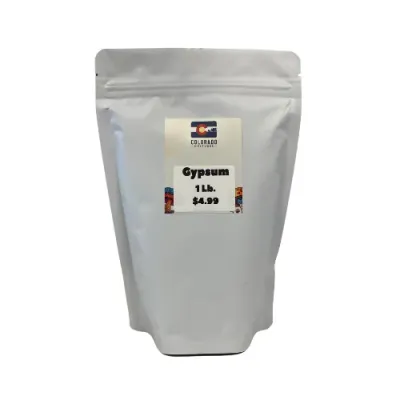
Colorado Cultures 1lb Premium Gypsum
Sold by Colorado Cultures
Loading feedback...
$4.99
Estimated US shipping $11.95
30-day returns
Secure checkout — Stripe & PayPal
Final shipping is calculated at checkout.
30-day money-back guarantee

The mineral that holds your substrate together
Walk into any commercial mushroom growing operation and ask the head cultivator what's in their substrate. You'll hear "coco coir" and "vermiculite" without hesitation. Then, almost always, a small but emphatic addition: "and gypsum, of course."
Gypsum is the third leg of the CVG substrate stool. Coco coir provides the bulk. Vermiculite provides the air pockets and water retention. And gypsum provides everything else — pH buffering, calcium nutrition, structural cohesion, and contamination resistance that the other two ingredients cannot deliver alone.
The Colorado Cultures 1-pound Premium Gypsum bag is the cultivator-sized supply for mixing your own bulk substrate, casing layers, or specialized recipes. Sized for the home grower running one to four monotubs at a time.
What gypsum actually is
Gypsum is a naturally occurring mineral — chemically, calcium sulfate dihydrate (CaSO₄·2H₂O). It's mined from deposits formed by ancient evaporated seas, where dissolved calcium and sulfate ions precipitated and accumulated over millions of years.
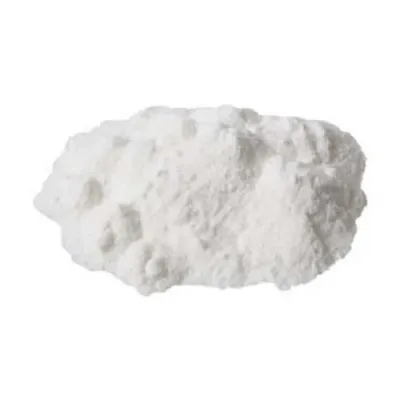
For cultivation use, gypsum is mined, dried, and milled into a fine off-white powder. The powder is virtually pH-neutral, water-soluble in low concentrations, and chemically stable across the temperatures and conditions found in mushroom substrate.
What gypsum does in mushroom substrate
In a CVG mix or any gypsum-amended substrate, the mineral plays four critical roles:
1. pH buffering
Mushroom mycelium grows best in a slightly alkaline-to-neutral environment (pH 6.5-7.5). Substrate pH drifts naturally during colonization — mycelium produces organic acids as it metabolizes carbohydrates, gradually acidifying the substrate.
Without pH buffering, this acidification can:
- Slow colonization as the substrate becomes increasingly hostile to mycelial growth
- Increase contamination risk as acid-tolerant bacteria find an opening
- Reduce yield by suppressing late-stage fruiting
Gypsum buffers against this drift by slowly releasing calcium and sulfate ions that neutralize the acids being produced. The substrate stays in the mycology-optimal pH range for the entire grow cycle.
2. Calcium nutrition
Mushroom mycelium and fruit bodies need calcium for several biological processes:
- Cell wall structure — chitin in fungal cell walls incorporates calcium
- Mycelial enzyme function — many fungal enzymes are calcium-dependent
- Pin formation — calcium concentration affects primordia development
- Fruit body density — calcium-fed mushrooms are denser and meatier
Gypsum is the most available calcium source for mushroom substrate — water-soluble enough that mycelium can access it, but stable enough that it doesn't leach out of the substrate quickly.
3. Structural cohesion
A pure coir-vermiculite substrate has a tendency to compact under its own weight during a long grow cycle. Compacted substrate restricts air movement, encourages anaerobic bacteria, and reduces mycelial spread.
Gypsum resists this compaction by adding mineral mass distributed throughout the substrate. The substrate maintains an aerated matrix even after weeks of mycelial growth and heavy water content.
4. Contamination resistance
The slightly-alkaline buffering effect of gypsum also inhibits many common contaminants. Trichoderma, the most-frequent monotub contaminant, prefers acidic substrate; gypsum-buffered substrate is less hospitable to Trichoderma infection. Many bacterial contaminants similarly prefer lower-pH environments.
The substrate isn't sterile, but it's biased toward conditions that favor mycelium over competitors.
Why "premium grade" matters
The gypsum market includes multiple grades and qualities:
- Drywall gypsum — manufactured for construction; often contains additives, paper fragments, and unreliable purity
- Garden gypsum — sold as soil amendment; variable particle size and purity
- Industrial gypsum — used in cement and plaster; chemically pure but ground for non-food applications
- Premium horticultural / mycology gypsum — sourced for purity and consistency, milled to appropriate particle size for substrate work
The Colorado Cultures Premium Gypsum is sourced for mycology-specific applications:
- Sourced for purity — minimal contaminants, no horticultural additives
- Finely milled — appropriate particle size for substrate mixing
- Consistent quality batch-to-batch
- Mycology-grade specifications that ensure reliable cultivation results
What you can use this for
CVG bulk substrate mixing (primary application)
The standard mycology recipe:
- 2 lbs coco coir (rehydrated)
- 2 lbs vermiculite
- 1 lb gypsum (this product)
A 1-pound bag of gypsum is enough for one batch of 5 lbs of CVG substrate — sized for typical home grow scale.
Casing layer enhancement
For cultivators using vermiculite casing layers, a small amount of gypsum (5-10% by volume) added to the casing improves pH buffering at the fruiting surface.
BRF cake substrate
For traditional brown-rice-flour cake cultivation, gypsum is sometimes added to the BRF mix for the same buffering and calcium benefits.
Manure-based substrate amendments
Some cultivators using horse or cow manure-based substrates add gypsum to balance the often-high-nitrogen content of dung. The calcium helps moderate the substrate chemistry.
Custom substrate experiments
For cultivators developing their own substrate recipes, gypsum is a standard amendment — typically 5-10% by weight of the total mix.
Quantity calculation
How much gypsum for your grow?
| Grow size | CVG substrate needed | Gypsum needed |
|-----------|---------------------|---------------|
| Small (12qt monotub) | 5 lbs CVG | 1 lb (this product) |
| Medium (24qt monotub) | 10 lbs CVG | 2 lbs (2 of these) |
| Large (30qt+ monotub) | 15-20 lbs CVG | 3-4 lbs |
| AIO bag (3 lb spawn) | N/A (substrate pre-mixed) | 0 lbs |
| Casing layer only | N/A | 1/8 to 1/4 lb per chamber |
For a single medium-size grow, the 1-pound bag is exactly the right size.
Who buys this
- Cultivators mixing their own bulk substrate rather than buying pre-mixed CVG
- Casing layer enhancers adding gypsum for pH buffering
- BRF cake cultivators using gypsum as a traditional amendment
- Manure-based substrate cultivators balancing high-nitrogen recipes
- Experimenters developing custom substrate formulas
- Anyone replenishing their substrate-mixing supplies
What this is NOT
- Not a complete substrate — gypsum is one ingredient, typically 10-20% of the mix
- Not a fungicide or contamination cure — gypsum's pH effect inhibits some contaminants but doesn't eliminate them
- Not appropriate for all species — wood-loving species (oysters, lion's mane, reishi) prefer hardwood-based substrates where gypsum is less impactful
- Not asbestos-containing — gypsum is naturally asbestos-free
- Not a food product — for substrate use only
For everyone mixing CVG, casing cubensis fruiting chambers, or stocking the mycology bench, gypsum is the third essential amendment alongside coco coir and vermiculite. The 1-pound bag is the right size for the home grower running 1-4 grows at a time.