Colorado Cultures Pre-Poured Agar Plates – 10 Pack
Sold by Colorado Cultures
Loading feedback...
$21.99
Estimated US shipping $11.05
30-day returns
Secure checkout — Stripe & PayPal
Final shipping is calculated at checkout.
30-day money-back guarantee

Skip the pressure cooker; start with clean plates
If you have ever tried to make agar plates from scratch, you know it's not the gentle, peaceful lab work that mushroom tutorials make it look like. You measure agar powder. You hydrate it carefully. You sterilize in a pressure cooker for 45 minutes. You pour 10-20 plates while everything is at 180°F. You cool them in a sterile environment. You stack them. You wait 48 hours to verify no contamination. Then you have plates.
It's a 3-hour project. It requires equipment (pressure cooker, agar plates, agar powder, malt extract, gypsum), workspace (large clean kitchen counter), and technique (sterile pour without contamination). For a first-time cultivator, getting through this without a single contaminated plate is unusual.
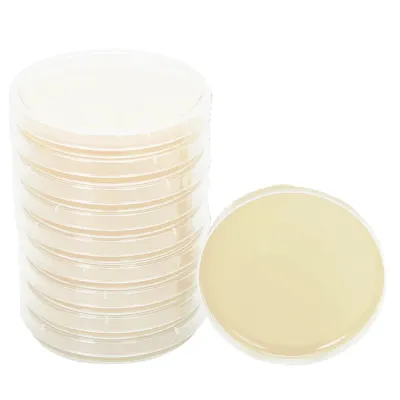
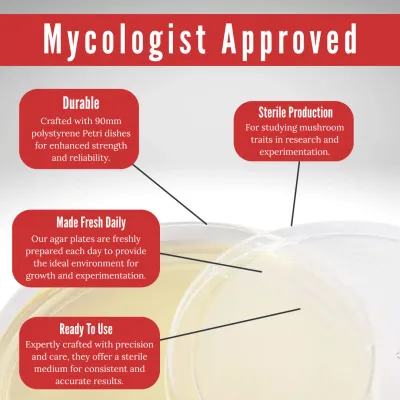
The Colorado Cultures Pre-Poured Agar Plates skip all of that. Crafted fresh in-house, sealed, sterile, ready to use. You receive 10 plates per pack, already poured, already tested for contamination, ready to inoculate the moment they arrive.
Why agar work matters
Most beginner cultivation skips agar entirely. You buy a liquid culture, you inoculate a grain bag, you mix the colonized grain into bulk substrate. No agar required.
But for anything beyond your first few grows, agar becomes indispensable. Agar plates let you:
- Verify the cleanliness of a liquid culture before committing it to expensive grain spawn — drop a single drop of LC on agar and within 5-7 days you'll see if the culture is pure or contaminated
- Isolate single-spore cultures from a multi-spore syringe — pick the strongest mycelium on a plate and re-streak to get a pure genetic isolate
- Rescue contaminated cultures by transferring a clean wedge of mycelium away from a contaminated edge to a fresh plate
- Compare genetics side-by-side by growing different strains on identical plates under identical conditions
- Store cultures long-term by slanting agar in test tubes and refrigerating for 6-12 months
- Diagnose contamination by visual inspection of plates colonized from a known source
Agar work is how serious cultivators move from "hoping the LC works" to "knowing the LC works." It is the bridge between beginner cultivation and professional-quality results.
What's in the pack
Each pack contains:
- 10 sterile pre-poured agar plates — sealed and ready for use
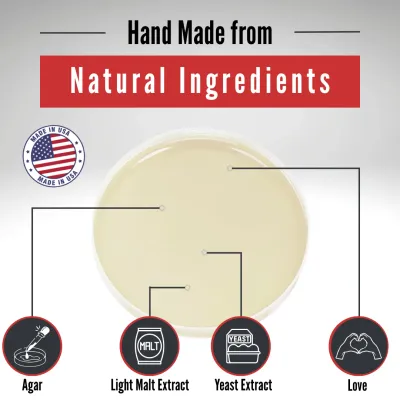
- Light Malt Extract (LME) with Bacteriological Agar as the standard medium
These plates are crafted fresh in-house at Colorado Cultures' Denver facility. The pour-to-shipment time is short — you're receiving plates made within the recent batch, not plates that have been sitting in a warehouse for months losing moisture and bioactivity.
Why LME with Bacteriological Agar
The recipe matters. Colorado Cultures uses Light Malt Extract (LME) with Bacteriological Agar for these plates — and this combination is the mycology gold standard for general-purpose cultivation work.
Why Light Malt Extract (LME)
Malt extract is the carbohydrate source that feeds the mycelium. Light malt extract is the right choice for mycology because:
- Balanced nutrient profile — provides sugars, proteins, and minerals at ratios that encourage healthy mycelial growth without over-feeding
- Doesn't overwhelm the mycelium — heavier malts (dark malt extract, dextrose malt) can encourage too-fast growth that goes ropy, scraggly, or develops aerial mycelium prematurely
- Visually clear medium — LME produces a pale honey-colored agar that makes it easy to see mycelial growth and any contamination clearly through the plate
- Mild flavor profile — for species you'll eventually grow on, LME doesn't leave residual flavors that affect the fruit body
Why Bacteriological Agar (vs. plain agar-agar)
Bacteriological agar is purified, ash-free, low-mineral agar specifically refined for laboratory and microbiological work. Compared to the food-grade agar-agar sold for cooking applications:
- Higher purity — less ash residue, fewer inhibitors of mycelial growth
- More consistent gel strength — plates set firmly with predictable consistency
- Lower contamination risk — food-grade agar carries small amounts of bacteria that can survive sterilization
- Better optical clarity — translucent, allowing easier inspection of growth
The combination of LME + bacteriological agar produces plates that are ideal for the vast majority of mycology applications — culture transfers, contamination testing, isolation work, and species exploration.
What you can do with these plates
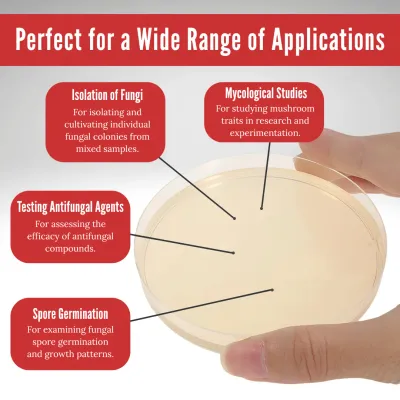
Tissue culture transfer
Take a small wedge of tissue from a fruiting mushroom (cleanly cut from inside the cap, where the tissue hasn't yet been exposed to airborne contamination), place it on a fresh agar plate, and within 7-10 days you'll have a pure mycelial culture you can transfer to grain spawn or liquid culture.
Liquid culture purity testing
Take a single drop of liquid culture, place it in the center of an agar plate, and observe over 5-7 days. Clean culture shows pure white mycelium spreading evenly. Contaminated culture shows competing colors, textures, or growth patterns. This single test will save more grain than you can imagine by catching bad LC before you inject it into expensive substrate bags.
Multi-spore syringe to single-spore isolate
Streak a multi-spore syringe across an agar plate. As individual spores germinate, you'll see distinct mycelium colonies growing from each spore. Pick the strongest, fastest-growing colony and transfer a wedge to a fresh plate. Repeat 2-3 times. You now have an isolated genetic strain you can confirm is consistent.
Contamination rescue
If a culture starts showing contamination at the edges but still has clean mycelium in the center, you can sometimes rescue the culture by cutting a wedge of pure mycelium away from the contamination and transferring to a fresh plate. The new plate has a head start in a contamination-free environment.
Cross-species testing
Pour two plates from the pack with different culture sources and observe how each one grows. Direct visual comparison of mycelium texture, growth speed, aerial mycelium, and pigment lets you select the genetics best suited to your cultivation goals.
Who buys these
- Cultivators transitioning beyond first grows who want the verification capabilities that agar provides
- Anyone who has lost a grow to contamination and wants to test future LCs before committing them to expensive spawn
- Genetics testers and breeders doing single-spore isolation work
- Beginners who want to learn agar technique without spending 3 hours making their own plates first
- Educators and demo presenters who need ready-to-use plates for workshops
- Researchers and small-batch growers doing controlled comparative work
- Cultivation collectives or shared workspaces where one person buying for multiple users saves the agar-prep labor
What these are NOT
- Not for advanced media work. These are standard LME plates. For specialized media (Sabouraud dextrose, potato dextrose, or supplemented media), you'll need to make your own plates from custom recipes.
- Not pressure-resistant. Standard Petri dishes; do not autoclave or pressure-cook them again. They're already sterile from manufacture.
- Not a sterilization shortcut for the rest of your workflow. Plates arrive clean; you still need clean technique to inoculate them, sterile tools to transfer mycelium, and proper storage to keep them clean.
For everyone else, pre-poured plates are the cheapest, fastest way to add agar work to your cultivation practice. The time saved on agar preparation translates directly to time spent actually doing mycology — selecting, isolating, comparing, propagating.
Bulk pricing
For working cultivators, ordering plates in bulk every 1-2 months ensures a steady supply for ongoing agar work without batching trips to your local supplier.