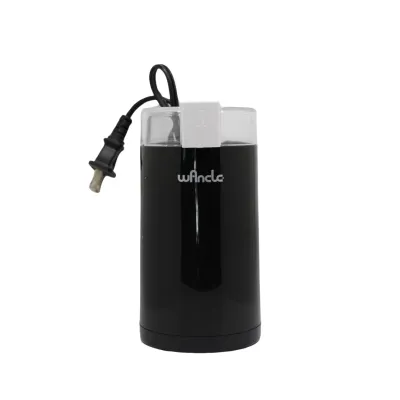
Electric "Coffee" Grinder
Sold by Colorado Cultures
Loading feedback...
$25.99
Estimated US shipping $11.95
30-day returns
Secure checkout — Stripe & PayPal
Final shipping is calculated at checkout.
30-day money-back guarantee

The bridge between harvest and consumption
You spent 6-8 weeks growing mushrooms. Spawn run, pin formation, fruiting, harvest, dehydration. The finished product sits in a jar on your shelf — dried fruit bodies, maybe an ounce, maybe a half-pound. Now what?
For most cultivators, the next step is grinding. Dried whole mushrooms are awkward to consume:
- Hard to dose precisely — a "half a cap" doesn't translate to grams
- Chewy texture that many users find unpleasant
- Slow digestion — whole-fruit-body chitin is harder to break down than powder
- Inconsistent absorption — uneven dose distribution across a single fruit body
Grinding into powder solves all four problems:
- Weight-precise dosing — 0.25 g powder is repeatable; "a small cap" is not
- Easier consumption — powder mixes into chocolates, gummies, capsules, drinks
- Faster digestion — surface area increased dramatically, bioavailability improves
- Even distribution — well-mixed powder delivers consistent dose across servings
The Colorado Cultures Electric "Coffee" Grinder is purpose-built for this work. A small-bowl, blade-style electric grinder originally designed for coffee beans and small spices — and repurposed by cultivators for the specific task of producing fine, even mushroom powder.
Why "coffee grinder" instead of a dedicated mushroom grinder
The truth is, a small blade-style coffee grinder is the right tool for grinding dried mushrooms. The market has tried specialized "mushroom grinders" (hand-crank pepper-style devices, mortar-and-pestle kits, etc.), but the consensus across experienced cultivators is that a quality coffee grinder produces finer, more consistent powder with less effort.
The reason: mushroom fruit bodies behave similar to coffee beans when dried — light, slightly fibrous, brittle, and respond well to blade-impact grinding. A burr grinder (the expensive coffee-shop kind) would crush rather than slice, which is poor for mushrooms. A blade grinder slices and pulverizes simultaneously, producing the fine powder mushroom prep requires.
The "coffee grinder" label is also useful for legal and discretion reasons in some contexts — but the engineering matches the task regardless.
What's in the box
- The grinder unit with stainless steel blades and 2.1 oz capacity grinding bowl
- 2-in-1 brush & scoop tool for cleaning the bowl and transferring ground powder
- Power cord and plug
Grinder specifications at a glance
- Bowl capacity: 2.1 oz (approximately 60 g of dried mushroom — enough for several batches of capsules or one moderate tincture)
- Blades: Durable stainless steel
- Switch: Pulse-operated (hold button to grind, release to stop)
- Overheat protection: Yes — built-in thermal shutoff prevents motor damage
Why these specifications matter
The 2.1 oz bowl size
Many coffee grinders have larger bowls (4-6 oz). The 2.1 oz size is the sweet spot for mushroom work:
- Small batches fit cleanly — typical home cultivators process 0.5-2 oz of dried mushroom per session, not pounds
- Even grinding — smaller bowl means more uniform particle size since material stays in better contact with the blades
- Easier cleaning — smaller bowl = less surface area to wipe down between batches or between species
- Less waste — less ground powder stuck in the bowl after transfer
Larger bowls (6+ oz) are optimized for grinding large quantities of coffee beans in one shot. For mushroom work, the smaller bowl is better.
Stainless steel blades
Why stainless steel matters:
- Doesn't corrode during cleaning (which often involves IPA, water, or moisture)
- Holds an edge through years of repeated impact grinding
- Food-safe — no reaction with mushroom compounds or food acids
- Sharp edge — stainless steel takes a finer edge than mild steel
- Heat tolerant — high-friction grinding generates heat that can damage softer metals
Overheat protection
Mushroom material can be more demanding on small motors than dry coffee beans:
- Slightly more moisture content (mushrooms held in storage at 5-7% moisture absorb humidity slowly)
- Fibrous structure — small pieces of stem or veil material can resist blade slicing
- Density variation — caps and stems behave differently in the bowl
Without overheat protection, a small grinder can burn out the motor during long sessions. The Colorado Cultures unit's thermal shutoff prevents this — the unit pauses for cooling rather than burning out.
Pulse operation
Most coffee grinders use a pulse-button design rather than a continuous switch. Pulse is better for mushroom work because:
- Particle size control — short pulses produce coarser powder; long sustained pulses produce fine powder
- Prevents over-grinding — easy to stop the moment you reach the desired texture
- Allows mid-session stirring — pause, shake the bowl, resume for more even results
The 2-in-1 brush & scoop
Cleaning is the most-overlooked aspect of grinding work. A clean grinder produces clean, uncontaminated powder; a dirty grinder cross-contaminates between batches and reduces shelf life of stored powder.
The included brush & scoop tool is designed for this:
- Brush side: Stiff bristles for sweeping powder out of corners and from around the blades
- Scoop side: Curved spoon for transferring powder from the bowl to your storage container
- Single-tool design: No need to source separate cleaning brushes
For thorough deep cleaning (between species, between batches), see the How to Use section.
What you can grind
Primary: Dried mushrooms
The intended use:
- Cubensis fruit bodies (caps, stems, or whole) — fully dried (5% moisture or less)
- Functional mushrooms (lion's mane, cordyceps, reishi, turkey tail, chaga)
- Wild-harvested mushrooms (assuming proper drying and identification)
Secondary: Other small dry materials
- Coffee beans — the original intended use; grinds for espresso, drip, French press
- Whole spices — cumin seeds, peppercorns, allspice berries, cinnamon sticks
- Tea leaves for fine matcha-style preparation
- Sugars for powdered sugar from granulated
- Nuts and seeds (with caveats — see What This Is NOT)
Avoid
- Very wet materials — fresh herbs, juicy ingredients (use a different tool)
- Hard materials — coffee beans not pre-cracked, dried whole bones, etc.
- Sticky materials — caramelized sugar, raisins (gum up the blades)
- Plastic or non-food items — these are food-grade blades, not industrial grinders
Why a separate grinder for mushrooms
Most cultivators don't share their mushroom grinder with their morning coffee grinder. Three reasons:
- Flavor cross-contamination — Mushroom powder will leave residue in the bowl and on the blades that flavors subsequent coffee batches
- Decarboxylation of trace compounds — Some mushroom compounds are heat-labile; repeated grinding without thorough cleaning can introduce trace amounts to other ground material
- Personal hygiene — Mushroom dust is a known allergen and irritant; mixing with food prep equipment is poor practice
Either:
- Dedicate this grinder to mushroom use only (recommended)
- Thoroughly clean between species and between mushroom-and-non-mushroom sessions (challenging — see cleaning instructions)
Use cases
Microdose capsule production
- Grind 14-28 g of dried mushroom to fine powder
- Load into size 00 vegan capsules using a capsule filling machine or hand-filling
- Typical yield: 60-120 capsules at 100-300 mg per capsule
- The Chef Cookbook (also from Colorado Cultures) covers capsule preparation in detail
Tincture preparation
- Grind 14-28 g of dried mushroom to coarse-to-fine powder
- Combine with 8-12 oz high-proof alcohol in a glass jar
- Macerate 4-6 weeks; strain and bottle
- Finer grinds extract faster and more completely than coarser
Gummies and chocolates
- Grind 5-15 g of dried mushroom to ultra-fine powder
- Incorporate into pectin/gelatin gummies, chocolate, or other carriers
- Fine powder is essential for even distribution per serving
- See Chef Cookbook recipes
Smoothies and beverages
- Grind 0.5-2 g per serving immediately before use (best fresh)
- Add to smoothie, coffee, or other beverages
- Less common — most users grind a batch ahead and use over time
Cooking with functional mushrooms
- Grind functional species (lion's mane, cordyceps, reishi) for incorporation into cooking
- Fine powder dissolves into soups, sauces, and broths
- Coarser grinds add umami texture to sauteed dishes
Who buys this
- Cultivators harvesting their own mushrooms who need to process dried fruit
- Microdosers producing their own capsule or chocolate dose forms
- DIY tincture makers who want fresh-ground material for maceration
- Cookbook users (especially the Chef Cookbook) who need fine powder for recipes
- Functional mushroom users who buy whole dried fruit bodies and grind their own
- Travelers and gift-givers preparing portable, dose-controlled mushroom products
- Anyone tired of choking down whole dried mushroom and ready to upgrade their consumption methods
What this is NOT
- Not a mortar and pestle. The grinder is an electric tool; for manual grinding, use a mortar and pestle (slower, less consistent particle size).
- Not a high-volume processor. Process 1-3 oz per session, not pounds at a time. For commercial volumes, look at larger-capacity grinders.
- Not autoclave-safe. The motor and electronics can't tolerate sterilization heat. Wipe-down cleaning only.
- Not waterproof. The motor housing is NOT submersible. Don't immerse in water during cleaning.
- Not designed for wet ingredients. Use only with dry materials (mushrooms at 5% moisture or less, coffee beans, dry spices). Wet material will gum the blades and damage the motor.
- Not industrial-rated. Designed for home use, not continuous-duty commercial operations.
- Not a substitute for proper drying. Mushrooms must be fully dried before grinding. Grinding wet mushrooms produces paste, not powder, and damages the grinder.
Pairing with the Colorado Cultures lineup
The grinder is part of the harvest-to-consumption stack:
- 5-Level Food Grade Dehydrator — dry your harvest before grinding. The dehydrator and grinder are the canonical pair.
- The Mushroom Chef Cookbook / The Psilocybin Mushroom Bible — recipes that depend on ground mushroom powder
- Dual Extracted Pure Mushroom Tincture — alternative if you don't want to grind your own (Colorado Cultures sells pre-made tinctures)
- Super Food Extract Powders — alternative if you want ready-to-use powders without grinding
- Storage containers — small dark glass jars with airtight lids for storing ground powder
A note on grinder lifespan
A quality small grinder, well-maintained, lasts 3-5+ years in regular use. Failure modes:
- Motor burnout (from neglecting overheat shutoffs or grinding wet material)
- Blade dulling (from years of regular use; not user-serviceable, requires replacement)
- Switch failure (mechanical wear on the pulse button)
- Bowl scratching or warping (cosmetic; doesn't affect function)
When the grinder fails, replace the unit. Repair is rarely cost-effective at this price point.