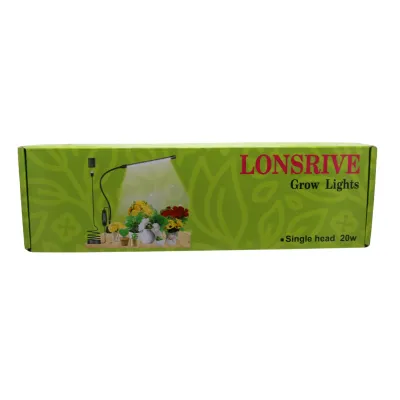
Mushroom Grow Light
Sold by Colorado Cultures
Loading feedback...
$25.99
Estimated US shipping $11.05
30-day returns
Secure checkout — Stripe & PayPal
Final shipping is calculated at checkout.
30-day money-back guarantee

The light that triggers fruiting (and what most cultivators get wrong about it)
Most cultivation guides tell you the same thing: "mushrooms need some light to fruit, but not much — ambient room light is fine." This is technically true and practically misleading.
Yes, cubensis and most cultivated mushrooms will fruit under ambient indirect light. They will also fruit under almost any indoor lighting condition. But cultivators who actively manage lighting consistently report:
- Faster pin initiation (days, not weeks)
- More uniform pinning across the substrate surface
- Denser fruit bodies with better cap development
- More consistent flush timing
- Better photographic documentation of cultivars
The difference between "any light works" and "optimal light produces better grows" is significant. The Colorado Cultures Mushroom Grow Light is designed for the optimal end of that spectrum — high-tech lighting engineered to mimic natural light and trigger mushroom development at maximum efficiency.
What "mimicking natural light" means
Mushrooms in the wild evolved under specific light conditions:
- Filtered sunlight through forest canopy — never direct intense rays
- Indirect light from sky with diffuse blue-spectrum components
- Day-night cycles that mirror photoperiod-driven biological responses
- Specific wavelengths that fungal cells detect via different receptor proteins
The standard ambient bedroom light has none of these qualities optimally:
- Most household LED light is warm-spectrum (2700-3000K), missing the blue spectrum mushrooms prefer
- Daylight bulbs at 5000K+ approach better but still aren't optimized
- Window light has variable intensity and inconsistent timing
- Most ceiling LEDs have wrong wavelength balance for mycology
A purpose-built mushroom grow light optimizes for:
- Blue-spectrum wavelengths (450-500nm) for pin initiation
- Some red-spectrum (660nm+) for fruit body development
- Color temperature around 5000-6500K (daylight)
- Adjustable intensity for different cultivation phases
- Cool operation that doesn't dry the substrate or stress mycelium
Why lighting matters during fruiting
Mushroom pinning is a light-dependent process in most cultivated species. The fungal cells contain photoreceptors that respond to specific wavelengths:
Pin initiation
When colonized substrate is exposed to blue-spectrum light (450-500nm), the mycelium receives a signal that "the substrate surface is exposed" — a natural cue that fruiting conditions are appropriate.
In the wild, this signal happens when a mature mushroom-colonized log or pile reaches the surface or has its bark wear away. The mycelium responds by initiating reproductive structures (fruit bodies = mushrooms).
In cultivation, the cultivator artificially provides this signal through targeted lighting. Stronger, more appropriate-wavelength lighting produces faster, more uniform pin initiation than ambient light.
Fruit body development
Once pins form, red-spectrum light (660nm+) supports continued development:
- Cap expansion
- Stem elongation
- Cell wall thickening
Standard sunlight contains both blue and red spectrums; a purpose-built grow light replicates this balance.
Photoperiod sensitivity
Many cultivars respond to light cycle (photoperiod) in addition to wavelength:
- 12 hours light / 12 hours dark — matches natural daylight rhythm
- Continuous light — works but may stress some cultivars
- Insufficient light cycle — slows fruiting
The grow light can be paired with a simple timer to provide consistent photoperiod control.
Who buys this grow light
- Cultivators with monotubs in low-light spaces (basements, closets, garages)
- Cultivators in seasonal-darkness regions (winter in northern latitudes)
- Pin-initiation troubleshooters trying to coax cubensis or oyster grows to start fruiting
- Genetics testers and breeders wanting consistent lighting across cultivar comparisons
- Multi-tub cultivators running Martha tents that need shared lighting
- Documentation and photography enthusiasts wanting consistent visual conditions
- Anyone whose grows have stalled at the pre-pinning phase — sometimes the missing variable is light
What "high-tech" means
The Colorado Cultures Mushroom Grow Light is engineered for cultivation specifically, not adapted from generic plant grow lights or houseplant lamps. The differences:
- Mushroom-tuned spectrum rather than plant-tuned (plants need different wavelengths than fungi)
- Cool LED operation — no infrared heating that would dry substrate
- Compact form factor — fits in monotubs and chambers without taking excessive space
- Low power draw — supports continuous operation without significant electricity cost
- Easy mounting — clamp, magnet, or adhesive options for fruiting chamber installation
- Durable construction — handles humid cultivation environments
What you can do with this light
Single fruiting chamber lighting
Mount the light over a monotub, fruiting bag, or open fruiting tray. The light triggers pin initiation and supports development for that chamber.
Multi-chamber Martha tent lighting
Place the light at the top of a Martha tent to provide shared lighting for multiple tubs simultaneously. One light replaces multiple ambient sources.
Cultivation photography setup
The consistent color temperature and intensity make this an excellent cultivation photography light — capturing accurate-color images of cultivars in development.
Multi-stage cultivation
Use the light during the fruiting phase only. Mycelium during colonization doesn't need light (and may even be slightly slowed by it). The light becomes a tool you turn on when fruiting begins.
Lighting during winter or low-light conditions
In northern climates with minimal natural daylight in winter, the grow light eliminates seasonal slowdown in cultivation cycles. Year-round consistent fruiting becomes achievable.
Why this matters for cubensis specifically
Cubensis is one of the most light-responsive cultivated species. Cubensis-specific lighting effects:
- Pin initiation: Cubensis benefits more from active lighting than most gourmet species
- Phototropism: Cubensis fruit bodies bend toward light sources; uniform lighting produces more upright growth
- Cap pigmentation: Light intensity affects the depth of golden coloring on Golden Teacher and similar cultivars
- Flush timing: Consistent lighting helps synchronize pin sets
For cubensis cultivators specifically, upgrading from ambient to dedicated lighting is one of the higher-leverage equipment investments in the cultivation toolkit.
What this is NOT
- Not required for cultivation. Mushrooms will fruit under ambient light. The grow light optimizes rather than enables.
- Not a plant grow light. Plant grow lights are tuned to different wavelengths (chlorophyll absorbs different frequencies than fungal photoreceptors). Plant lights work for mushrooms but aren't optimal.
- Not a heat source. Modern LED grow lights produce minimal heat. If you need temperature control in your cultivation space, source a heating mat separately.
- Not appropriate for sterile lab work. Lab spaces need bright, even, neutral-color lighting. Grow lights have specific spectrum profiles for cultivation, not lab work.
- Not waterproof. While the light tolerates humid environments, don't submerge or spray directly with water.
For cultivators ready to optimize fruiting outcomes beyond what ambient lighting delivers, the mushroom grow light is the right targeted upgrade. Modest investment, measurable cultivation improvement.
Comparison to alternatives
For lighting cultivation chambers:
| Source | Wavelength fit | Cost | Best for |
|--------|---------------|------|----------|
| Ambient room light | Variable, often suboptimal | Free | Casual cultivation |
| Window daylight | Variable, seasonal | Free | Bright south-facing rooms |
| Standard LED bulb (5000K) | Decent | Low | Improved over ambient |
| Plant grow light | Decent — slightly off-spectrum | Mid | Multi-purpose if also growing plants |
| Dedicated mushroom grow light (this product) | Optimized | Mid | Cultivation-specific use |
For most cultivators upgrading from ambient to active lighting, the dedicated mushroom grow light is the right purchase — purpose-built for the specific cultivation use case.
Pairing with cultivation chambers
The grow light works with:
- Full Flush Bin — mount on top or above the chamber
- H2Shroom Fruiting Chamber — supplements the chamber's lighting if not built-in
- Martha Tent 4-Tier — mounted at top to illuminate all tiers
- DIY monotubs — clamp or adhesive mount to the lid or stand
- Open fruiting trays — overhead lighting for substrate exposed without a cover
- Genetic comparison setups — consistent lighting across multiple test grows
A single light source unifies the lighting environment across multiple cultivation contexts.