Portable Still Air Box
Sold by Colorado Cultures
Loading feedback...
$54.99
Estimated US shipping $11.95
30-day returns
Secure checkout — Stripe & PayPal
Final shipping is calculated at checkout.
30-day money-back guarantee

The cheap, fast path to laboratory-grade sterility
Every serious mycology project eventually hits the same wall: the air in your room is contaminated, and there is no way to do sterile work in it without protection. Open a Petri dish on your kitchen counter and within thirty seconds you have airborne mold spores landing on the agar. Inoculate a grain bag in your living room and the dust kicked up by your own movement is enough to seed Trichoderma into the bag. Routine cultivation work demands a clean-air environment, and most home growers simply don't have one.
The two traditional solutions are both expensive and bulky. A HEPA flow hood costs $300-$900, requires a permanent install footprint, and consumes electricity every minute it runs. A dedicated lab room is even more committed — square footage, ventilation modifications, sealed doors, dedicated HVAC.
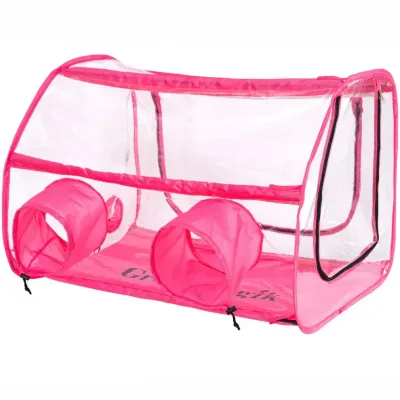
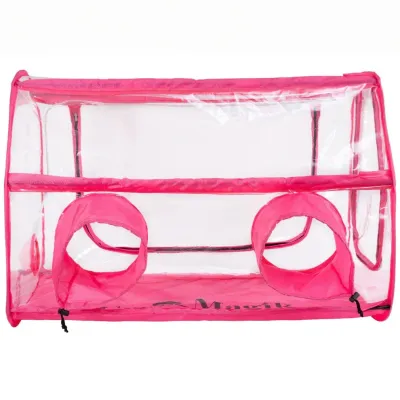
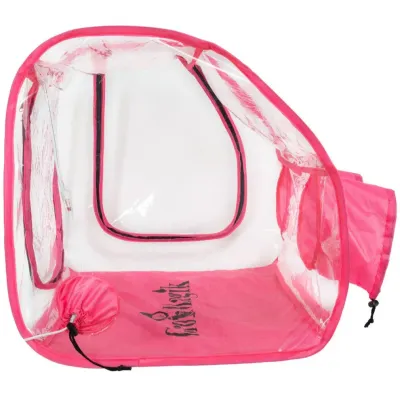
The Gro Magik Still Air Box is the third option that most cultivators don't realize is available: an enclosed, hand-access workspace that creates a sterile working environment by eliminating air movement rather than filtering it.
How a still air box actually works
The science behind a SAB is older than most cultivators realize. Airborne contaminants — mold spores, dust, bacterial cells — don't actually move through air on their own. They are carried by air currents. A room with circulating HVAC, foot traffic, opening doors, or even a person walking past has dozens of micro-currents moving contaminants from surface to surface.
A still air box exploits a simple principle: if the air inside the box is not moving, the contaminants inside the box are not moving either. Existing contaminants settle to the bottom over the course of about 5-15 minutes after the box is sealed. Once they've settled, you can work in the upper portion of the box — agar plates, grain bag injection ports, liquid culture syringes — with effectively the same contamination risk as a flow hood, for under $50.
The trade-off vs. a flow hood: you have to be deliberate about your movements. Sudden gestures, fast hand motions, or pulling material in and out of the box re-stir the settled contaminants. The technique is to work slowly, methodically, and with your hands already positioned inside the box before you start.
What the Gro Magik SAB delivers
The Gro Magik design solves the three problems that ruin most DIY SABs:
- Setup and breakdown in under one minute. Most DIY still air boxes are a permanent thing once you build them — a 30-gallon tote with two arm holes cut into the side, sealed with foam. The Gro Magik design is a purpose-built collapsible structure that you can set up on a kitchen table when you need it and store flat in a closet when you don't.
- Sturdy enough for repeated use. DIY plastic-tote SABs flex, warp, and develop cracks at the arm holes after a few months. Gro Magik builds for long-term use — the structure holds shape through hundreds of work sessions.
- Light enough to transport. This matters more than it sounds. You can take a SAB to a friend's grow to help them with a transfer. You can move it between rooms based on where the cleanest air is. You can pack it for festival or fieldwork.
The result is what the product name claims: a portable laboratory environment that transforms any indoor or outdoor space into a clean working zone for the duration of your sterile work.
What you can do inside a SAB
- Agar work. Pour fresh plates. Transfer wedges between plates. Isolate single-spore cultures from a multispore plate. Photograph cultures. Inspect colonies for contamination.
- Inoculate grain bags. Punch the syringe through the injection port inside the box rather than out in the open. The chance of an airborne spore landing during the moment of needle entry drops by orders of magnitude.
- Liquid culture work. Draw fresh LC from a master jar into individual syringes. Transfer LC between sterile containers. Photograph LC for genetics records.
- Multi-spore syringe work. Load syringes from spore prints, refill solution, examine under a microscope or magnifying glass.
- Monotub prep work. Drop in colonized spawn over substrate, mix, smooth the casing — all the high-contamination-risk steps that happen during a monotub build.
- Pre-grow inspection and photography. Document your culture's progress with clean photographs taken under the SAB's controlled environment, without dust or ambient air to fog the image.
Indoor or outdoor — both work
A SAB doesn't require a clean room around it. It creates its own clean zone. This means you can:
- Set up on a kitchen counter without HVAC modifications
- Work in a garage without dust filtration
- Run outdoor sessions at a campsite, a farm, or a foraging event — wind doesn't matter once the lid is closed
- Use in a coat closet where you'd never otherwise do sterile work
The flexibility is the entire point. Where a HEPA flow hood demands a permanent install and a clean room, a SAB demands neither.
Who buys this
- Hobbyist cultivators ready to upgrade from "fingers crossed" sterile technique to a real workspace
- Anyone who has lost a grow to contamination and wants the cheapest, fastest intervention to prevent the next loss
- Cultivators who travel or move frequently — apartment renters, students, military, full-time RVers — who can't justify a permanent flow hood
- Mycology educators and demo presenters who need a portable demonstration environment
- Researchers and small-batch growers doing genetics work where airborne contamination is the single biggest variable
- First-time agar workers who want to start with the right tool rather than trying to do agar in open air
What this is NOT
- Not a HEPA flow hood replacement for industrial or commercial-scale work. At scale, active HEPA filtration with positive airflow is the right tool.
- Not a guarantee of contamination-free work without proper technique. Even with a SAB, you still need clean gloves, surface sterilization, masked breath, and slow deliberate movements.
- Not a permanent solution for a serious lab. If your cultivation operation scales past hobbyist-level, expect to graduate to a flow hood eventually. The SAB is the cheapest, fastest, most portable bridge to that point.
For most cultivators, the SAB is the single biggest contamination-rate improvement they can make, for under the cost of a single high-quality liquid culture. The math is simple: one prevented contamination event pays for the box several times over.