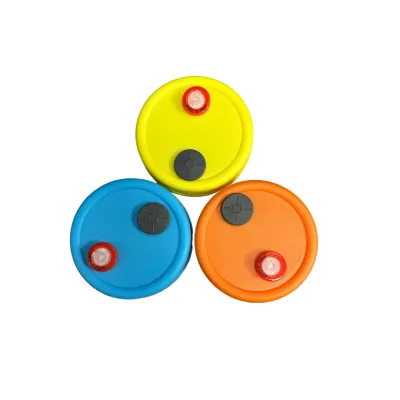
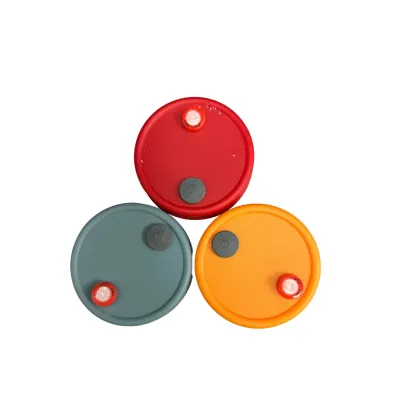
Reusable Mycology Lids - Regular & Wide Mouth
Sold by Colorado Cultures
Loading feedback...
$4.49
Estimated US shipping $6.60
30-day returns
Secure checkout — Stripe & PayPal
Final shipping is calculated at checkout.
30-day money-back guarantee

The DIY upgrade that pays for itself in 3 grows
Every home cultivator eventually faces the question: "Do I keep buying pre-sterilized grain bags, or do I make my own grain spawn in jars?"
Pre-sterilized bags (Sorghum AIO, Binky Bags) are convenient. You inject, wait, use. But at $15-30 per bag and 5-15 bags per year, the costs add up fast — and you're locked into the bag sizes the supplier offers.
Jar-based grain spawn is the alternative. You buy bulk grain, hydrate, fill mason jars, sterilize in a pressure cooker, inoculate, and you're producing grain spawn for a fraction of the per-unit cost of pre-made bags. The limiting factor is the lid — standard canning lids don't allow gas exchange during the spawn run, and the mycelium suffocates from CO₂ buildup.
The traditional solution: drill holes in the lids and add micron filters and self-healing injection ports — a 20-minute DIY job per lid, with variable quality depending on your drill press and parts sourcing.
The Colorado Cultures Reusable Mycology Lids skip the DIY entirely. Pre-assembled, professional-grade mycology lids that screw onto standard canning jars. Each lid has:
- An integrated injection port — self-healing rubber for sterile inoculation
- A silicon O-ring seal — keeps grain sterile and contamination out
- A breathable syringe filter — allows gas exchange during the spawn run
- Easy-disassembly design — comes apart for thorough cleaning between batches
Compatible with standard glass canning jars. Available in regular mouth and wide mouth sizes to fit your existing jar collection.
Why mycology lids vs. bagged grain spawn
Factor | Reusable mycology lids | Pre-made spawn bags |
|---|---|---|
Reuse | Reusable; the injection port is replaceable | Single use |
Ongoing cost | One-off, then only grain and electricity | Recurring with every batch |
Inspection | Glass lets you check every side for contamination | Limited visibility |
Breaking up colonised grain | A rigid jar takes vigorous shaking | Bags can split when shaken hard |
Sterilisation | Jar and lid go through the autoclave together | Sterilised by the supplier before shipping |
For cultivators producing 5+ grain spawn jars per year, mycology lids pay for themselves within 6-12 months. After that, every subsequent grain spawn is essentially free (just the cost of grain and electricity for sterilization).
What's in each lid
The Reusable Mycology Lid is a multi-component design:
1. Outer ring (metal)
Standard canning-jar lid ring that threads onto the jar. Compatible with most major canning jar brands including Ball, Kerr, Mason, and most off-brand glass jars.
2. Inner lid (food-grade plastic or stainless steel)
Sized to fit standard canning-jar mouth diameters. Houses the:
- Injection port (typically a self-healing rubber septum)
- Filter housing (sized for the included syringe filter)
3. Silicon O-ring
Sits between the inner lid and the jar rim. Creates an airtight seal when the metal ring is tightened, preventing contamination ingress and grain dust egress.
4. Breathable syringe filter
A small (typically 13mm) PTFE or PP filter that allows gas exchange while blocking spore-sized contaminants. Replaceable — when the filter degrades or fouls, swap for a fresh one (also sold separately as the Colorado Cultures Lid Filters & Ports 24 Combo Pack).
5. Injection port (self-healing rubber septum)
A rubber spot the diameter of a typical syringe needle. Self-seals after needle withdrawal, maintaining sterile integrity for multiple injections per session.
Compatible jar sizes
The Mycology Lids are designed for standard canning jars:
- Regular mouth lids: Fit standard regular-mouth canning jars (4 oz, 8 oz, 16 oz, 32 oz pint and quart sizes). Most common in the US.
- Wide mouth lids: Fit wide-mouth canning jars (typically half-pint, pint, and quart sizes). Useful for larger spawn batches and easier scooping during transfer.
Both versions thread onto standard canning-ring threads. Buy the size that matches your existing jar collection or your preferred spawn volume.
Use cases
Grain spawn production
The canonical use case:
- Hydrate and prepare grain (rye, sorghum, popcorn, oats, etc.)
- Fill mason jars with grain — typically 1.5-2 lbs of pre-hydrated grain per quart jar
- Screw on the Mycology Lid (with O-ring and filter in place)
- Sterilize in pressure cooker at 15 PSI for 60-90 minutes
- Cool, then inject inoculant (LC or spores) through the injection port
- Incubate at 70-78°F for 14-21 days for full colonization
- Use the colonized grain for inoculating bulk substrate
Liquid culture production
Less common but supported:
- Sterilize broth (water + sugar + nutrient) in jars with the Mycology Lid
- Inoculate with a small piece of mycelium from agar
- Incubate at 70-78°F, periodically shaking to disperse mycelium
- Use LC to inoculate grain or substrate
Sub-spawn / scaling up genetics
For propagating valuable genetics:
- Start with one colonized jar (your "master")
- Open the master jar in a sterile workspace
- Transfer 1-2 cups of colonized grain to fresh jars (also using Mycology Lids)
- Sterilize the fresh jars prior to transfer
- Inoculate by grain-to-grain transfer
This is how serious cultivators scale 1 jar to 10 jars without buying multiple liquid culture syringes.
Why this lid system specifically
Quality matters in mycology lids. Cheap or DIY lids often fail in subtle ways:
Common failure modes (other products / DIY)
- O-ring not properly sealed → contamination ingress during the spawn run
- Filter too coarse → spore-sized contaminants pass through
- Filter too fine → insufficient gas exchange, spawn run stalls
- Injection port doesn't self-heal → contamination after each injection
- Materials not autoclave-safe → lid warps or melts in the pressure cooker
- Hard to clean between batches → trapped substrate or grain becomes contamination source
Why Colorado Cultures lids work
- Pre-tested seal — the O-ring and filter housing are pressure-cooker-tested
- Quality filter — PTFE filter is the industry standard for mycology
- Self-healing port — rubber septum maintains integrity through multiple punctures
- Easy disassembly — separates into components for thorough cleaning
- Reusable across hundreds of cycles — proper care extends usable life dramatically
Who buys these
- Cultivators graduating from bagged grain spawn — the per-unit cost savings are dramatic
- High-volume cultivators — Martha tent operators running 5+ grain spawn jars per year
- Cultivators with multiple genetics — easy to run 5-10 jars simultaneously to test strains
- Cultivators with mason jars already on hand — leverage existing kitchen equipment
- Multi-flush cultivators — DIY grain spawn enables more frequent spawn runs
- Long-term cultivators — lids last for years; the cost amortizes dramatically over time
- Spore-print collectors and genetics experimenters — agar-to-LC-to-grain workflows benefit from reusable spawn vessels
- Wholesale and small-commercial producers — scalable spawn production at low per-unit cost
What this is NOT
- Not jars. This is the lid only. You provide your own canning jars (regular or wide mouth depending on which lid size you buy).
- Not grain. Source your own bulk grain (rye, sorghum, popcorn, oats — see the Grain Spawn How-To guide).
- Not inoculant. Source your own liquid culture, spore syringe, or agar culture.
- Not autoclave-rated for surgical use. These are mycology-grade lids, not surgical-grade. Suitable for cultivation work; not for medical applications.
- Not for direct fruiting. Grain spawn in jars doesn't directly produce mushrooms; you use the colonized grain to inoculate bulk substrate, which is what fruits.
- Not single-use. These ARE reusable. Don't discard after one grow — clean and reuse. Filters are replaceable individually when degraded.
Pairing across the Colorado Cultures lineup
The Mycology Lids are the core of a DIY grain spawn workflow:
- Lid Filters & Ports 24 Combo Pack — replacement filters for the syringe filter component
- Sterilized Syringes (10mL Luer-Lock) — inoculation tool through the injection port
- Sterile Disposable Scalpels #11 — for opening colonized jars during spawn transfer
- Portable Still Air Box — sterile workspace for inoculation and transfer
- 2'x2' Laminar Flow Hood — upgraded workspace for high-volume operations
- Nitrile Medical Grade Gloves — PPE during sterile work
- Premium Disposable Face Masks — PPE during sterile work
- 99% IPA Spray Bottle — surface sterilization
- Gourmet/Medicinal Liquid Culture 10ml — inoculant for the jars
A complete DIY grain spawn setup using these products is the most cost-effective cultivation path for serious home growers.
Long-term economics
A typical mason jar + mycology lid setup:
- Initial investment: $20-40 for 4-6 lids + $15-25 for a set of canning jars + $30-50 for a 50lb bag of bulk rye grain = $65-115 total
- Per-spawn cost (after setup): $0.50-2.00 per quart jar (just grain + electricity)
- Lid lifespan: Years of regular use (50+ sterilization cycles per lid)
After 5 grows, the setup has paid for itself. Every grow after is essentially free spawn production.
For comparison, 5 grows worth of pre-made grain spawn costs $75-150 — about the same as the entire DIY setup that then keeps producing for years.
A note on cleaning
The "easy disassembly" feature is critical. Between batches:
- Remove the metal ring from the jar
- Disassemble the inner lid — separate filter, port, O-ring
- Wash each component individually with soap and warm water
- Inspect each component for cracks, debris, or degradation
- Replace filter if it's discolored, fouled, or aging (filters are inexpensive replacements)
- Reassemble with fresh O-ring (or the same one if still in good condition)
- Sterilize the assembled lid alongside the new jar of grain in the pressure cooker
Proper cleaning between batches prevents cross-contamination and extends the useful life of each lid component.