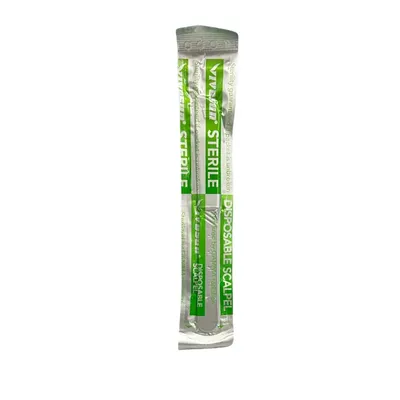
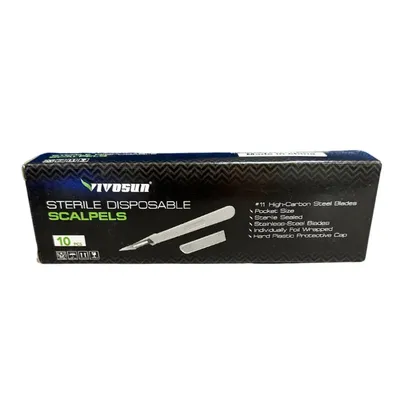
Sterile Disposable Scalpels - #11
Sold by Colorado Cultures
Loading feedback...
$2.49
Estimated US shipping $6.60
30-day returns
Secure checkout — Stripe & PayPal
Final shipping is calculated at checkout.
30-day money-back guarantee

The cutting tool that respects your work
Every transfer you make on an agar plate is an opportunity to either preserve your culture or contaminate it. The instrument you use matters. A clean, sharp scalpel with a fresh blade is the difference between a transfer that takes seconds and produces a clean isolate — and a transfer that smears mycelium, tears agar, and introduces airborne debris into a culture you spent weeks growing.
The Colorado Cultures Sterile Disposable Scalpels - #11 are surgical-grade, individually-sealed, pre-sterilized cutting instruments built for one purpose: precise sterile transfers in mycology, lab, and tissue culture work. The #11 blade — the long, narrow, pointed-tip blade favored by surgeons and pathologists — is also the right shape for cutting clean wedges of mycelium from agar plates, harvesting tissue from fresh mushroom caps, and making precision cuts in grain bags or substrate prep.
Why disposable, sterile, and surgical-grade matters
Cultivators sometimes try to economize by using a re-sterilized kitchen knife, a craft scalpel from an art store, or a paring knife flame-sterilized between cuts. All three approaches compromise sterility in subtle ways:
- Kitchen and craft blades are not surgical steel. They corrode, develop micro-pits, and accumulate biological residue in the imperfections faster than surgical steel does.
- Re-sterilization via flame kills surface organisms but doesn't remove the protein residue from previous cultures. By the third or fourth re-use, every flame-sterilized cut deposits cooked-on residue from past cultures into your current work.
- Inadequate sharpness turns precise cuts into tears — and tears in agar release airborne spores from the surface, contaminating both the plate and your work area.
Surgical scalpels solve all of this:
- Sharpened surgical-steel blade holds an edge through dozens of cuts before dulling
- Factory-sterilized in individual sealed packaging — every blade comes out of the package as sterile as if it were freshly autoclaved
- Disposable economics mean you use a fresh blade for every session, eliminating cross-contamination between projects
- Standardized #11 shape is the shape recommended in every serious mycology cultivation manual for agar work
The Colorado Cultures scalpels include a hard plastic protective cap that keeps the blade sterile until the moment you peel it open — and lets you safely re-cap the blade for disposal after use without exposing the cutting edge.
Why the #11 blade specifically
Surgical scalpel blades come in dozens of standardized shapes, each designed for a specific cutting task. For mycology, the #11 is the gold standard:
- Long, narrow, pointed tip — perfect for fine, controlled cuts in soft media like agar
- Straight cutting edge — produces clean wedges with minimal tearing
- Tapered profile — slips into tight spaces (under a mycelium-and-agar wedge, into a grain bag injection port, across a mushroom cap for tissue culture)
- Standard #11 size — works with disposable scalpel handles if you eventually upgrade to a reusable handle plus blade system
Other common surgical blade shapes you might see — #10 (curved general-purpose), #15 (small curved, for fine work), #20 (large curved, for tissue) — are designed for surgical applications that don't translate well to mycology. The #11's combination of length, sharpness, and pointed tip is what makes it the right tool for sterile agar work.
What cultivators use these for
- Agar transfers — cutting wedges of mycelium from one plate and transferring to a fresh plate, or to a grain bag, or to a liquid culture jar
- Tissue culture from fresh mushrooms — cutting clean wedges of internal tissue from cap or stem for direct inoculation onto agar
- Grain bag inoculation port preparation — making clean access cuts when retrofitting bags without pre-installed ports
- Substrate prep cuts — opening colonized substrate for transfer to fruiting chambers
- Sample preparation — cutting specimens for microscopy or photography
- Print preparation — separating mushroom caps from stems cleanly for spore print collection
- Field foraging — clean cuts at the base of wild specimens, leaving the mycelial network undisturbed (better than tearing)
- General lab work — any task requiring a sharp, sterile, single-use cutting instrument
Why "disposable" is actually a value, not a downside
Some cultivators initially balk at single-use scalpels — the per-cut cost feels higher than re-using a single blade. The math actually favors disposables for most home cultivation operations:
- One fresh scalpel per session at typical hobby use (2-3 sessions per week) costs roughly $0.30-$0.60 per session
- Contamination from a re-used blade costs $20-$100+ per lost grow
- Time saved not flame-sterilizing between cuts is meaningful — 10-15 seconds per cut adds up over a long agar session
- Confidence in sterility lets you focus on the actual cultivation technique rather than worrying about your tools
For the cost of a single contaminated grow, you can buy enough disposable scalpels to last a year of weekly sessions. The product pays for itself the first time you don't lose a flush.
Who buys these
- Cultivators doing agar work — every agar transfer benefits from a fresh blade
- Genetics testers and breeders doing single-spore isolation work where contamination = wasted weeks
- Mycology educators and demo presenters who need sterile tools for participant use
- Anyone doing tissue culture work from fresh mushroom specimens
- Lab and research workers with general sterile-cutting requirements
- Field foragers who want clean cuts at the base of wild specimens (better than tearing or twisting)
- Cultivators who have lost a grow to contamination and want to eliminate the most-frequent contamination vector
What this is NOT
- Not a reusable surgical scalpel handle. This is a single-use disposable scalpel — handle and blade are one piece, designed to be discarded after the session.
- Not autoclavable for re-use. Steel and plastic handle are not designed for repeated sterilization cycles.
- Not a substitute for proper sterile technique. A sterile scalpel is necessary but not sufficient. You still need clean gloves, mask, surface sanitation, and ideally a still air box or flow hood for the most sensitive work.
- Not safe for casual handling. These are sharp surgical-grade blades. Use proper safety practices — re-cap the blade after use, dispose in a sharps container or marked rigid container, keep away from children and unsuspecting fingers.
For everyone else, sterile disposable scalpels are the professional-grade upgrade to your sterile-technique toolkit. Once you've worked with a fresh sharp blade for an agar session, the experience of working with a flame-sterilized kitchen knife will feel like working with a butter knife.