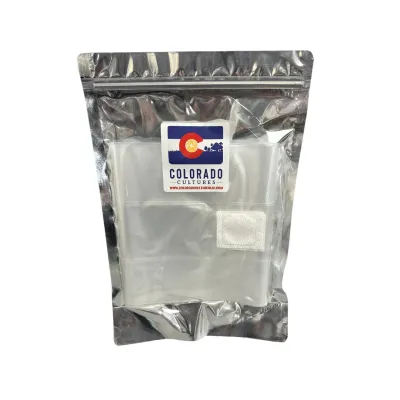
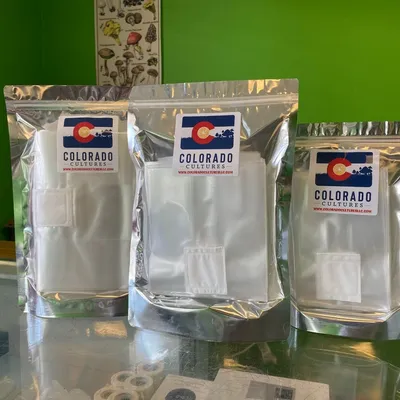
Unicorn Bags
Sold by Colorado Cultures
Loading feedback...
$11.99
Estimated US shipping $6.90
30-day returns
Secure checkout — Stripe & PayPal
Final shipping is calculated at checkout.
30-day money-back guarantee

The case for making your own grain spawn
Pre-made grain spawn bags — Colorado Cultures' Sorghum AIO and Binky Bags being the canonical examples — are how most cultivators run their first 5-10 grows. They're convenient, sterile, ready to inoculate. You pay a per-bag premium for that convenience.
At a certain point, every serious cultivator hits the question: "What if I made my own?"
The answer is yes, you absolutely can — and once you have the right bags, you're paying a fraction of pre-made bag prices per unit of grain spawn. A 50lb bag of organic rye grain costs $30-50 and produces enough grain for 25+ Unicorn Bag spawn runs. Compare that to $25-40 for a single pre-made spawn bag, and the math becomes obvious after about 5 grows.
What you need to make your own grain spawn:
- A bulk grain source (rye, sorghum, popcorn, oats, or whichever your species prefers)
- A pressure cooker capable of holding the bag size you want
- A sterilization bag rated for autoclave temperatures with a built-in microfilter — which is exactly what Unicorn Bags are
The Unicorn Bags line is the bag side of "make your own grain spawn." Four sizes, four filter ratings, all autoclavable, all 10-packs, designed specifically for mushroom cultivation work.
Why these specific bags
Generic plastic bags melt in a pressure cooker. Sealable canning bags don't allow gas exchange during spawn run. You need a bag specifically designed for sterilization + spawn run + bulk substrate transfer. That bag has three required properties:
- Heat tolerance to 250°F+ (the temperature of pressure-cooker sterilization at 15 PSI)
- An integrated microfilter patch — typically a hydrophobic membrane that allows gas exchange (CO₂ out, O₂ in) during spawn run while blocking spore-sized contaminants
- A heat-sealable mouth that lets you close the bag securely after filling
Unicorn Bags meet all three across four size tiers. The filter rating varies by bag size (smaller bags get smaller filters; larger bags get larger filters to support the greater gas exchange a larger grain mass requires).
The four sizes
Each size in this product comes as a 10-pack, sized for the typical home grower running 1-5 grows from each grain batch.
1lb Bag — 4B Filter (small)
- Filled with: 1 lb of grain (typically rye or sorghum, less commonly oats or popcorn)
- Filter: 4B rating — small filter for small bags
- Best for: Test batches, single-grow inoculations, agar-to-grain transfers, individual genetic experiments
- Sterilization: Standard 90-minute sterilization at 15 PSI
- Per-bag cost (filled with bulk grain): Approximately $1-2 of grain + the bag
2-3lb Bag — 10T Filter (medium)
- Filled with: 2-3 lbs of grain
- Filter: 10T rating — medium gas-exchange capacity for medium grain mass
- Best for: The "workhorse" grain spawn size for home cultivators. Sized to spawn one full monotub or a small batch of casing-layer grows
- Sterilization: 90-minute sterilization at 15 PSI for 2 lb fill; 100-minute sterilization for 3 lb fill
- Per-bag cost (filled with bulk grain): Approximately $2-4 of grain + the bag
5lb Bag — 3B Filter (large)
- Filled with: 5 lbs of grain
- Filter: 3B rating — high gas-exchange capacity for larger grain mass
- Best for: Commercial-scale cultivation, multi-tub Martha tent runs, large-batch genetics propagation. One 5lb bag can spawn 5-10 small fruiting containers or 2-3 large monotubs
- Sterilization: 2-hour sterilization at 15 PSI
- Per-bag cost (filled with bulk grain): Approximately $4-7 of grain + the bag
10lb Bag — A Filter (extra large)
- Filled with: 10 lbs of grain
- Filter: A rating — maximum gas-exchange capacity
- Best for: Serious commercial work, dedicated grow-room operations, or research-scale cultivation. One 10lb bag is significantly more grain than most home cultivators will use in a single batch
- Sterilization: 2.5-3 hour sterilization at 15 PSI (requires a large pressure cooker / autoclave)
- Per-bag cost (filled with bulk grain): Approximately $7-12 of grain + the bag
Why filter rating matters
Each filter rating describes the gas-exchange capacity of the filter patch relative to bag size. The principle:
- Small bag = small grain mass = limited respiration = small filter is sufficient
- Large bag = large grain mass = high respiration during spawn run = needs larger filter to prevent CO₂ buildup
If you put a large grain mass in a bag with too small a filter, the bag will accumulate CO₂ during spawn run, stalling or slowing mycelium growth. Unicorn Bags are pre-matched to their fill volume — you don't need to engineer the gas exchange, the bag already knows what it needs.
What you can grow in them
These bags work for any cultivation that requires sterile grain spawn:
- Cubensis spawn (Psilocybe cubensis on rye, sorghum, or popcorn)
- Oyster spawn (Pleurotus ostreatus, P. eryngii, P. citrinopileatus etc. on rye or millet)
- Lion's mane spawn (Hericium erinaceus on rye)
- Shiitake spawn (Lentinula edodes on supplemented sawdust — note: shiitake is usually grown on sawdust blocks, but spawn can be grain-based)
- King oyster, pioppino, chestnut mushroom spawn — various species, all on grain
- Reishi spawn (Ganoderma lucidum — usually wood-based but can be grain-spawned)
- Specialty genetics propagation — when you want to scale a particular genetic, grain-to-grain transfer requires sterile grain bags
What makes Unicorn Bags different from other autoclavable bags
Several competitor brands sell similar bags. What sets Unicorn Bags apart:
- Consistent filter performance across batches — filter quality is a major variable in spawn bags; Unicorn maintains tight tolerances
- Heavy-duty bag film — thicker than typical retail "sterilization bags," reducing the risk of pinholes from sharp grain edges
- Heat-sealable mouth — designed for impulse heat sealers (the standard tool) and works with simpler heat-and-fold techniques
- Standardized 10-pack format — predictable inventory planning for cultivators running cycles
- Available in the four sizes you actually use — the 1lb, 2-3lb, 5lb, and 10lb sizes match real cultivation use patterns
Who buys these
- Cultivators graduating from pre-made bags to DIY grain spawn — the cost savings on grain alone justify the bag investment within 5-10 grows
- Multi-genetic experimenters — when you want to test 5-10 strains in parallel, buying 50 pre-made bags is prohibitive; sterilizing your own grain is the only practical path
- Commercial-scale cultivators — anyone running 5+ tubs simultaneously needs DIY grain spawn capability
- Specialty species cultivators — oysters, lion's mane, shiitake, and reishi cultivators who can't easily source pre-made grain bags for non-cubensis species
- Research-scale cultivators — sterile, controllable grain spawn is essential for any controlled experimentation
- Genetics preservation enthusiasts — long-term storage of valuable genetics often requires periodic re-propagation via grain spawn
- Cultivators with their own pressure cookers — if you already have a 23-quart pressure canner sitting in the kitchen, you have the hard hardware to start making your own spawn
What these bags are NOT
- Not pre-sterilized. You sterilize them yourself in a pressure cooker. If you want pre-sterilized grain spawn ready-to-inoculate, see Colorado Cultures Sorghum AIO or Binky Bags.
- Not pre-filled with grain. Source your own grain in bulk. Rye is the most common (best balance of nutrition and texture); sorghum, popcorn, and millet are alternatives.
- Not for bulk substrate. These are grain spawn bags. For bulk substrate (CVG, manure, masters mix), use the larger fruiting chamber bags or substrate tubs.
- Not single-use beyond their first sterilization. Each bag is single-use — you'll cut the bag open at spawning. Re-use is not practical.
- Not for liquid culture. LC bottles and LC jars use different containers. These bags are for grain.
- Not autoclave bags for use beyond mushroom cultivation. While the bags will tolerate autoclave heat, the filter patch and bag design are mushroom-specific.
The break-even math
If you currently buy pre-made grain spawn (Sorghum AIO at $25-40/bag, Binky Bags at $15-25/bag), here's when Unicorn Bags pay off:
- First batch (1 bag of Unicorn + 50 lbs of organic rye): Combined cost = $30-50 for grain + $5-15 for the bag = $35-65 → 50 lbs of grain can fill 17-25 1lb bags or 5-10 5lb bags. Even one batch of DIY grain spawn from bulk grain is 80% cheaper than the equivalent pre-made bags.
- Per-grow cost reduction: A typical pre-made bag of 3 lb grain costs $25-35. The DIY equivalent (3 lbs of rye + 1 Unicorn 2-3lb bag) costs $3-6 total — a 5-7x reduction.
- Payback period: After 5-10 grows, the Unicorn Bags have paid for themselves vs. continuing to buy pre-made spawn.
For cultivators running serious cycles, this is the largest single cost reduction available in the hobby.
Pairing across the Colorado Cultures lineup
The DIY grain spawn workflow integrates with the rest of the CC ecosystem:
- Pressure cooker / autoclave — required hardware. Most home cultivators use a 23-qt pressure canner for 1-3 lb bags or upgrade to a 41-qt for 5-10 lb bags.
- Bulk grain source — rye is preferred; sorghum (as in Colorado Cultures' Sorghum AIO line) is the alternative.
- Inoculation tools — Sterile Disposable Scalpels, Sterilized Syringes, Inoculation Loops, or grain-to-grain transfer from existing colonized spawn
- Sterile work surface — Still Air Box or Laminar Flow Hood
- Bulk substrate — Denver Dirt, CVG mixes, or custom bulk substrate to mix with your colonized grain
- Fruiting chamber — Full Flush Bin, H2Shroom Chamber, Martha Tent, or custom designs
A complete DIY grain-to-fruit workflow using only CC products is achievable for the cultivator willing to invest in the bag and substrate stack once and then run cycles for years.
A note on filter ratings and species
The factory-paired filter ratings work well across most species. One exception: some wood-loving species (oysters, lion's mane) have higher metabolic rates than cubensis, so a slightly larger filter than the bag-size match might benefit them. If you're growing wood-lovers and notice slow colonization in a properly-sterilized bag, the filter rating may be the bottleneck. Consider upgrading to the next size of bag (with its larger filter) even if you don't fill it to capacity.