Last updated:
Antrodia xantha
"yellow antrodia"
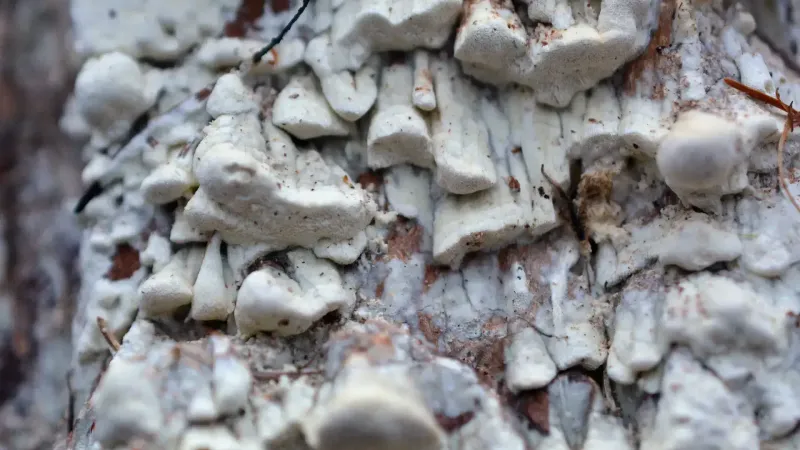
Antrodia xantha fruiting bodies
Scientific Classification
Kingdom:Fungi
Division:Basidiomycota
Class:Agaricomycetes
Order:Polyporales
Family:Fomitopsidaceae
Genus:Antrodia
Frequently Asked Questions
- What is yellow antrodia?
- yellow antrodia (Antrodia xantha) is a mushroom species, belonging to the Fomitopsidaceae family. It is studied for its biological characteristics and is documented in the ShroomSpy mycology database.
- Is yellow antrodia edible?
- Inedible. Antrodia xantha is a tough, woody, resupinate (crust-forming) polypore that grows as a thin layer on dead conifer wood and is not used as food. It is a wood-decay (wet rot) fungus rather than a culinary or medicinal mushroom; there is no reliable evidence supporting it as edible. Earlier descriptions linking this species to Taiwanese folk medicine and liver-health benefits actually refer to the unrelated Antrodia cinnamomea (Taiwanofungus camphoratus) and do not apply to Antrodia xantha.
- What is the scientific classification of yellow antrodia?
- yellow antrodia belongs to the kingdom Fungi, division Basidiomycota, class Agaricomycetes, order Polyporales, family Fomitopsidaceae, genus Antrodia. Its scientific name is Antrodia xantha.
About
Antrodia xantha (yellow antrodia) is a small, crust-forming polypore in the family Fomitopsidaceae. Rather than producing a stalked mushroom, it spreads as a thin, bright yellow resupinate layer over dead conifer wood, with a poroid lower surface and a tough, corky texture. It is a brown-rot (wet rot) fungus and is not edible; it has no established culinary or medicinal use.
History
Antrodia xantha is recognised mycologically as a wood-decay fungus rather than a foraged or cultivated species. It is repeatedly listed among the wet rot fungi that damage timber in buildings, alongside Serpula lacrymans, Coniophora puteana and Antrodia vaillantii. It should not be confused with Antrodia cinnamomea (Taiwanofungus camphoratus), the prized Taiwanese medicinal fungus; claims of liver-supporting, antioxidant or anti-inflammatory benefits in older sources belong to that unrelated species, not to A. xantha.
Overview
Ecologically, Antrodia xantha acts as a decomposer of dead and worked conifer wood, contributing to nutrient cycling in forests but also figuring among the fungi responsible for structural wood decay. Its key field characters are the absence of a cap or stem, the bright yellow resupinate fruit body, and the small angular pores on the underside. There is no reliable evidence that it is edible, and it has no recognised value as a culinary or medicinal mushroom.
Physical Characteristics
Caps:
Antrodia xantha forms no distinct cap. The fruit body is resupinate (crust-like), spreading flat against the wood substrate as a thin, soft to corky layer that is bright sulphur-yellow to pale yellow when fresh, fading toward whitish or cream with age.
Gills:
None. The underside is a poroid surface of small, angular pores (roughly 4-6 per mm) rather than gills, sometimes splitting or cracking as the fruit body dries.
Mushroom Ratings
0.0
Based on 0 Reviews
5
★4
★3
★2
★1
★Share your thoughts
If you've consumed this mushroom, share your thoughts with our community