Last updated:
Artomyces Pyxidatus
"Crown-tipped Coral, Crown Coral, Crown-tipped Coral Fungus"
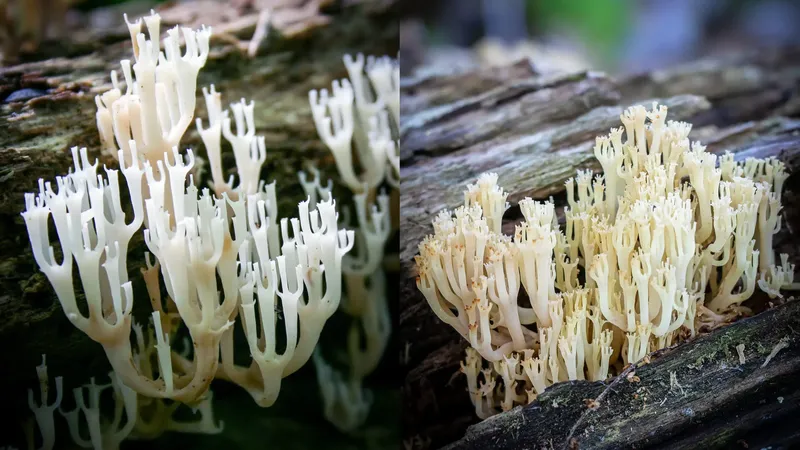
Artomyces pyxidatus fruiting bodies
Scientific Classification
Kingdom:Fungi
Division:Basidiomycota
Class:Agaricomycetes
Order:Russulales
Family:Auriscalpiaceae
Genus:Artomyces
Frequently Asked Questions
- What is Crown-tipped Coral?
- Crown-tipped Coral (Artomyces Pyxidatus) is a mushroom species, belonging to the Auriscalpiaceae family. It is studied for its biological characteristics and is documented in the ShroomSpy mycology database.
- Is Crown-tipped Coral edible?
- Edible. Artomyces pyxidatus, the crown-tipped coral, is widely regarded as edible, with a mild, slightly peppery or sour taste. Only firm, fresh, young specimens should be collected, and they must be cooked. As with any wild coral fungus, positive identification is essential and some foragers report mild gastric upset from older or undercooked material.
- What effects does Crown-tipped Coral produce?
- Crown-tipped Coral is associated with the following effects: Focus, Calm, Relaxed. Individual experiences vary based on dose, set, and setting.
- What is the scientific classification of Crown-tipped Coral?
- Crown-tipped Coral belongs to the kingdom Fungi, division Basidiomycota, class Agaricomycetes, order Russulales, family Auriscalpiaceae, genus Artomyces. Its scientific name is Artomyces Pyxidatus.
About
Artomyces pyxidatus, commonly called the crown-tipped coral, is a wood-decaying coral fungus named for the small ring or 'crown' of points that tips each of its repeatedly forking branches. It grows in clusters directly on decaying hardwood logs and branches in temperate forests across North America, Europe, and Asia, typically appearing from late spring through autumn. Its pale, intricately branched fruiting body is a distinctive sight on rotting wood.
History
The species was first described by Christiaan Hendrik Persoon in 1796. It was long classified in the genus Clavicorona as Clavicorona pyxidata before being transferred to Artomyces. It is placed in the family Auriscalpiaceae within the order Russulales, alongside other tooth and coral fungi, rather than among the true clavarioid corals it superficially resembles.
Overview
Artomyces pyxidatus is a saprotroph that fruits on dead hardwood, contributing to wood decomposition and forest nutrient cycling. It is recognized chiefly by its crown-tipped branch endings and its habit of growing on wood. The fungus is generally considered edible when young and firm, with a mild and sometimes slightly peppery or sour flavor, though it is valued more as a foraging curiosity than as a major culinary species. It is not cultivated commercially and has no well-established medicinal use.
Physical Characteristics
Caps:
Artomyces pyxidatus produces no cap. The fruiting body is a coral-like, repeatedly branched structure 5-13 cm tall, whitish to pale yellow or tan, often browning with age. Each branch terminates in a distinctive ring of small points surrounding a tiny central depression, giving the characteristic 'crown' tips.
Gills:
This species has no gills. Spores are produced over the smooth outer surface of the branches.
Cognitive Effects
Focus
This effect relates to enhancing focus, which may arise from the specific alkaloids present in the fungal composition that stimulate neural pathways.
Calm
This effect relates to providing calming sensations, which may stem from compounds that influence serotonin pathways in the brain.
Relaxed
This effect refers to an enhancement of endurance, possibly linked to bioactive compounds that support energy metabolism.
Pharmacology
Helps With
Memory
Artomyces pyxidatus may contribute positive effects to mental clarity, thus assisting individuals dealing with stress-related cognitive decline.
Depression
The fungus might assist with digestive health due to its high fiber content, promoting regularity.
Possible Side Effects
Headache
While Artomyces pyxidatus is not known for causing significant side effects, some individuals may experience mild headaches when consuming unfamiliar fungi.
Crown-tipped Coral Products
Explore Crown-tipped Coral products from independent vendors
Chemical Constituents
Medicinal Chemistry
Nutrition Facts
Serving Size100
Amount Per Serving
Calories30
% Daily Value*
Total Fat 0 g0%
Saturated Fat 0 g0%
Trans Fat 0 g
Cholesterol 0 mg0%
Sodium 5 mg0%
Total Carbohydrate 6 g2%
Dietary Fiber 2 g7%
Total Sugars 0 g
Protein 1 g2%
Vitamin A 0 µg 0%•Thiamin B1 0 mg 0%
Riboflavin B2 0 mg 0%•Niacin B3 0 mg 0%
Vitamin B6 0 mg 0%•Folate B9 0 µg 0%
Vitamin B12 0 mg 0%•Vitamin C 0 mg 0%
Vitamin D 0 µg 0%•Vitamin E 0 mg 0%
Vitamin K 0 µg 0%•Calcium 5 mg 0%
Copper 0.15 mg 17%•Iron 0.5 mg 3%
Magnesium 0 mg 0%•Manganese 0 mg 0%
Phosphorus 0.8 mg 0%•Potassium 100 mg 2%
Selenium 0 µg 0%•Zinc 0.15 mg 1%
Vit A 0 µg 0%•B1 0 mg 0%
B2 0 mg 0%•B3 0 mg 0%
B6 0 mg 0%•B9 0 µg 0%
B12 0 mg 0%•Vit C 0 mg 0%
Vit D 0 µg 0%•Vit E 0 mg 0%
Vit K 0 µg 0%•Calcium 5 mg 0%
Copper 0.15 mg 17%•Iron 0.5 mg 3%
Mg 0 mg 0%•Mn 0 mg 0%
Phosph. 0.8 mg 0%•Pot. 100 mg 2%
Selenium 0 µg 0%•Zinc 0.15 mg 1%
* Percent Daily Values are based on a 2,000 calorie diet.
Mushroom Ratings
0.0
Based on 0 Reviews
5
★4
★3
★2
★1
★Share your thoughts
If you've consumed this mushroom, share your thoughts with our community