Last updated:
Clitocybe Odora
"Aniseed Funnel, Aniseed Toadstool"
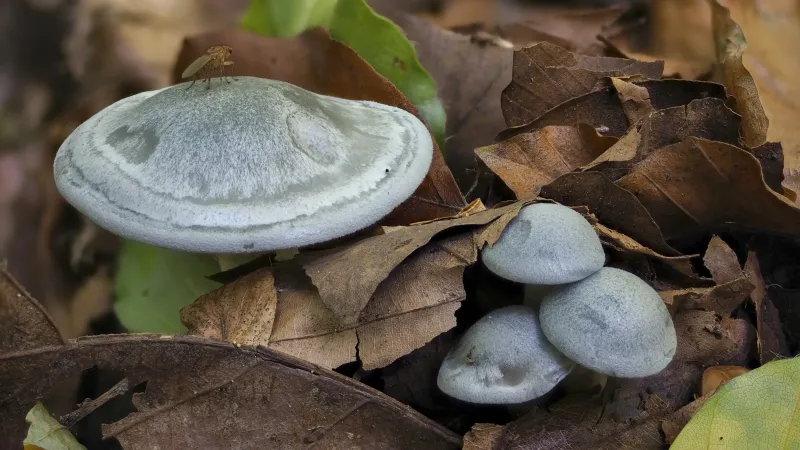
Clitocybe Odora fruiting bodies
Scientific Classification
Kingdom:Fungi
Division:Basidiomycota
Class:Agaricomycetes
Order:Agaricales
Family:Tricholomataceae
Genus:Clitocybe
Frequently Asked Questions
- What is Aniseed Funnel?
- Aniseed Funnel (Clitocybe Odora) is a mushroom species, belonging to the Tricholomataceae family. It is studied for its biological characteristics and is documented in the ShroomSpy mycology database.
- Is Aniseed Funnel edible?
- edible
- What is the scientific classification of Aniseed Funnel?
- Aniseed Funnel belongs to the kingdom Fungi, division Basidiomycota, class Agaricomycetes, order Agaricales, family Tricholomataceae, genus Clitocybe. Its scientific name is Clitocybe Odora.
About
Clitocybe odora, commonly known as the Aniseed Funnel or Anise Mushroom, is a fragrant wild mushroom found in deciduous and coniferous woodlands across Europe and North America. Its distinctive blue-green hue and strong anise (licorice-like) scent make it easily recognizable. While edible in moderation, it is most appreciated for its aromatic contribution to dishes and is sometimes used as a culinary spice or seasoning.
History
The name “odora” derives from the Latin word for “fragrant,” referencing its unmistakable aroma of anise. Historically, it has been used in rural European cooking, particularly in France and the UK, where it is added in small quantities to dishes to impart a sweet, spicy fragrance.
Although not a prominent mushroom in folklore or traditional medicine, it has intrigued mycologists and chefs alike for its unique sensory profile. Its culinary use has always been limited due to the need for precise identification—some Clitocybe species are toxic.
Overview
The mushroom has a funnel-shaped cap, typically 4–10 cm wide, with a pale bluish-green or grey-green color. The gills are decurrent and whitish, and the stem is similarly colored to the cap. It emits a strong smell of anise when fresh or dried, which remains even after cooking.
Clitocybe odora is edible when cooked and used sparingly, especially in soups, rice dishes, or sauces. It is low in calories and contains minor amounts of essential oils and compounds that contribute to its aroma. Caution is advised, as it resembles some toxic relatives within the Clitocybe genus.
Flavors
Mild
Mild flavor when cooked
Minty
This mushroom emits a strong minty or anise-like aroma, adding a refreshing twist to dishes.
Textures
Smooth
Smooth texture when fresh
Fragrances
Aniseed
Has a distinct aniseed smell
Physical Characteristics
Caps:
Blue-green; convex, becoming flat with age
Gills:
White; decurrent
Aniseed Funnel Products
Explore Aniseed Funnel products from independent vendors
Mushroom Ratings
0.0
Based on 0 Reviews
5
★4
★3
★2
★1
★Share your thoughts
If you've consumed this mushroom, share your thoughts with our community
References
- Rapior, S. (2002). The Anise-like Odor of Clitocybe odora, Lentinellus cochleatus and Agaricus essettei. .