Last updated:
Coprinopsis atramentaria
"Common Ink Cap, Inky Cap, Smooth Inky Cap, Tippler's Bane"
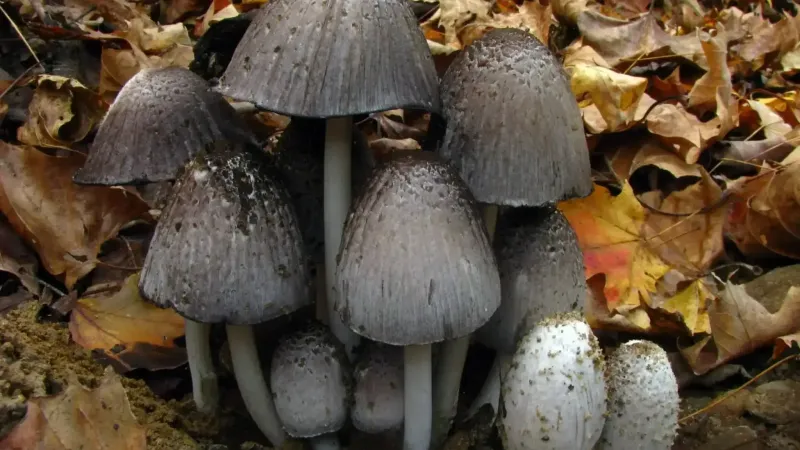
Coprinopsis atramentaria fruiting bodies
Scientific Classification
Kingdom:Fungi
Division:Basidiomycota
Class:Agaricomycetes
Order:Agaricales
Family:Psathyrellaceae
Genus:Coprinopsis
Frequently Asked Questions
- What is Common Ink Cap?
- Common Ink Cap (Coprinopsis atramentaria) is a mushroom species, belonging to the Psathyrellaceae family. It is studied for its biological characteristics and is documented in the ShroomSpy mycology database.
- Is Common Ink Cap edible?
- Toxic with alcohol. Coprinopsis atramentaria contains coprine, an amino acid that inhibits acetaldehyde dehydrogenase like the drug disulfiram (Antabuse). Eating the mushroom and consuming any alcohol within roughly 72 hours triggers acetaldehyde poisoning: facial flushing, a metallic taste, palpitations, throbbing headache, nausea, vomiting and low blood pressure, beginning 30 to 60 minutes after drinking. The reaction is unpleasant but not fatal and usually subsides within a few hours. The mushroom itself is not toxic when eaten young and well away from any alcohol, but because the alcohol interaction is easily missed and persists for days, it is not recommended for the table.
- What is the scientific classification of Common Ink Cap?
- Common Ink Cap belongs to the kingdom Fungi, division Basidiomycota, class Agaricomycetes, order Agaricales, family Psathyrellaceae, genus Coprinopsis. Its scientific name is Coprinopsis atramentaria.
About
Coprinopsis atramentaria, commonly known as the inky cap or tippler's bane, is a distinctive mushroom characterized by its bell-shaped, dark brown to black cap that dissolves into an inky liquid as it matures. This species typically grows in nutrient-rich soils, often found in grassy areas, gardens, and along roadsides, particularly in temperate regions. While it is edible when young, it is notorious for its potential toxicity when consumed with alcohol, leading to severe gastrointestinal distress. Its ecological role includes decomposing organic matter, thereby contributing to nutrient cycling in its habitat.
History
Coprinopsis atramentaria has been utilized in various culinary traditions, particularly in Europe, where it is sometimes featured in dishes before the cap begins to deliquesce. The species was first described scientifically by the mycologist Elias Magnus Fries in 1838, and its name reflects its characteristic inky cap—derived from the Latin "atramentum," meaning "ink." Over time, the understanding of its edibility has evolved, with early culinary uses overshadowed by awareness of its adverse reactions when paired with alcohol, leading to its cautionary reputation.
Research into C. atramentaria has revealed its unique biochemical properties, including the presence of coprine, a compound responsible for its toxic effects when alcohol is consumed. This has sparked interest in its potential medicinal applications, although the risks associated with its consumption have led to a more cautious approach in modern foraging and culinary practices.
Overview
Coprinopsis atramentaria plays a significant ecological role as a saprotroph, breaking down dead organic matter and recycling nutrients back into the soil. It is primarily found in the wild and is not commonly cultivated due to its rapid decay and the specific conditions required for growth. Key distinguishing features include its rapidly dissolving cap and the presence of a white spore print, which sets it apart from similar species like Coprinus comatus, the shaggy mane, which does not exhibit the same deliquescent behavior.
Commercially, while not widely sought after due to its toxicity concerns, C. atramentaria remains of interest for its unique properties and role in the ecosystem. Its careful foraging and consumption practices highlight the importance of understanding mushroom biology and the potential risks associated with wild edibles.
Flavors
Mild
Pleasantly mild and slightly sweet when consumed without alcohol; broadly used in European cuisine when the alcohol warning is heeded.
Textures
Tender
Delicate flesh that must be cooked quickly before auto-digestion (deliquescence) begins.
Fragrances
Earthy
Clean earthy aroma; auto-digesting ink produces an unpleasant odor as specimens age.
Physical Characteristics
Caps:
The cap is bell-shaped to conical, measuring 3-10 cm in diameter, initially white to grayish, becoming black and inky as it matures.
Gills:
Gills are free, crowded, and initially white, turning black and dissolving into a black liquid as the mushroom matures.
Pharmacology
Helps With
Addiction
Coprine (1-aminocyclopropanol) in C. atramentaria is an irreversible aldehyde dehydrogenase inhibitor producing aversive acetaldehyde reactions with alcohol — the same mechanism as disulfiram (Antabuse) — making it historically noteworthy as a potential alcohol deterrent.
Possible Side Effects
Nausea
C. atramentaria causes severe nausea, vomiting, flushing, tachycardia, and headache within 30 minutes to 2 hours of consuming even small amounts of alcohol up to 72 hours after eating the mushroom.
Dizzy
Dizziness, hypotension, and palpitations occur due to acetaldehyde accumulation from coprine-mediated ALDH inhibition after alcohol co-ingestion.
Nutrition Facts
Serving Size100
Amount Per Serving
Calories260
% Daily Value*
Total Fat 2.2 g3%
Saturated Fat 0 g0%
Trans Fat 0 g
Cholesterol 0 mg0%
Sodium 14 mg1%
Total Carbohydrate 44 g16%
Dietary Fiber 16 g57%
Total Sugars 0 g
Protein 20 g40%
Vitamin A 0 µg 0%•Thiamin B1 0 mg 0%
Riboflavin B2 0 mg 0%•Niacin B3 0 mg 0%
Vitamin B6 0 mg 0%•Folate B9 0 µg 0%
Vitamin B12 0 mg 0%•Vitamin C 0 mg 0%
Vitamin D 0 µg 0%•Vitamin E 0 mg 0%
Vitamin K 0 µg 0%•Calcium 0 mg 0%
Copper 0 mg 0%•Iron 0 mg 0%
Magnesium 0 mg 0%•Manganese 0 mg 0%
Phosphorus 300 mg 24%•Potassium 1700 mg 36%
Selenium 18 µg 33%•Zinc 0 mg 0%
Vit A 0 µg 0%•B1 0 mg 0%
B2 0 mg 0%•B3 0 mg 0%
B6 0 mg 0%•B9 0 µg 0%
B12 0 mg 0%•Vit C 0 mg 0%
Vit D 0 µg 0%•Vit E 0 mg 0%
Vit K 0 µg 0%•Calcium 0 mg 0%
Copper 0 mg 0%•Iron 0 mg 0%
Mg 0 mg 0%•Mn 0 mg 0%
Phosph. 300 mg 24%•Pot. 1700 mg 36%
Selenium 18 µg 33%•Zinc 0 mg 0%
* Percent Daily Values are based on a 2,000 calorie diet.
Mushroom Ratings
0.0
Based on 0 Reviews
5
★4
★3
★2
★1
★Share your thoughts
If you've consumed this mushroom, share your thoughts with our community