Last updated:
Fomitopsis officinalis
"Agarikon, Quinine Conk, White Agaric"
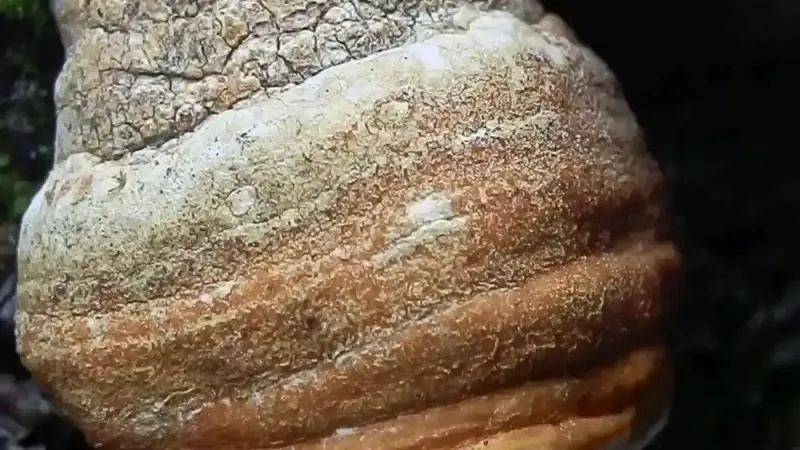
Fomitopsis officinalis fruiting bodies
Scientific Classification
Kingdom:Fungi
Division:Basidiomycota
Class:Agaricomycetes
Order:Polyporales
Family:Fomitopsidaceae
Genus:Fomitopsis
Frequently Asked Questions
- What is Agarikon?
- Agarikon (Fomitopsis officinalis) is a mushroom species, belonging to the Fomitopsidaceae family. It is studied for its biological characteristics and is documented in the ShroomSpy mycology database.
- Is Agarikon edible?
- Inedible. Fomitopsis officinalis is intensely bitter and is not eaten as food; it is used only as a tea or medicinal extract. Treat it strictly as a medicinal/research polypore, not a culinary mushroom.
- What effects does Agarikon produce?
- Agarikon is associated with the following effects: Energy. Individual experiences vary based on dose, set, and setting.
- What is the scientific classification of Agarikon?
- Agarikon belongs to the kingdom Fungi, division Basidiomycota, class Agaricomycetes, order Polyporales, family Fomitopsidaceae, genus Fomitopsis. Its scientific name is Fomitopsis officinalis.
About
Fomitopsis officinalis (synonym Laricifomes officinalis), known as agarikon, quinine conk, or white agaric, is a large perennial bracket fungus that grows on the trunks of conifers such as spruce, larch, and pine. Distinctive columnar or hoof-shaped conks are soft and yellow-white when young, becoming chalky white with age, and the flesh is intensely bitter. Once widespread across Europe, Asia, and North America, it is now rare and is considered effectively extinct across much of Eurasia, surviving mainly in the old-growth forests of the Pacific Northwest of North America.
History
Agarikon is one of the oldest documented medicinal mushrooms. The Greek physician Dioscorides described it around 65 AD as a treatment for consumption (tuberculosis), and Pliny the Elder recorded the Roman name agaricum. The common name agaric is traditionally said to derive from Agarus, a town of the Scythian Agari people. European and Central Asian herbalists used it for chronic coughs, asthma, bleeding, and infected wounds, while Indigenous peoples of the Pacific Northwest coast carved the large conks into shamanic spirit figures and grave guardians. The species epithet officinalis itself signals its long history as an apothecary medicine.
Overview
Ecologically, F. officinalis is a wood-decay fungus that causes a brown cubical rot in standing conifers and is restricted to old-growth habitat now in steep decline. Modern interest centers on its antimicrobial chemistry: research led by Paul Stamets, submitted to the U.S. Bioshield BioDefense program, found that cultured mycelial extracts showed strong antiviral activity against pox viruses and influenza, and the fungus contains agaric acid (agaricin) and lanostane triterpenoids with documented antibacterial and anticancer activity in vitro. Because the species is rare and endangered, harvesting wild conks is discouraged in favor of culturing.
Physical Characteristics
Caps:
A large, perennial bracket (conk) that is columnar or hoof-shaped rather than a flat shelf, building layer upon layer over many years; large specimens can reach 40-50 cm long. The surface is soft and yellow-white when young, soon becoming chalky white and cracked with age.
Gills:
None. Like other polypores it bears a pore surface (tube layer) on the underside instead of gills; the spore print is white.
Cognitive Effects
Energy
Agaricin (agaric acid) in Fomitopsis officinalis was historically used as an antidiaphoretic, potentially reducing energy-depleting sweating in consumption (tuberculosis) patients.
Pharmacology
Helps With
Immune System
Fomitopsis officinalis contains lanostane triterpenoids and polysaccharides with documented immunostimulatory effects in vitro, consistent with its traditional role as Agarikon medicine.
Viral Suppression
Paul Stamets-led research found F. officinalis extracts effective against H1N1 influenza and poxvirus in USAMRIID-funded biodefense studies; antiviral activity attributed to triterpenoid fractions.
Bacterial Suppression
Agarikon extracts have shown antibacterial activity against Mycobacterium tuberculosis and Staphylococcus aureus in antimicrobial screening panels.
Lung Respiration
Traditional use of F. officinalis in Greek, Roman, and Indigenous Pacific Northwest medicine involved treating respiratory ailments including asthma, cough, and consumption.
Chemical Constituents
Medicinal Chemistry
Mushroom Ratings
0.0
Based on 0 Reviews
5
★4
★3
★2
★1
★Share your thoughts
If you've consumed this mushroom, share your thoughts with our community
References
- Saxe, G., Shubov, A., Smith, C., Golshan, S., Shekhtman, T., Wilson, S., Slater, D., Bair, Z., Beathard, C., Davis, R., MacElhern, L., Kao, L., Senowitz, P., Gosnell, N., Buchholz, D., & Aguilar-Carreno, H. (2026). Polypore Mushroom Mycelia for Treatment of Active COVID-19 Infection: A Randomized Clinical Trial. . https://doi.org/10.64898/2026.06.01.26354267
- Bennett, P., Bair, Z., Bradshaw, A., & Stamets, P. (2026). Genomic Characterization of the Endangered Medicinal Polypore Agarikon (Laricifomes officinalis syn. Fomitopsis officinalis). . https://doi.org/10.64898/2026.06.01.728891