Last updated:
Gymnopilus luteofolius
"Yellow Leaf Gymnopilus, Golden Leaf Mushroom"
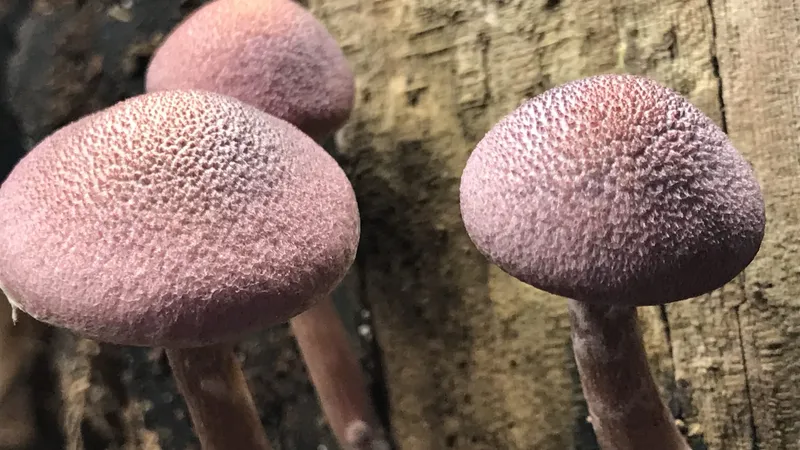
Gymnopilus luteofolius fruiting bodies
Scientific Classification
Kingdom:Fungi
Division:Basidiomycota
Class:Agaricomycetes
Order:Agaricales
Family:Hymenogastraceae
Genus:Gymnopilus
Frequently Asked Questions
- What is Yellow Leaf Gymnopilus?
- Yellow Leaf Gymnopilus (Gymnopilus luteofolius) is a mushroom species, belonging to the Hymenogastraceae family. It is studied for its biological characteristics and is documented in the ShroomSpy mycology database.
- Is Yellow Leaf Gymnopilus edible?
- Not edible. Gymnopilus luteofolius is a psilocybin-containing psychoactive species, not a culinary mushroom; ingestion produces hallucinogenic effects and is commonly accompanied by a very bitter taste and nausea.
- Is Yellow Leaf Gymnopilus psychoactive?
- Yellow Leaf Gymnopilus is documented as a psychoactive species. It contains psychoactive compounds that may produce mind-altering effects. Laws governing possession and use vary by jurisdiction.
- What effects does Yellow Leaf Gymnopilus produce?
- Yellow Leaf Gymnopilus is associated with the following effects: Focus. Individual experiences vary based on dose, set, and setting.
- What is the scientific classification of Yellow Leaf Gymnopilus?
- Yellow Leaf Gymnopilus belongs to the kingdom Fungi, division Basidiomycota, class Agaricomycetes, order Agaricales, family Hymenogastraceae, genus Gymnopilus. Its scientific name is Gymnopilus luteofolius.
About
Gymnopilus luteofolius is a wood-rotting mushroom with a reddish to purplish young cap that fades to yellowish or tawny with age, and crowded gills that mature from yellow to rusty-orange as the rust-brown spores develop. It grows in clusters on decaying hardwood and conifer wood, on wood chips, and on woody debris in soil. It is a member of a small group of Gymnopilus species that produce psilocybin, and it is regarded as psychoactive rather than edible.
History
The species was originally described by Charles Horton Peck and was later transferred to the genus Gymnopilus by Rolf Singer, so it is cited as Gymnopilus luteofolius (Peck) Singer. The epithet luteofolius derives from Latin, roughly meaning "yellow-leaved," a reference to the yellowish gills of young specimens. The genus name Gymnopilus refers to the bare, exposed cap surface. Interest in this species has grown alongside research into psilocybin-producing fungi outside the genus Psilocybe; recent phylogenomic work has confirmed that G. luteofolius carries the core psilocybin biosynthetic genes.
Overview
Gymnopilus luteofolius functions ecologically as a wood-decay fungus, breaking down lignin and cellulose in dead wood and recycling nutrients in forest ecosystems. It is reported from North America and Europe and is found in the wild rather than cultivated. Its psilocybin content is variable from collection to collection, so reported potency is inconsistent. Because it is bitter and psychoactive, it is not used as food.
Physical Characteristics
Caps:
Convex to flat, 3-10 cm in diameter, yellow to orange-yellow, smooth to slightly sticky when moist.
Gills:
Free, close, yellow to orange, with a slightly serrated edge.
Cognitive Effects
Focus
At microdose levels, psilocybin from G. luteofolius may enhance cognitive flexibility and focused attention through transient 5-HT2A modulation.
Psychoactive Effects
Hallucinogenic
G. luteofolius contains psilocybin and may contain bis-noryangonin and hispidine — β-carboline derivatives that can potentiate the hallucinogenic effect through weak MAOI activity.
Visuals
Visual distortions and color intensification are reported, with potency variable across collections due to inconsistent psilocybin content.
Euphoric
Euphoric mood elevation is commonly reported, though the concurrent presence of bitter sesquiterpenes and potential β-carbolines may modify the subjective quality.
Chemical Constituents
Medicinal Chemistry
Mushroom Ratings
0.0
Based on 0 Reviews
5
★4
★3
★2
★1
★Share your thoughts
If you've consumed this mushroom, share your thoughts with our community