Last updated:
Hericium coralloides
"Coral Tooth, Bear's Head, Comb Tooth"
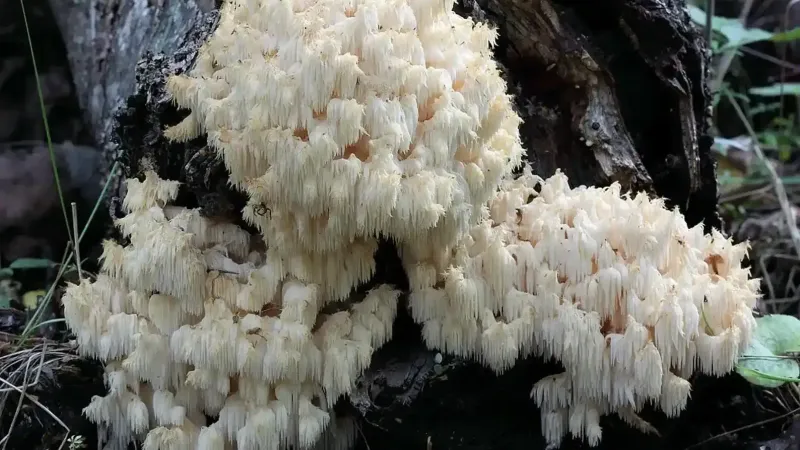
Hericium coralloides fruiting bodies
Scientific Classification
Kingdom:Fungi
Division:Basidiomycota
Class:Agaricomycetes
Order:Russulales
Family:Hericiaceae
Genus:Hericium
Frequently Asked Questions
- What is Coral Tooth?
- Coral Tooth (Hericium coralloides) is a mushroom species, belonging to the Hericiaceae family. It is studied for its biological characteristics and is documented in the ShroomSpy mycology database.
- Is Coral Tooth edible?
- Edible and choice. The flesh is delicate with a texture like crab or lobster when cooked, and develops a mild sweetness with no bitterness. Best harvested young and white; older, yellowing specimens turn sour. As with all wild mushrooms, cook thoroughly and confirm identification before eating.
- What effects does Coral Tooth produce?
- Coral Tooth is associated with the following effects: Memory, Focus, Energy. Individual experiences vary based on dose, set, and setting.
- What is the scientific classification of Coral Tooth?
- Coral Tooth belongs to the kingdom Fungi, division Basidiomycota, class Agaricomycetes, order Russulales, family Hericiaceae, genus Hericium. Its scientific name is Hericium coralloides.
About
Hericium coralloides, commonly known as the coral tooth or bear's head fungus, is a striking white-rot fungus that grows as a branched, coral-like or delicately antler-shaped cluster up to about 30 cm across. Short spines hang downward in rows along the upper sides of its branches. It fruits on dead and dying broadleaf trees — oak, beech, maple, walnut, sycamore and other hardwoods — most often on logs and stumps in temperate forests across North America, Europe, China and Japan. As a saprotroph it helps decompose dead wood and recycle forest nutrients. It is both edible and choice, with a crab- or lobster-like texture when cooked, and is studied for its neurotrophic compounds.
History
Hericium coralloides belongs to the tooth-fungus family Hericiaceae in the order Russulales. The genus name Hericium derives from the Latin for hedgehog, a reference to the spiny, downward-hanging teeth shared across the genus, while the epithet coralloides means "coral-like." It is closely related to the better-known lion's mane (H. erinaceus) and to H. abietis, and is reliably distinguished from H. erinaceus by its branching habit: in H. coralloides the spines fork and arise from a many-branched body, whereas in H. erinaceus the spines cascade individually from a single unbranched mass. The species is uncommon enough in parts of Europe that it appears on national Red Lists, where its wild fruit bodies are protected.
Overview
Hericium coralloides is valued both as a gourmet edible and as a subject of medicinal-mushroom research. Chemically it is best characterized by the corallocins — corallocins A–C, isolated by Wittstein and colleagues in 2016, are nerve-growth-factor (NGF) and brain-derived neurotrophic factor (BDNF) inducing metabolites isolated specifically from this species, and the related corallocins D–E were later described from its fruiting bodies. Like other members of the genus it also contains bioactive polysaccharides studied for antitumor and immunomodulating activity. Much of the popular health literature on "lion's mane" neurotrophic compounds (hericenones and erinacines) refers chiefly to H. erinaceus; H. coralloides shares the same neurotrophic compound class through its own corallocins rather than being identical to it. As a saprotrophic species it is comparatively easy to cultivate on sterilized hardwood sawdust or by the traditional log method, making it accessible to growers as well as foragers.
Physical Characteristics
Caps:
No true cap. The fruiting body is a branched, coral-like (delicately antler-shaped) cluster up to about 30 cm across, white to cream when young and discoloring to yellow-brown with age, especially from the top.
Gills:
None. In place of gills it bears short (3-6 mm) spines or teeth that hang downward in rows along the upper sides of the branches.
Cognitive Effects
Memory
Hericium coralloides contains hericenones and erinacines that may promote nerve growth factor (NGF) synthesis, supporting hippocampal neurogenesis and memory function.
Focus
NGF-promoting compounds in H. coralloides may enhance myelination and synaptic plasticity in the prefrontal cortex, supporting sustained attentional performance.
Energy
High protein and B-vitamin content in H. coralloides support mitochondrial energy production and reduce cognitive fatigue.
Pharmacology
Helps With
Nerve Function
Hericenone and erinacine compounds in H. coralloides stimulate NGF and BDNF expression, promoting peripheral nerve regeneration and protection against demyelinating conditions.
Dementia
Clinical trials with H. erinaceus (same compound class) show cognitive improvement in mild cognitive impairment; H. coralloides contains overlapping bioactive erinacines.
Alzheimers
Erinacine A from Hericium spp. demonstrates inhibition of amyloid-beta aggregation and tau hyperphosphorylation in Alzheimer's disease cell models.
Depression
H. erinaceus extracts show antidepressant-like effects in animal models through hippocampal neurogenesis and reduction of inflammatory cytokines; H. coralloides shares this compound profile.
Immune System
Beta-glucan polysaccharides in H. coralloides activate macrophage and NK cell immune pathways via dectin-1 receptor engagement.
Possible Side Effects
Allergies
Rare contact dermatitis and mild respiratory allergy from handling H. coralloides during harvest; dietary allergy is uncommon.
Chemical Constituents
Medicinal Chemistry
Nutrition Facts
Serving Size100
Amount Per Serving
Calories295
% Daily Value*
Total Fat 3.5 g4%
Saturated Fat 0.4 g2%
Trans Fat 0 g
Cholesterol 0 mg0%
Sodium 8 mg0%
Total Carbohydrate 52 g19%
Dietary Fiber 20 g71%
Total Sugars 0 g
Protein 22 g44%
Vitamin A 0 µg 0%•Thiamin B1 0 mg 0%
Riboflavin B2 0 mg 0%•Niacin B3 9 mg 56%
Vitamin B6 0 mg 0%•Folate B9 0 µg 0%
Vitamin B12 0 mg 0%•Vitamin C 0 mg 0%
Vitamin D 10 µg 50%•Vitamin E 0 mg 0%
Vitamin K 0 µg 0%•Calcium 0 mg 0%
Copper 0.8 mg 89%•Iron 0 mg 0%
Magnesium 0 mg 0%•Manganese 0 mg 0%
Phosphorus 410 mg 33%•Potassium 2100 mg 45%
Selenium 20 µg 36%•Zinc 4.2 mg 38%
Vit A 0 µg 0%•B1 0 mg 0%
B2 0 mg 0%•B3 9 mg 56%
B6 0 mg 0%•B9 0 µg 0%
B12 0 mg 0%•Vit C 0 mg 0%
Vit D 10 µg 50%•Vit E 0 mg 0%
Vit K 0 µg 0%•Calcium 0 mg 0%
Copper 0.8 mg 89%•Iron 0 mg 0%
Mg 0 mg 0%•Mn 0 mg 0%
Phosph. 410 mg 33%•Pot. 2100 mg 45%
Selenium 20 µg 36%•Zinc 4.2 mg 38%
* Percent Daily Values are based on a 2,000 calorie diet.
Mushroom Ratings
0.0
Based on 0 Reviews
5
★4
★3
★2
★1
★Share your thoughts
If you've consumed this mushroom, share your thoughts with our community