Last updated:
Hypomyces Lactifluorum
"Lobster Mushroom, Shrimp Mushroom"
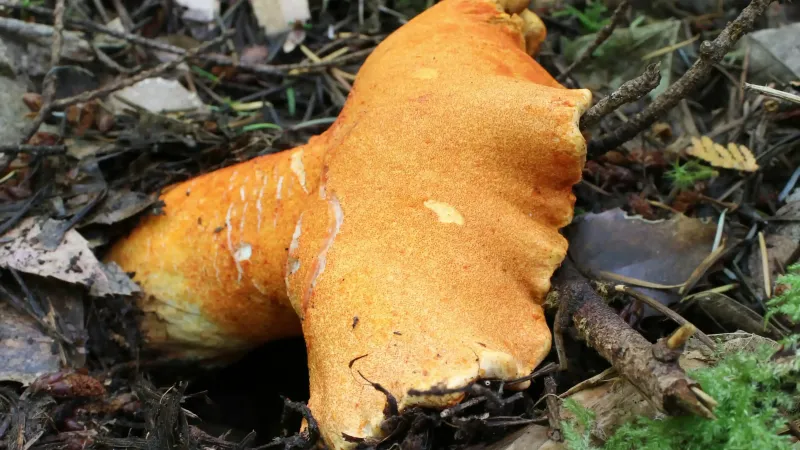
Hypomyces Lactifluorum fruiting bodies
Scientific Classification
Kingdom:Fungi
Division:Ascomycota
Class:Pezizomycetes
Order:Hypocreales
Family:Hypocreaceae
Genus:Hypomyces
Frequently Asked Questions
- What is Lobster Mushroom?
- Lobster Mushroom (Hypomyces Lactifluorum) is a mushroom species, belonging to the Hypocreaceae family. It is studied for its biological characteristics and is documented in the ShroomSpy mycology database.
- Is Lobster Mushroom edible?
- edible
- What is the scientific classification of Lobster Mushroom?
- Lobster Mushroom belongs to the kingdom Fungi, division Ascomycota, class Pezizomycetes, order Hypocreales, family Hypocreaceae, genus Hypomyces. Its scientific name is Hypomyces Lactifluorum.
About
Hypomyces lactifluorum, known as the Lobster Mushroom, is not a standalone mushroom species but rather a parasitic fungus that colonizes and transforms other mushrooms—typically Lactarius or Russula species—into a vibrant orange-red, seafood-scented delicacy. This parasitic relationship dramatically alters the host’s flavor, texture, and appearance, creating a unique mushroom highly prized in gourmet cooking for its dense texture and subtle shellfish-like aroma.
History
The use of Lobster Mushrooms in North American cuisine, particularly among foragers and gourmet chefs, has grown significantly over the past century. Native to North America, the mushroom was traditionally overlooked until chefs and mycologists recognized its culinary potential.
Interestingly, before being parasitized by Hypomyces lactifluorum, the host mushrooms are often bland or even inedible. The transformation enhances both flavor and edibility, leading to widespread use in vegetarian dishes as a seafood alternative.
Overview
Lobster Mushrooms are recognized by their bright reddish-orange exterior, firm texture, and irregular, contorted shape. The parasitic fungus suppresses the normal features of the host, replacing its gills with a hard, twisted interior. They are typically found in late summer to fall in mixed forests, especially near conifers.
While not technically cultivated, they are reliably found in certain regions and are foraged for commercial use. Nutritionally, they are high in fiber and protein, and their distinct taste and texture make them popular in risottos, pastas, soups, and stir-fries. Due to the dependency on a host, correct identification is essential to avoid toxic lookalikes.
Flavors
Seafood
Distinct shellfish, lobster or shrimp-like flavor
Sweet
Sweet, nutty taste
Nutty
Lobster Mushrooms have a distinct nutty flavor that is cherished in many culinary dishes.
Textures
Firm
Lobster Mushrooms have a firm texture, making them suitable for various cooking methods.
Crumbly
The outer layer can sometimes be slightly crumbly or brittle, especially when dried.
Meaty
The texture of Lobster Mushrooms is often described as meaty or dense, similar to some seafood.
Fragrances
Earthy
Hypomyces lactifluorum has a natural earthy aroma typical of many mushrooms.
Peppery
Some people detect a slightly spicy or peppery scent from Lobster Mushrooms.
Physical Characteristics
Caps:
Irregular, lobed, up to 15 cm wide. Reddish orange to orange-yellow.
Gills:
Dense, forked, white becoming pale yellow.
Lobster Mushroom Products
Explore Lobster Mushroom products from independent vendors
Similar Species
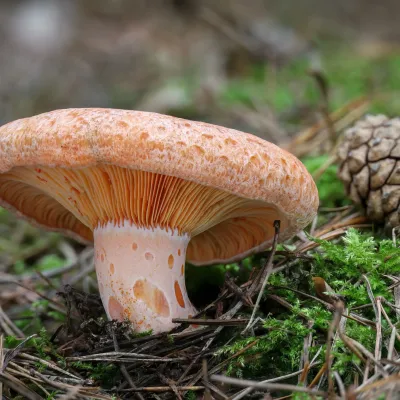
Key Differences: Not parasitized or lobed, has orange milk when stem is broken
Species: Lactarius Deliciosus
(Saffron Milkcap)
Edibility: edible
Key Differences: Not parasitized or lobed, has orange milk when stem is broken
Mushroom Ratings
5.0
(1)
Based on 1 Review
5
★4
★3
★2
★1
★Share your thoughts
If you've consumed this mushroom, share your thoughts with our community
01/30/2025
Noah Schlickeisen
EnergyEuphoricCreativityCalmReflective
Ok so I finally tried Lobster Mushroom and it lowkey tastes like seafood?? Made a creamy pasta with it and my partner thought I added actual lobster. Wild.
Beyond the taste, I felt pretty good after eating it. More energized, kinda creative. Had a busy week and noticed I was less stressed than usual. No weird side effects like dizziness or anything which was nice.
You can get it fresh or dried - I've tried both. Fresh is better for pasta, dried works for soups. Honestly if you like cooking and want something different this is a fun one to play with