Last updated:
Nidularia deformis
"Bird's Nest Fungus, Nidularia"
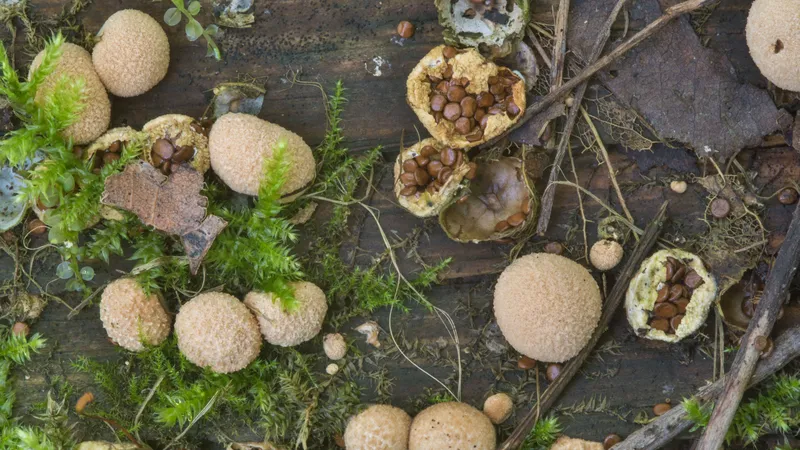
Nidularia deformis fruiting bodies
Scientific Classification
Kingdom:Fungi
Division:Basidiomycota
Class:Agaricomycetes
Order:Agaricales
Family:Agaricaceae
Genus:Nidularia
Frequently Asked Questions
- What is Bird's Nest Fungus?
- Bird's Nest Fungus (Nidularia deformis) is a mushroom species, belonging to the Agaricaceae family. It is studied for its biological characteristics and is documented in the ShroomSpy mycology database.
- Is Bird's Nest Fungus edible?
- non-edible - primarily of interest for its unique morphology and ecological role
- What is the scientific classification of Bird's Nest Fungus?
- Bird's Nest Fungus belongs to the kingdom Fungi, division Basidiomycota, class Agaricomycetes, order Agaricales, family Agaricaceae, genus Nidularia. Its scientific name is Nidularia deformis.
About
Nidularia deformis is a distinctive fungus characterized by its unique, cup-shaped fruiting bodies that resemble small nests or bowls, often containing dark, spore-filled structures. This species typically grows on decaying wood, particularly in temperate forests, and is commonly found in Europe and North America. While Nidularia deformis is not known for its edibility or medicinal properties, it plays a significant ecological role as a decomposer, contributing to nutrient cycling within its habitat.
History
Historically, Nidularia deformis has been of interest primarily to mycologists and ecologists rather than culinary or medicinal traditions. The species was first described scientifically in 1791 by the botanist and mycologist, Christian Hendrik Persoon. Its name, derived from Latin, translates to "deformed nest," aptly reflecting its unique morphology. Over time, the understanding of this species has evolved, with increased focus on its ecological importance in forest ecosystems and its role in wood decay processes.
Overview
Ecologically, Nidularia deformis serves a crucial function in breaking down lignin and cellulose in decaying wood, thereby facilitating the recycling of nutrients back into the soil. It is primarily found in the wild, thriving in forested areas where decaying wood is abundant, and is not cultivated commercially. The key distinguishing features of Nidularia deformis include its dark, cup-like fruiting bodies and the presence of peridioles—small, dark structures within the cups that release spores. These characteristics set it apart from similar species, such as Nidularia disciformis, which may have a more flattened appearance and different habitat preferences.
Physical Characteristics
Caps:
The fruiting body resembles a small, dark, irregularly shaped nest, typically 1-3 cm in diameter, with a rough texture and a dark brown to black color.
Gills:
None
Mushroom Ratings
0.0
Based on 0 Reviews
5
★4
★3
★2
★1
★Share your thoughts
If you've consumed this mushroom, share your thoughts with our community