Last updated:
Ophiocordyceps sinensis
"Chinese Caterpillar Fungus, Dong Chong Xia Cao, Yartsa Gunbu"
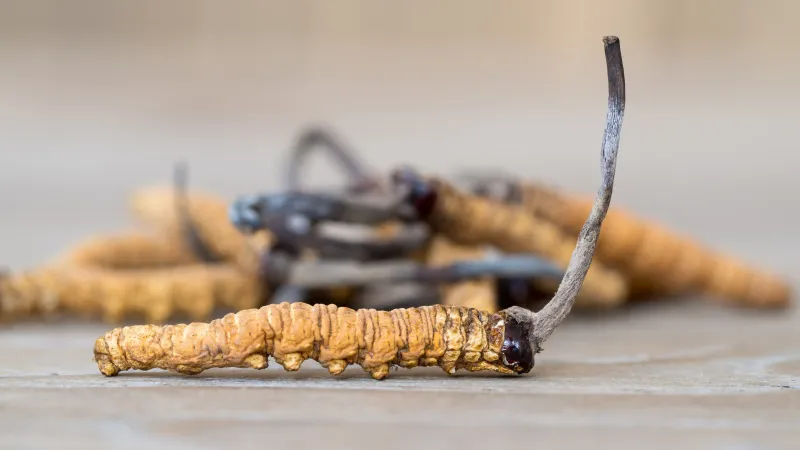
Ophiocordyceps sinensis fruiting bodies
Scientific Classification
Kingdom:Fungi
Division:Ascomycota
Class:Sordariomycetes
Order:Hypocreales
Family:Ophiocordycipitaceae
Genus:Ophiocordyceps
Frequently Asked Questions
- What is Chinese Caterpillar Fungus?
- Chinese Caterpillar Fungus (Ophiocordyceps sinensis) is a mushroom species, belonging to the Ophiocordycipitaceae family. It is studied for its biological characteristics and is documented in the ShroomSpy mycology database.
- Is Chinese Caterpillar Fungus edible?
- Edible - traditional tonic, extremely expensive
- What effects does Chinese Caterpillar Fungus produce?
- Chinese Caterpillar Fungus is associated with the following effects: Energy, Endurance, Calm. Individual experiences vary based on dose, set, and setting.
- What is the scientific classification of Chinese Caterpillar Fungus?
- Chinese Caterpillar Fungus belongs to the kingdom Fungi, division Ascomycota, class Sordariomycetes, order Hypocreales, family Ophiocordycipitaceae, genus Ophiocordyceps. Its scientific name is Ophiocordyceps sinensis.
About
Ophiocordyceps sinensis, commonly known as the Chinese caterpillar fungus or dong chong xia cao ("winter worm, summer grass"), is one of the most prized organisms in traditional Chinese and Tibetan medicine. This entomopathogenic fungus parasitizes the larvae of ghost moths (Thitarodes spp.) in the alpine meadows of the Tibetan Plateau at elevations between 3,000 and 5,000 meters. The fruiting body — a slender, dark brown stroma — emerges from the mummified caterpillar host, making it one of the most visually distinctive and expensive fungi in existence.
History
Ophiocordyceps sinensis has been used in traditional Chinese medicine for over 2,000 years, with the first written record appearing in the Classic Herbal of the Divine Plowman from approximately 200 AD. Known in Tibet as yartsa gunbu, it was historically reserved for the imperial court and wealthy nobility due to its extreme rarity.
In Tibetan culture, the ancient belief that this organism transformed from animal to plant with the changing seasons led to its poetic name "winter worm, summer grass." Today it commands prices exceeding $20,000 per kilogram, making it the most expensive fungus in the world.
Overview
Ophiocordyceps sinensis plays a unique ecological role as a specialist parasite of ghost moth larvae in high-altitude grassland ecosystems. Unlike its cultivable relative Cordyceps militaris, O. sinensis has proven extremely difficult to cultivate commercially. The primary bioactive compounds include cordycepin, cordycepic acid, polysaccharides, and adenosine.
Physical Characteristics
Caps:
Elongated dark brown club-shaped stromatal head
Gills:
None - produces perithecia
Cognitive Effects
Energy
Traditionally used to combat fatigue and enhance energy by supporting cellular ATP production.
Endurance
May improve physical endurance and stamina, historically valued by athletes in Tibet.
Calm
Adaptogenic properties that may help manage stress responses.
Pharmacology
Helps With
Fatigue
Traditionally used as a tonic against fatigue and lethargy.
Immune System
Polysaccharides have shown immunomodulatory activity in preliminary studies.
Stress
Used as an adaptogen to resist physical and mental stress.
Lung Respiration
Traditional use for respiratory conditions; may support lung function.
Kidney Function
Considered a kidney tonic in traditional Chinese medicine.
Inflammation
Preliminary research suggests anti-inflammatory properties.
Oxidative Stress
Extracts have demonstrated antioxidant activity in vitro.
Libido
Traditional use as an aphrodisiac; may influence reproductive function.
Possible Side Effects
Allergies
Rare allergic reactions; heavy metal accumulation in wild specimens is a concern.
Nausea
Overconsumption may cause mild gastrointestinal discomfort.
Chemical Constituents
Medicinal Chemistry
Mushroom Ratings
0.0
Based on 0 Reviews
5
★4
★3
★2
★1
★Share your thoughts
If you've consumed this mushroom, share your thoughts with our community