Last updated:
Pleurotus ostreatus
"Oyster Mushroom, Tree Oyster"
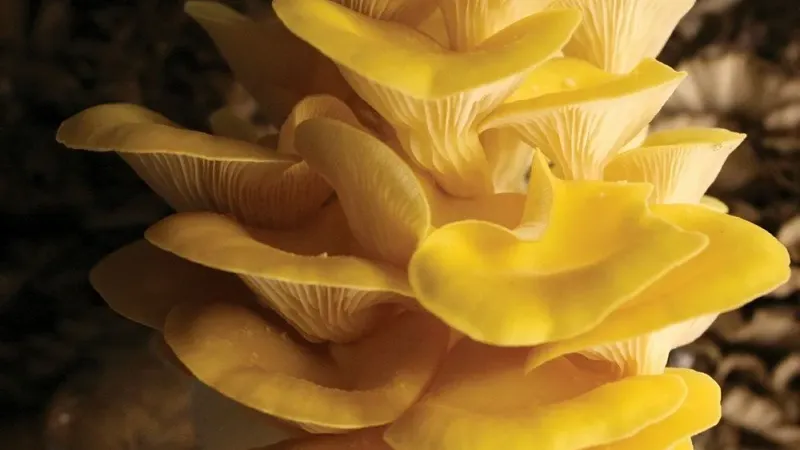
Pleurotus ostreatus fruiting bodies
Scientific Classification
Kingdom:Fungi
Division:Basidiomycota
Class:Agaricomycetes
Order:Agaricales
Family:Pleurotaceae
Genus:Pleurotus
Frequently Asked Questions
- What is Oyster Mushroom?
- Oyster Mushroom (Pleurotus ostreatus) is a mushroom species, belonging to the Pleurotaceae family. It is studied for its biological characteristics and is documented in the ShroomSpy mycology database.
- Is Oyster Mushroom edible?
- edible - widely consumed and considered safe when properly cooked
- What effects does Oyster Mushroom produce?
- Oyster Mushroom is associated with the following effects: Energy, Endurance, Focus. Individual experiences vary based on dose, set, and setting.
- What is the scientific classification of Oyster Mushroom?
- Oyster Mushroom belongs to the kingdom Fungi, division Basidiomycota, class Agaricomycetes, order Agaricales, family Pleurotaceae, genus Pleurotus. Its scientific name is Pleurotus ostreatus.
About
Pleurotus ostreatus, commonly known as the oyster mushroom, is a widely recognized edible fungus notable for its distinctive oyster-shaped cap, which can vary in color from white to gray to brown. This species typically features a smooth, fan-shaped cap with a slightly wavy margin and gills that run down the stem. P. ostreatus is found in a variety of habitats, particularly on decaying wood, and plays a crucial ecological role in wood decomposition. Its significance extends beyond its ecological contributions, as it is highly valued for its culinary uses and potential health benefits, including antioxidant properties and cholesterol-lowering effects.
History
Historically, Pleurotus ostreatus has been consumed for centuries, particularly in Asian cuisines, where it is prized for its delicate flavor and texture. It has also been used in traditional medicine for its purported health benefits, including immune support and anti-inflammatory properties. The species was first described scientifically in 1775 by the mycologist Giovanni Antonio Scopoli, and its name derives from the Latin words "pleuro," meaning side, and "ostrea," meaning oyster, reflecting its shape. Over time, human understanding of this species has expanded, leading to its cultivation and commercial production, which began in the late 19th century in Europe.
In recent decades, research has focused on the nutritional and medicinal properties of P. ostreatus, revealing its potential as a functional food. The mushroom's popularity has surged, not only for its culinary applications but also for its health-promoting compounds, making it a staple in both gourmet and health-conscious diets.
Overview
Ecologically, Pleurotus ostreatus plays a vital role as a decomposer, breaking down lignin and cellulose in wood, which contributes to nutrient cycling in forest ecosystems. It is commonly found in temperate and tropical regions, thriving on a variety of substrates, including hardwoods and agricultural waste. The species is now extensively cultivated worldwide, making it one of the most commercially significant mushrooms, available in grocery stores and farmers' markets.
Key distinguishing features of P. ostreatus include its unique cap shape, which resembles an oyster, and its gills that are closely spaced and run down the stem. It can be confused with other species such as Pleurotus pulmonarius, but P. ostreatus typically has a more pronounced oyster shape and a more robust flavor. Its ease of cultivation and adaptability to various substrates have made it a favorite among mushroom growers, further solidifying its status as a staple in both culinary and medicinal applications.
Physical Characteristics
Caps:
The cap is fan-shaped to oyster-shaped, typically 5-25 cm wide, with a smooth to slightly velvety texture. Color ranges from white to pale cream, light gray, or tan.
Gills:
Gills are closely spaced, decurrent (running down the stem), and white to cream in color, becoming darker with age.
Cognitive Effects
Energy
P. ostreatus contains ergothioneine and B-vitamins that may support sustained mental energy and reduce fatigue associated with oxidative stress.
Endurance
Beta-glucans and polysaccharides in oyster mushrooms may support physical endurance by modulating immune responses during prolonged exertion.
Focus
Ergothioneine, a potent antioxidant concentrated in oyster mushrooms, may support cognitive function and attention by protecting neurons from oxidative damage.
Pharmacology
Helps With
Immune System
Pleuran, a beta-1,3/1,6-glucan found in P. ostreatus, may support immune modulation by activating macrophages and natural killer cells.
Cholesterol
P. ostreatus naturally contains lovastatin (mevinolin), an HMG-CoA reductase inhibitor that may help reduce LDL cholesterol levels.
Inflammation
Polysaccharides and phenolic compounds in oyster mushrooms may exhibit anti-inflammatory activity by modulating NF-kB and cytokine pathways.
Oxidative Stress
Ergothioneine and other antioxidants in P. ostreatus may help combat oxidative stress by scavenging reactive oxygen species.
Cardiovascular Support
The combination of lovastatin, beta-glucans, and potassium in oyster mushrooms may support overall cardiovascular health.
Diabetes
P. ostreatus extracts may help regulate blood glucose levels, with studies suggesting improved insulin sensitivity.
Cancer
Polysaccharide fractions from P. ostreatus may exhibit antiproliferative properties in vitro, though clinical evidence remains preliminary.
Bacterial Suppression
P. ostreatus produces ostreatin and other compounds that may exhibit antibacterial activity against certain Gram-positive and Gram-negative bacteria.
Possible Side Effects
Allergies
Spore exposure during cultivation or in poorly ventilated environments may trigger allergic reactions, particularly respiratory hypersensitivity, in susceptible individuals.
Oyster Mushroom Products
Explore Oyster Mushroom products from independent vendors
Chemical Constituents
Medicinal Chemistry
Nutrition Facts
Serving Size100
Amount Per Serving
Calories364
% Daily Value*
Total Fat 1.6 g2%
Saturated Fat 0 g0%
Trans Fat 0 g
Cholesterol 0 mg0%
Sodium 18 mg1%
Total Carbohydrate 57 g21%
Dietary Fiber 11.5 g41%
Total Sugars 0 g
Protein 31 g62%
Vitamin A 0 µg 0%•Thiamin B1 0 mg 0%
Riboflavin B2 0 mg 0%•Niacin B3 0 mg 0%
Vitamin B6 0.11 mg 6%•Folate B9 38 µg 10%
Vitamin B12 0 mg 0%•Vitamin C 0 mg 0%
Vitamin D 29 µg 145%•Vitamin E 0 mg 0%
Vitamin K 0 µg 0%•Calcium 3 mg 0%
Copper 0.24 mg 27%•Iron 1.3 mg 7%
Magnesium 18 mg 4%•Manganese 0.11 mg 5%
Phosphorus 120 mg 10%•Potassium 420 mg 9%
Selenium 2.6 µg 5%•Zinc 0.77 mg 7%
Vit A 0 µg 0%•B1 0 mg 0%
B2 0 mg 0%•B3 0 mg 0%
B6 0.11 mg 6%•B9 38 µg 10%
B12 0 mg 0%•Vit C 0 mg 0%
Vit D 29 µg 145%•Vit E 0 mg 0%
Vit K 0 µg 0%•Calcium 3 mg 0%
Copper 0.24 mg 27%•Iron 1.3 mg 7%
Mg 18 mg 4%•Mn 0.11 mg 5%
Phosph. 120 mg 10%•Pot. 420 mg 9%
Selenium 2.6 µg 5%•Zinc 0.77 mg 7%
* Percent Daily Values are based on a 2,000 calorie diet.
Mushroom Ratings
0.0
Based on 0 Reviews
5
★4
★3
★2
★1
★Share your thoughts
If you've consumed this mushroom, share your thoughts with our community