Last updated:
Psilocybe Baeocystis
"Bottle Cap, Knobby Tops"
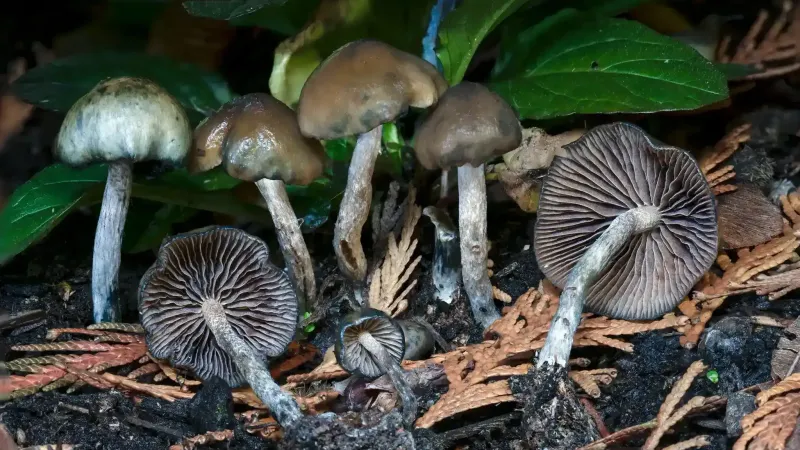
Psilocybe Baeocystis fruiting bodies
Scientific Classification
Kingdom:Fungi
Division:Basidiomycota
Class:Agaricomycetes
Order:Agaricales
Family:Hymenogastraceae
Genus:Psilocybe
Frequently Asked Questions
- What is Bottle Cap?
- Bottle Cap (Psilocybe Baeocystis) is a mushroom species, belonging to the Hymenogastraceae family. It is studied for its biological characteristics and is documented in the ShroomSpy mycology database.
- Is Bottle Cap edible?
- Psychoactive
- Is Bottle Cap psychoactive?
- Bottle Cap is documented as a psychoactive species. It contains psychoactive compounds that may produce mind-altering effects. Laws governing possession and use vary by jurisdiction.
- What is the scientific classification of Bottle Cap?
- Bottle Cap belongs to the kingdom Fungi, division Basidiomycota, class Agaricomycetes, order Agaricales, family Hymenogastraceae, genus Psilocybe. Its scientific name is Psilocybe Baeocystis.
About
Psilocybe baeocystis, nicknamed the Bottle Cap, is a potent psychedelic mushroom known for its dark, glistening cap and high levels of psilocybin, psilocin, and baeocystin—a unique compound for which the species is named. Native to the Pacific Northwest of North America, this mushroom is recognized for its strong and often unpredictable effects, making it a species more suitable for experienced users.
History
Discovered and described in the mid-20th century, P. baeocystis grows naturally in lawns, wood chips, mulch, and other urban or landscaped environments. It was one of the earliest psilocybin mushrooms to be documented in modern times and has been involved in research exploring the varying effects of tryptamine alkaloids.
Its nickname "Bottle Cap" refers to its convex cap shape, which resembles an old-fashioned bottle stopper, especially when young.
Overview
Psilocybe baeocystis features a small to medium-sized cap (1–4 cm wide), ranging from dark brown to olive green when moist, and fading as it dries. The cap is viscid (sticky) when wet and often has a gelatinous pellicle. The stem is thin, whitish to bluish, and bruises deep blue when damaged.
It is notably high in baeocystin, a psilocybin analog that may contribute to more intense or unpredictable experiences compared to other species. Effects include strong visuals, emotional intensity, time distortion, and occasional body load. Due to its variability, careful dosing is essential.
Physical Characteristics
Caps:
Conic to convex, with a nipple-like protrusion, tan to olive-brown, 1-4 cm wide
Gills:
Adnate to adnexed, initially grayish-purple, darkening to purplish-black with age
Psychoactive Effects
Euphoric
Describing intense feelings of happiness or excitement
Perceptual
The change in the way things are perceived, including changes in time perception, spatial perception, and perception of one's own body.
Pharmacology
Helps With
Depression
Relieves symptoms of depression, improving mood and outlook
Anxiety
Helps to alleviate feelings of worry, fear, and unease
Addiction
Helps to overcome addiction and substance abuse
PTSD
Helps to alleviate symptoms of post-traumatic stress disorder
OCD
Helps to alleviate symptoms of obsessive-compulsive disorder
ADD ADHD
Helps to alleviate symptoms of attention deficit disorder and attention deficit hyperactivity disorder
Pain
Microdosing psilocybin has been shown to help with certain types of pain
Migraines
Research shows that psilocybin, the active compound in magic mushrooms, has potential therapeutic benefits for migraines. A small-scale study conducted by Yale School of Medicine found that a single dose of psilocybin reduced the likelihood of having a migraine attack in two weeks.
Possible Side Effects
Nausea
A feeling of discomfort in the stomach with an urge to vomit
Grow at Home
Start your cultivation journey with quality grow kits from independent vendors
Chemical Constituents
Medicinal Chemistry
Similar Species
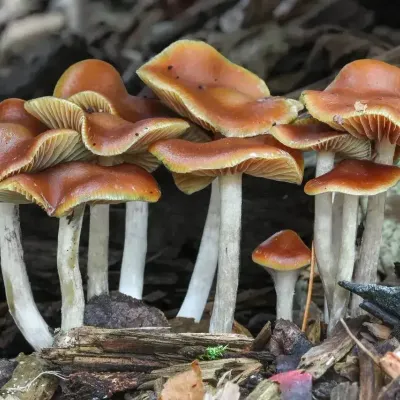
Key Differences: P. cyanescens lacks the distinctive nipple-like protrusion on the cap and tends to have a more wavy cap margin.
Species: Psilocybe Cyanescens
(Wavy Cap)
Edibility: edible
Key Differences: P. cyanescens lacks the distinctive nipple-like protrusion on the cap and tends to have a more wavy cap margin.
Mushroom Ratings
0.0
Based on 0 Reviews
5
★4
★3
★2
★1
★Share your thoughts
If you've consumed this mushroom, share your thoughts with our community
References
- Kilmer, B., Priest, M., Ramchand, R., Rogers, R. C., Senator, B., & Palmer, K. (2024). Considering Alternatives to Psychedelic Drug Prohibition. RAND Corporation.
- Bhagavan, C., Kanaan, R., Carter, O., Nielsen, G., Berlowitz, D., Issak, S., Braat, S., Zaloumis, S., Attard, Z., Oliver, G., Mayne, D., McKernon, D., Roebuck, G., Rucker, J., Butler, M., & Bryson, A. (2024). Psilocybin and motor function: A triple-blind, dose-finding study in healthy participants. Psychiatric Research and Clinical Practice, 6(4), 164-174. https://doi.org/10.1176/appi.prcp.20240047
- Nayak, S., White, S., Hilbert, S., Lowe, M., Jackson, H., Griffiths, R., Garcia-Romeu, A., & Yaden, D. (2024). Psychedelic Experiences Increase Mind Perception but do not Change Atheist-Believer Status: A Prospective Longitudinal Study. Journal of Psychoactive Drugs, 57(3), 275-284. https://doi.org/10.1080/02791072.2024.2346130
- Neumann, J., Dimov, K., Azatsian, K., Hofmann, B., & Gergs, U. (2024). Effects of psilocin and psilocybin on human 5-HT4 serotonin receptors in atrial preparations of transgenic mice and humans. Toxicology Letters, 398, 55-64. https://doi.org/10.1016/j.toxlet.2024.06.006
- Khajavinia, A., Michel, D., Ezeaka, U., Purves, R., Laprairie, R., & El-Aneed, A. (2024). Addressing a major interference in the quantification of psilocin in mouse plasma: Development of a validated liquid chromatography tandem mass spectrometry method. Journal of Chromatography A, 1730, 465123. https://doi.org/10.1016/j.chroma.2024.465123
- Hudspeth, J., Rogge, K., Dörner, S., Müll, M., Hoffmeister, D., Rupp, B., & Werten, S. (2024). Methyl transfer in psilocybin biosynthesis. Nature Communications, 15(1). https://doi.org/10.1038/s41467-024-46997-z
- Seibold, P., Dörner, S., Fricke, J., Schäfer, T., Beemelmanns, C., & Hoffmeister, D. (2024). Genetic regulation of L-tryptophan metabolism in Psilocybe mexicana supports psilocybin biosynthesis. Fungal Biology and Biotechnology, 11(1). https://doi.org/10.1186/s40694-024-00173-6
- Gold, E. (2023). Psilocybin Mushrooms of Australia. United States: Independently published.
- Ley, L. (2023). Comparative acute effects of mescaline, lysergic acid diethylamide, and psilocybin in a randomized, double-blind, placebo-controlled cross-over study in healthy participants. .
- Carpenter, W. (2022). The Psilocybin Mushroom Bible: A Step-by-Step Guide to Growing, Microdosing and Safely Using Magic Mushrooms.. MarkHollis.