Last updated:
Psilocybe CubensisKAPE
"Golden Teacher, Golden Halo"
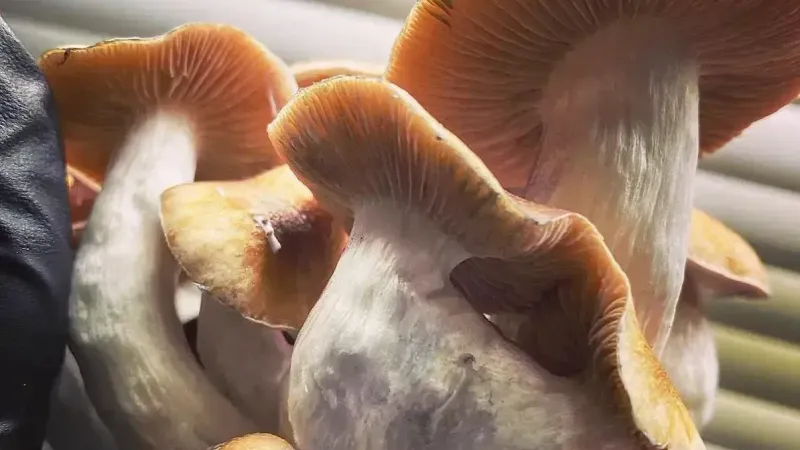
Psilocybe Cubensis fruiting bodies
Scientific Classification
Kingdom:Fungi
Division:Basidiomycota
Class:Agaricomycetes
Order:Agaricales
Family:Hymenogastraceae
Genus:Psilocybe
Frequently Asked Questions
- What is the KAPE strain?
- KAPE is a documented mushroom strain of Golden Teacher (Psilocybe Cubensis). It is cataloged in the ShroomSpy mycology database with strain-specific characteristics, origin, and identification details.
- Is Golden Teacher edible?
- Psychoactive
- Is Golden Teacher psychoactive?
- Golden Teacher is documented as a psychoactive species. It contains psychoactive compounds that may produce mind-altering effects. Laws governing possession and use vary by jurisdiction.
- What effects does Golden Teacher produce?
- Golden Teacher is associated with the following effects: Creativity. Individual experiences vary based on dose, set, and setting.
- What is the scientific classification of Golden Teacher?
- Golden Teacher belongs to the kingdom Fungi, division Basidiomycota, class Agaricomycetes, order Agaricales, family Hymenogastraceae, genus Psilocybe. Its scientific name is Psilocybe Cubensis.
About
Summary
Golden Teacher Kape is a regionally rooted variant of Psilocybe cubensis, believed to be connected to Kape, a name likely referencing Koh Samui or other Southeast Asian origins. This variant preserves the classic Golden Teacher’s philosophical depth and balanced strength, while adding a layer of energetic brightness and tropical vigor—making it an excellent choice for both beginners and seasoned psychonauts who value clarity, warmth, and introspection.
History
The “Kape” naming convention may derive from Koh Samui KAPE (Koh Samui x Golden Teacher hybrids), developed by Southeast Asian cultivators seeking to blend resilience, aesthetic, and potency. It is known for stable fruiting, high adaptability in humid environments, and effects that evoke mental cleansing and emotional elevation.
Popular among microdosers and those working with psychedelics for emotional clarity, this variant strikes a unique balance between stimulation and serenity.
Overview
Kape mushrooms are medium-sized, with rounded golden-brown caps, robust white stems, and consistent blue bruising. Growth is reliable and fast, with excellent yields in tropical or temperate indoor environments.
The psychedelic effects are clear-headed, expansive, and mildly euphoric, often described as mentally bright, emotionally steady, and physically light. Ideal for creative work, nature walks, or therapeutic sessions focused on gentle clarity.
Physical Characteristics
Caps:
Convex to broadly convex to plane at maturity, smooth, viscous when moist, golden brown.
Gills:
Adnate to adnexed, narrow, close, gray to nearly black in maturity.
Cognitive Effects
Creativity
Users report an increase in creative thinking and problem-solving abilities.
Psychoactive Effects
Euphoric
A sense of well-being and happiness is commonly experienced.
Pharmacology
Helps With
Depression
May alleviate symptoms of depression in some users.
Anxiety
Can reduce feelings of anxiety and stress.
Possible Side Effects
Nausea
Can occur, especially in higher doses.
Paranoid
Some users may experience paranoia or increased anxiety.
Grow at Home
Start your cultivation journey with quality grow kits from independent vendors
Chemical Constituents
Medicinal Chemistry
Similar Species
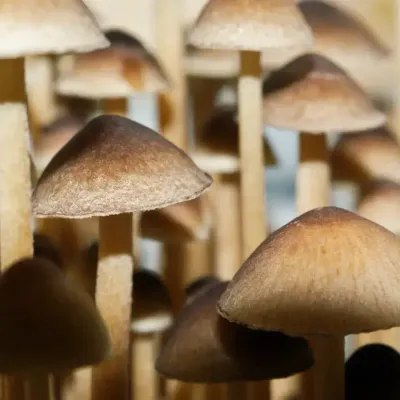
Key Differences: KAPE tends to have a larger, more robust appearance and faster colonization.
Species: Psilocybe Tampanensis
(Tampa Psilocybe)
Edibility: Psychoactive
Key Differences: KAPE tends to have a larger, more robust appearance and faster colonization.
Mushroom Ratings
0.0
Based on 0 Reviews
5
★4
★3
★2
★1
★Share your thoughts
If you've consumed this mushroom, share your thoughts with our community