Last updated:
Psilocybe Ingeli
"Ingel's Magic Mushroom, Psychoactive Ingel Mushroom"
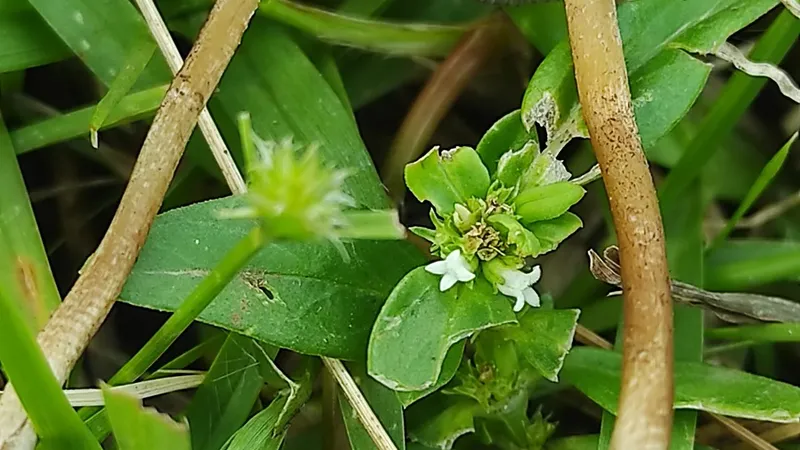
Psilocybe Ingeli fruiting bodies
Scientific Classification
Kingdom:Fungi
Division:Basidiomycota
Class:Agaricomycetes
Order:Agaricales
Family:Hymenogastraceae
Genus:Psilocybe
Frequently Asked Questions
- What is Ingel's Magic Mushroom?
- Ingel's Magic Mushroom (Psilocybe Ingeli) is a mushroom species, belonging to the Hymenogastraceae family. It is studied for its biological characteristics and is documented in the ShroomSpy mycology database.
- Is Ingel's Magic Mushroom edible?
- Psychoactive. Psilocybe psilocybe ingeli is not considered edible in the culinary sense but is sought after for its hallucinogenic properties. Consumption can induce alterations in perception and cognition, but caution is advised due to its potent psychoactive effects.
- Is Ingel's Magic Mushroom psychoactive?
- Ingel's Magic Mushroom is documented as a psychoactive species. It contains psychoactive compounds that may produce mind-altering effects. Laws governing possession and use vary by jurisdiction.
- What effects does Ingel's Magic Mushroom produce?
- Ingel's Magic Mushroom is associated with the following effects: Focus, Endurance, Calm. Individual experiences vary based on dose, set, and setting.
- What is the scientific classification of Ingel's Magic Mushroom?
- Ingel's Magic Mushroom belongs to the kingdom Fungi, division Basidiomycota, class Agaricomycetes, order Agaricales, family Hymenogastraceae, genus Psilocybe. Its scientific name is Psilocybe Ingeli.
About
Psilocybe ingeli is a newly identified species of psychoactive mushroom belonging to the Psilocybe genus—renowned for producing the naturally occurring psychedelic compound psilocybin. Recently discovered in South Africa’s KwaZulu-Natal region, P. ingeli adds to the growing diversity of psilocybin mushrooms in the African continent.
Like its close relatives, Psilocybe ingeli contains psilocybin and psilocin, which are currently the focus of global research for their potential to promote neuroplasticity, enhance emotional well-being, and assist in the treatment of conditions like depression, PTSD, and anxiety. The species thrives in grassland and woodland environments, where it plays a role in organic matter decomposition.
History
Psilocybe ingeli was formally described in 2023 by mycologists documenting new species in southern Africa. It was first collected in KwaZulu-Natal, South Africa, particularly around the Ingeli Forest, which inspired its name.
While P. ingeli does not yet have an established history of traditional ceremonial use, it belongs to the globally significant Psilocybe genus, used for millennia in shamanic, spiritual, and healing practices, particularly in the Americas. Its recent discovery highlights Africa’s underexplored biodiversity of psychedelic fungi and opens new avenues for scientific, therapeutic, and ethnobotanical research.
Overview
- Common Name: No widely established common name; Psilocybe ingeli
- Scientific Name: Psilocybe ingeli
- Habitat: Grasslands and woodland edges in KwaZulu-Natal, South Africa; found on rich organic soil
- Appearance: Small mushroom with conical to bell-shaped cap, brownish in color with characteristic blue bruising indicating psilocybin presence
- Taste: Typical earthy mushroom taste; used for psychoactive purposes, not culinary
- Known Benefits: Under scientific investigation for potential support of mental health, neuroplasticity, emotional healing, and spiritual exploration
- Traditional Uses: No documented ancient use specific to P. ingeli; related Psilocybe species used worldwide in ceremonial and therapeutic contexts
- Modern Interest: Emerging species of interest for the fields of psychedelic therapy, ethnomycology, and mental wellness research
Physical Characteristics
Caps:
The cap of Psilocybe ingeli is typically conical to bell-shaped, measuring 1.5 to 5 centimeters in diameter. The surface is smooth, displaying a moist texture when fresh, and can exhibit a brownish to yellowish color, often fading to a lighter shade as it dries. Some specimens show a slight central umbo.
Gills:
The gills are closely spaced, and initially pale, changing to a dark brown as the spores mature. They can also exhibit a slight attachment to the stem, which forms the characteristic arcuate shape typical of this genus.
Cognitive Effects
Focus
Focus enhancement can be attributed to the modulation of serotonin receptors, promoting sustained attention and mental clarity.
Endurance
Endurance enhancement may result from a heightened sense of engagement and motivation, allowing users to engage in prolonged tasks without fatigue.
Calm
Calm effects are reported due to the anxiolytic properties of psilocybin, facilitating a reduction in anxiety and fostering a relaxed mental state.
Psychoactive Effects
Hallucinogenic
Hallucinogenic effects are a predominating characteristic caused by psilocybin's interaction with serotonin receptors, leading to altered visual and auditory perceptions.
Euphoric
Spiritual effects arise as users often report profound connections with nature, introspection, and heightened feelings of transcendence, facilitated by the psychoactive compounds.
Insightful
Insightful effects may pertain to enhanced self-reflection and cognitive processing, attributes linked to the cerebral cortical modulation by psilocybin.
Grow at Home
Start your cultivation journey with quality grow kits from independent vendors
Chemical Constituents
Medicinal Chemistry
Similar Species
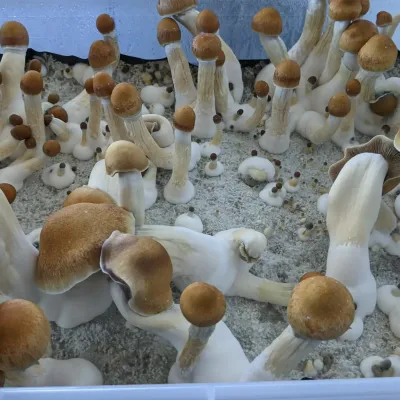
Key Differences: Unlike P. ingeli, P. cubensis tends to have a more robust fruit body and often a more pronounced golden-brown cap with a thicker stem.
Species: Psilocybe Cubensis
(Cubes)
Edibility: edible
Key Differences: Unlike P. ingeli, P. cubensis tends to have a more robust fruit body and often a more pronounced golden-brown cap with a thicker stem.
Mushroom Ratings
0.0
Based on 0 Reviews
5
★4
★3
★2
★1
★Share your thoughts
If you've consumed this mushroom, share your thoughts with our community