Last updated:
Psilocybe Mexicana
"Mexican Psilocybe, Mexicana"
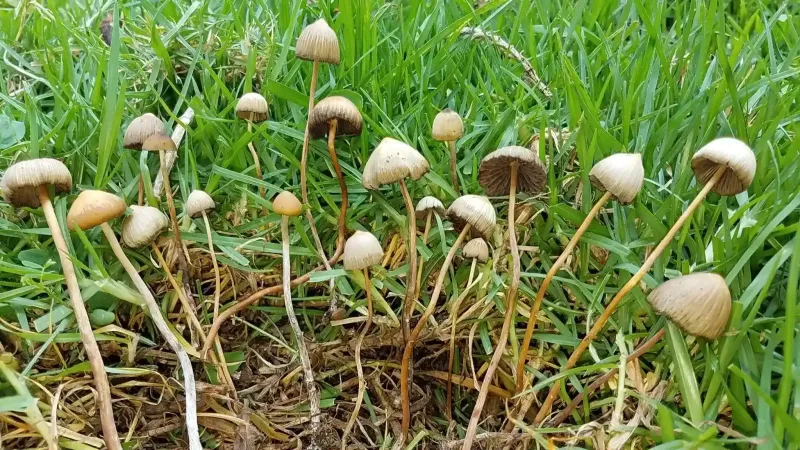
Psilocybe Mexicana fruiting bodies
Scientific Classification
Kingdom:Fungi
Division:Basidiomycota
Class:Agaricomycetes
Order:Agaricales
Family:Hymenogastraceae
Genus:Psilocybe
Frequently Asked Questions
- What is Mexican Psilocybe?
- Mexican Psilocybe (Psilocybe Mexicana) is a mushroom species, belonging to the Hymenogastraceae family. It is studied for its biological characteristics and is documented in the ShroomSpy mycology database.
- Is Mexican Psilocybe edible?
- Psychoactive
- Is Mexican Psilocybe psychoactive?
- Mexican Psilocybe is documented as a psychoactive species. It contains psychoactive compounds that may produce mind-altering effects. Laws governing possession and use vary by jurisdiction.
- What is the scientific classification of Mexican Psilocybe?
- Mexican Psilocybe belongs to the kingdom Fungi, division Basidiomycota, class Agaricomycetes, order Agaricales, family Hymenogastraceae, genus Psilocybe. Its scientific name is Psilocybe Mexicana.
About
Psilocybe mexicana is a small but culturally and historically significant psychedelic mushroom, native to Mexico and Central America. Known for its mild potency and deeply introspective effects, this species is revered as one of the original sacred mushrooms used in indigenous Mesoamerican rituals for thousands of years. It is also notable as the species from which psilocybin and psilocin were first isolated by Dr. Albert Hofmann in 1958.
History
The use of Psilocybe mexicana dates back to the Aztecs, who called it "teonanácatl", meaning “flesh of the gods.” It was central to religious ceremonies designed to connect with divine forces, guided by shamans or priests. During the Spanish conquest, its use was suppressed but survived in secret among indigenous communities in Oaxaca.
In the 1950s, it became the focus of Western psychedelic interest after R. Gordon Wasson’s expeditions with Mazatec curandera María Sabina. Hofmann later synthesized psilocybin from this species, launching decades of medical research into its psychoactive properties.
Overview
A small mushroom, typically 1–3 cm in cap diameter, with a conic to bell-shaped, yellow-brown cap and slender stem. It bruises blue when handled, indicating the presence of psilocybin. Its gills are adnate to adnexed and turn dark purple as spores mature.
Psilocybe mexicana has moderate potency and produces effects such as altered perception, emotional insight, and visual phenomena. It is consumed fresh, dried, or as sclerotia, which are denser fungal growths also containing psilocybin. While often used in ceremonial settings, it is increasingly recognized in modern therapeutic contexts.
Physical Characteristics
Caps:
Conic to campanulate, hygrophanous, 1-3 cm wide, reddish-brown to yellowish-brown when moist, fading to pale ochre when dry
Gills:
Adnate to adnexed, initially pale, becoming purplish-black with age
Psychoactive Effects
Euphoric
Describing intense feelings of happiness or excitement
Perceptual
The change in the way things are perceived, including changes in time perception, spatial perception, and perception of one's own body.
Pharmacology
Helps With
Depression
Relieves symptoms of depression, improving mood and outlook
Anxiety
Helps to alleviate feelings of worry, fear, and unease
Addiction
Helps to overcome addiction and substance abuse
PTSD
Helps to alleviate symptoms of post-traumatic stress disorder
OCD
Helps to alleviate symptoms of obsessive-compulsive disorder
ADD ADHD
Helps to alleviate symptoms of attention deficit disorder and attention deficit hyperactivity disorder
Pain
Microdosing psilocybin has been shown to help with certain types of pain
Migraines
Research shows that psilocybin, the active compound in magic mushrooms, has potential therapeutic benefits for migraines. A small-scale study conducted by Yale School of Medicine found that a single dose of psilocybin reduced the likelihood of having a migraine attack in two weeks.
Possible Side Effects
Nausea
A feeling of discomfort in the stomach with an urge to vomit
Grow at Home
Start your cultivation journey with quality grow kits from independent vendors
Chemical Constituents
Medicinal Chemistry
Similar Species
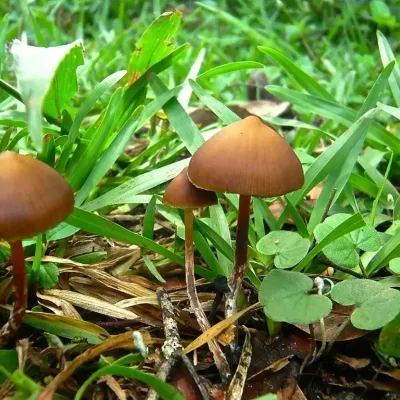
Key Differences: P. subtropicalis typically has a larger cap and a thicker stem compared to P. mexicana.
Species: Psilocybe Subtropicalis
(Subtropical Psilocybe)
Edibility: Psychoactive
Key Differences: P. subtropicalis typically has a larger cap and a thicker stem compared to P. mexicana.
Mushroom Ratings
4.3
(3)
Based on 3 Reviews
5
★4
★3
★2
★1
★Share your thoughts
If you've consumed this mushroom, share your thoughts with our community
01/29/2025
Victor Romo
CalmContentCreativityEnergyEuphoricFocusHallucinogenicInsightfulReflectiveSpiritualVisualsDizzy
Tried Psilocybe Mexicana dried and it came on slow and gentle. Started with this warm calm feeling then energy kicked in. Visuals were there but not overwhelming - more like everything looked more interesting.
The creative part was wild. Ideas flowing, imagination running. But the introspection hit me hardest - had thoughts about my life that I'm still thinking about days later. Really makes you look at things differently.
Got a little dizzy at points but nothing bad. Felt grounded the whole time even when things got intense. If you want something for creativity and self-reflection, this is a good one. Just be respectful with it
01/29/2025
Ruth Zota
CalmContentCreativityEuphoricFocusHallucinogenicInsightfulReflectiveSpiritualVisualsDizzyNausea
Tried Psilocybe Mexicana and it opened something up for me. Visuals were beautiful - colors everywhere, ordinary stuff looked alive. Felt light and euphoric, ended up reflecting on personal stuff I'd been avoiding.
I deal with anxiety and this actually calmed it down. Racing thoughts got quiet, replaced with clarity. Also felt super connected to my surroundings and the friends I was with - that part was special.
Got dizzy and a bit nauseous towards the end so be ready for that. But overall this helped me with anxiety and gave me a calmer mindset that lasted after. Not just fun, actually useful for working through stuff
01/29/2025
Ruth Zota
EuphoricInsightfulCreativityFocusReflectiveCalmVisualsDizzy
Tried Psilocybe Mexicana dried and spent time in nature - wow. Colors got way more vibrant, patterns moving, noticed details I always missed before. Creativity and focus spiked.
Started nervous but that faded into this calm reflective state. Processed thoughts and emotions in a way I couldn't normally. Felt super connected to everything around me.
Did get dizzy at times which was uncomfortable but worth it for what I got out of it. If you want clarity and something spiritual, this works. Just go into it with respect and be somewhere safe
References
- Kilmer, B., Priest, M., Ramchand, R., Rogers, R. C., Senator, B., & Palmer, K. (2024). Considering Alternatives to Psychedelic Drug Prohibition. RAND Corporation.
- Bhagavan, C., Kanaan, R., Carter, O., Nielsen, G., Berlowitz, D., Issak, S., Braat, S., Zaloumis, S., Attard, Z., Oliver, G., Mayne, D., McKernon, D., Roebuck, G., Rucker, J., Butler, M., & Bryson, A. (2024). Psilocybin and motor function: A triple-blind, dose-finding study in healthy participants. Psychiatric Research and Clinical Practice, 6(4), 164-174. https://doi.org/10.1176/appi.prcp.20240047
- Nayak, S., White, S., Hilbert, S., Lowe, M., Jackson, H., Griffiths, R., Garcia-Romeu, A., & Yaden, D. (2024). Psychedelic Experiences Increase Mind Perception but do not Change Atheist-Believer Status: A Prospective Longitudinal Study. Journal of Psychoactive Drugs, 57(3), 275-284. https://doi.org/10.1080/02791072.2024.2346130
- Neumann, J., Dimov, K., Azatsian, K., Hofmann, B., & Gergs, U. (2024). Effects of psilocin and psilocybin on human 5-HT4 serotonin receptors in atrial preparations of transgenic mice and humans. Toxicology Letters, 398, 55-64. https://doi.org/10.1016/j.toxlet.2024.06.006
- Khajavinia, A., Michel, D., Ezeaka, U., Purves, R., Laprairie, R., & El-Aneed, A. (2024). Addressing a major interference in the quantification of psilocin in mouse plasma: Development of a validated liquid chromatography tandem mass spectrometry method. Journal of Chromatography A, 1730, 465123. https://doi.org/10.1016/j.chroma.2024.465123
- Hudspeth, J., Rogge, K., Dörner, S., Müll, M., Hoffmeister, D., Rupp, B., & Werten, S. (2024). Methyl transfer in psilocybin biosynthesis. Nature Communications, 15(1). https://doi.org/10.1038/s41467-024-46997-z
- Seibold, P., Dörner, S., Fricke, J., Schäfer, T., Beemelmanns, C., & Hoffmeister, D. (2024). Genetic regulation of L-tryptophan metabolism in Psilocybe mexicana supports psilocybin biosynthesis. Fungal Biology and Biotechnology, 11(1). https://doi.org/10.1186/s40694-024-00173-6
- Gold, E. (2023). Psilocybin Mushrooms of Australia. United States: Independently published.
- Ley, L. (2023). Comparative acute effects of mescaline, lysergic acid diethylamide, and psilocybin in a randomized, double-blind, placebo-controlled cross-over study in healthy participants. .
- Carpenter, W. (2022). The Psilocybin Mushroom Bible: A Step-by-Step Guide to Growing, Microdosing and Safely Using Magic Mushrooms.. MarkHollis.