Last updated:
Schizophyllum Commune
"Split Gill, Common Split Gill"
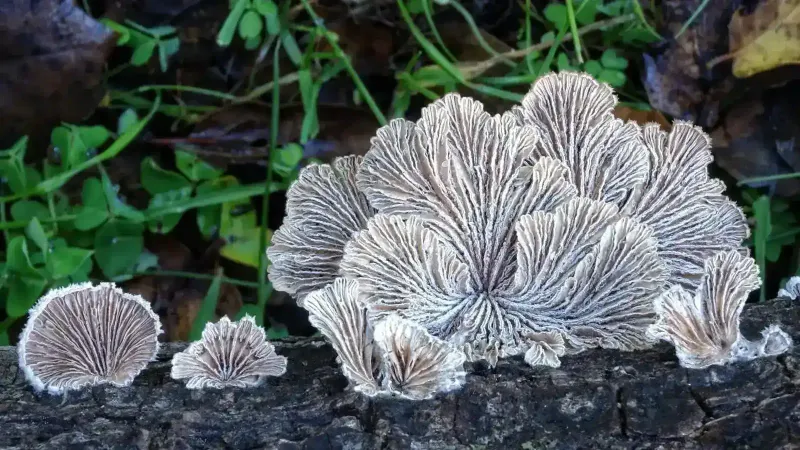
Schizophyllum Commune fruiting bodies
Scientific Classification
Kingdom:Fungi
Division:Basidiomycota
Class:Agaricomycetes
Order:Agaricales
Family:Schizophyllaceae
Genus:Schizophyllum
Frequently Asked Questions
- What is Split Gill?
- Split Gill (Schizophyllum Commune) is a mushroom species, belonging to the Schizophyllaceae family. It is studied for its biological characteristics and is documented in the ShroomSpy mycology database.
- Is Split Gill edible?
- medicinal
- What is the scientific classification of Split Gill?
- Split Gill belongs to the kingdom Fungi, division Basidiomycota, class Agaricomycetes, order Agaricales, family Schizophyllaceae, genus Schizophyllum. Its scientific name is Schizophyllum Commune.
About
Schizophyllum commune, commonly known as the Split Gill Mushroom, is one of the most widespread fungi in the world. It is named for its unique gills, which appear split or forked along their length. Though small in size, this tough, fan-shaped mushroom has a long history of traditional medicinal use, particularly in Asia, and has drawn attention from modern science for its immunomodulatory and antitumor properties.
History
Used for centuries in traditional Chinese, Thai, and African folk medicine, Schizophyllum commune was applied for treating various infections and respiratory ailments. It was once thought to be inedible due to its tough texture but has since been valued more for its medicinal properties than for culinary use.
Modern research has isolated bioactive compounds like schizophyllan—a beta-glucan polysaccharide studied for its role in cancer immunotherapy. Because of its adaptability and resilience, it has become a model organism in fungal genetics and biotechnology.
Overview
The fruiting body of Schizophyllum commune is small, fan- or shell-shaped, often only 1–4 cm wide, and gray to white in color. It typically grows in dense clusters on decaying hardwood, especially in tropical and subtropical climates, but is also found on every continent except Antarctica. Its gills are distinctly split down the middle, which helps it survive extreme drying and rehydration cycles.
While not commonly consumed due to its leathery texture, it is used in traditional medicine as a tea or dried extract. Its polysaccharides have shown immune-boosting and antimicrobial effects, and it continues to be a subject of global biomedical interest.
Flavors
Mild
Split Gill mushrooms typically have a very mild taste, making them versatile in culinary applications.
Woody
Due to their growth on wood, they can sometimes have a slightly woody or earthy flavor.
Textures
Tough
The fruiting body of Split Gill is tough and not easily broken apart by hand.
Dry
The texture can be dry, especially when the mushroom is not in its prime or is exposed to dry conditions.
Fan-like
The mushroom often grows in a fan-like or semicircular shape, with gills that appear split or segmented.
Fragrances
Earthy
Schizophyllum commune has a natural earthy aroma, typical of many mushrooms.
Fungal
Being a mushroom, it possesses a characteristic fungal scent.
Physical Characteristics
Caps:
Small, 1-5 cm. Fan or kidney-shaped, gray to brown.
Gills:
Very crowded, split lengthwise. White then grayish.
Pharmacology
Helps With
Immune System
Polysaccharide schizophyllan stimulates immune cell proliferation
Oxidative Stress
Scavenges reactive oxygen species and increases antioxidant enzymes
Cancer
Exhibits antitumor activity by stimulating immune response
Split Gill Products
Explore Split Gill products from independent vendors
Chemical Constituents
Medicinal Chemistry
Similar Species
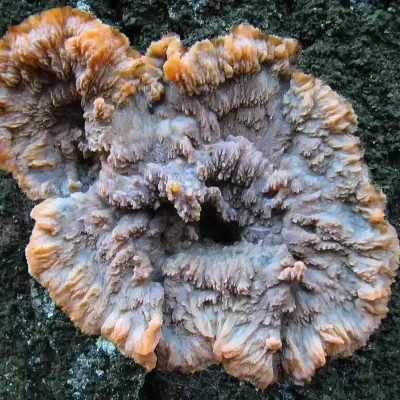
Species: Phlebia radiata
(radiate polypore)
Edibility: Non-edible. Phlebia radiata is a tough, thin, crust-like wood-rotting fungus with no culinary value; it is not gathered or eaten. It is not known to be poisonous, but it is not a food species.
Key Differences: Shelflike fruiting body, pores do not split
Mushroom Ratings
0.0
Based on 0 Reviews
5
★4
★3
★2
★1
★Share your thoughts
If you've consumed this mushroom, share your thoughts with our community
References
- Wang, K. (2022). The Flavor Profiles of Highland Barley Fermented with Different Mushroom Mycelium. .
- Sharma, A. (2022). An endophytic Schizophyllum commune possessing antioxidant activity exhibits genoprotective and organprotective effects in fresh water fish Channa punctatus exposed to bisphenol A. .
- Razak, D. (2018). Comparative Evaluation of Schizophyllum commune Extracts as Potential Cosmeceutical Bio-Ingredient. .