Last updated:
Trametes hirsuta
"Hairy Bracket, Hairy Turkey Tail, Woolly Polypore"
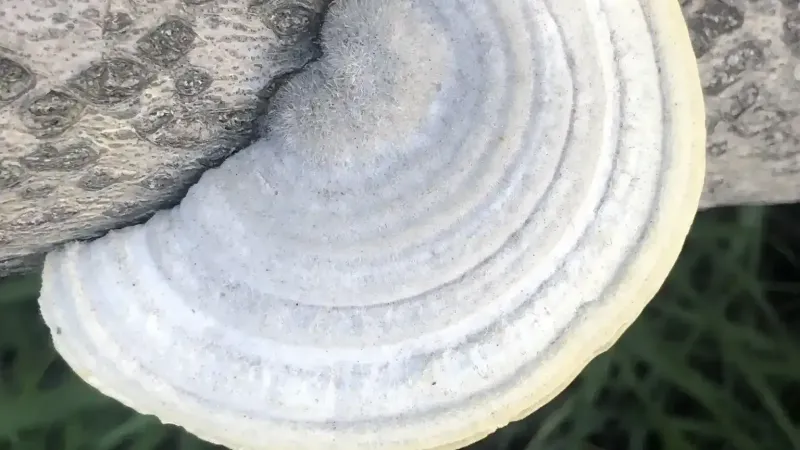
Trametes hirsuta fruiting bodies
Scientific Classification
Kingdom:Fungi
Division:Basidiomycota
Class:Agaricomycetes
Order:Polyporales
Family:Polyporaceae
Genus:Trametes
Frequently Asked Questions
- What is Hairy Bracket?
- Hairy Bracket (Trametes hirsuta) is a mushroom species, belonging to the Polyporaceae family. It is studied for its biological characteristics and is documented in the ShroomSpy mycology database.
- Is Hairy Bracket edible?
- non-edible - while not toxic, it is tough and not suitable for consumption.
- What effects does Hairy Bracket produce?
- Hairy Bracket is associated with the following effects: Energy. Individual experiences vary based on dose, set, and setting.
- What is the scientific classification of Hairy Bracket?
- Hairy Bracket belongs to the kingdom Fungi, division Basidiomycota, class Agaricomycetes, order Polyporales, family Polyporaceae, genus Trametes. Its scientific name is Trametes hirsuta.
About
Trametes hirsuta, commonly known as the hairy bracket fungus, is a wood-decaying fungus characterized by its distinctive hairy or velvety surface and concentric zones of color, typically ranging from white to brown. This species is commonly found growing on decaying hardwoods in temperate forests across the globe. T. hirsuta plays a crucial ecological role as a decomposer, breaking down lignin and cellulose in wood, which contributes to nutrient cycling in forest ecosystems. While not considered edible, it has garnered interest for its potential medicinal properties, including antioxidant and antimicrobial activities.
History
Trametes hirsuta has been recognized in traditional medicine for its potential health benefits, although it has not been widely utilized in cuisine due to its tough texture and lack of palatability. The species was first described scientifically in 1789 by the mycologist Christiaan Hendrik Persoon, and its name is derived from the Latin word "hirsutus," meaning "hairy," which aptly describes its appearance. Over time, the understanding of T. hirsuta has evolved, with modern research focusing on its biochemical properties and ecological importance rather than culinary uses.
In recent years, studies have highlighted the potential of T. hirsuta in bioremediation and its role in sustainable forestry practices. The exploration of its compounds for pharmaceutical applications has also increased, as researchers investigate its ability to produce enzymes that can break down complex organic materials.
Overview
Ecologically, Trametes hirsuta is a saprophytic fungus that plays a vital role in wood decomposition, aiding in the breakdown of dead trees and contributing to soil health. It is primarily found in the wild, thriving on decaying hardwoods, and is not cultivated commercially due to its tough texture and limited culinary appeal. Key distinguishing features include its hairy surface, which sets it apart from similar species like Trametes versicolor, which has a smoother texture and more vibrant coloration.
Commercially, while T. hirsuta is not a primary target for mushroom cultivation, its potential applications in biotechnology and environmental science are being explored. Its ability to produce various enzymes makes it a subject of interest for biotechnological innovations, particularly in waste management and sustainable practices.
Physical Characteristics
Caps:
The cap is shelf-like, typically 2-10 cm wide, with a hairy or velvety texture. It is often brown to grayish in color, with concentric zones.
Gills:
None - this species has a pore surface instead of gills.
Cognitive Effects
Energy
Trametes hirsuta polysaccharides may support immune-mediated energy recovery through reducing chronic low-grade inflammation that contributes to fatigue.
Pharmacology
Helps With
Immune System
T. hirsuta polysaccharide-protein complexes show immunostimulatory activity against sarcoma S180 in murine models; similar to T. versicolor (PSK/PSP) activity.
Cancer
Crude polysaccharide extracts from T. hirsuta inhibit proliferation of human liver and cervical cancer cell lines in vitro.
Bacterial Suppression
Laccase enzymes produced by T. hirsuta have documented antibacterial and antifungal activity, active against Staphylococcus aureus and Candida albicans.
Chemical Constituents
Medicinal Chemistry
Mushroom Ratings
0.0
Based on 0 Reviews
5
★4
★3
★2
★1
★Share your thoughts
If you've consumed this mushroom, share your thoughts with our community