Last updated:
Tremella mesenterica
"Witch's Butter, Golden Jelly Fungus"
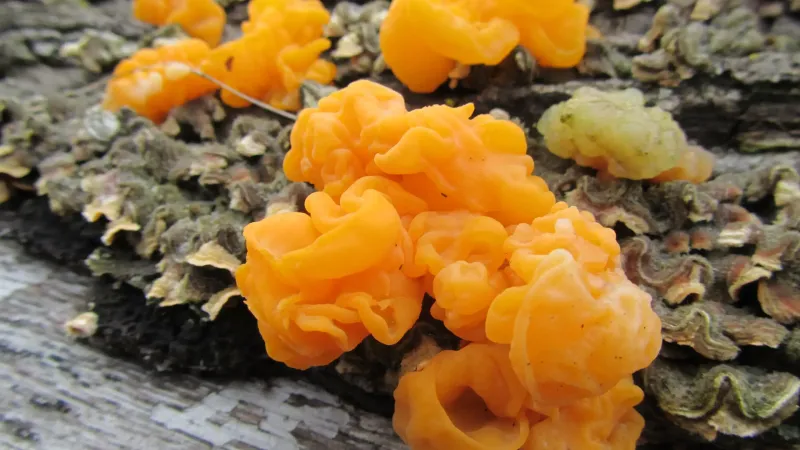
Tremella mesenterica fruiting bodies
Scientific Classification
Kingdom:Fungi
Division:Basidiomycota
Class:Tremellomycetes
Order:Tremellales
Family:Tremellaceae
Genus:Tremella
Frequently Asked Questions
- What is Witch's Butter?
- Witch's Butter (Tremella mesenterica) is a mushroom species, belonging to the Tremellaceae family. It is studied for its biological characteristics and is documented in the ShroomSpy mycology database.
- Is Witch's Butter edible?
- Edible. The bright yellow, gelatinous fruit body is harmless and edible, though largely flavorless (bland, sometimes with a faint apricot note). It is jelly-like when wet and shrivels small and hard when dry; it can be dried and rehydrated in soups in the manner of related Asian jelly fungi. It is valued more for its texture and traditional medicinal use than as a culinary mushroom.
- What effects does Witch's Butter produce?
- Witch's Butter is associated with the following effects: Calm, Relaxed. Individual experiences vary based on dose, set, and setting.
- What is the scientific classification of Witch's Butter?
- Witch's Butter belongs to the kingdom Fungi, division Basidiomycota, class Tremellomycetes, order Tremellales, family Tremellaceae, genus Tremella. Its scientific name is Tremella mesenterica.
About
Tremella mesenterica, commonly known as the yellow brain fungus, is a distinctive jelly-like fungus characterized by its bright yellow to orange color and convoluted, brain-like appearance. This species typically grows on decaying wood, particularly in damp, shaded forest environments, and is often found during the late summer and fall. While T. mesenterica is not considered edible in the traditional sense, it holds ecological significance as a decomposer, breaking down wood and contributing to nutrient cycling in forest ecosystems. Additionally, it has garnered interest for its potential medicinal properties, including immune support and skin health.
History
Historically, Tremella mesenterica has been used in traditional Chinese medicine, where it is valued for its purported health benefits, including its ability to promote skin hydration and overall vitality. The species was first described scientifically in 1789 by the mycologist Christiaan Hendrik Persoon, and its name derives from the Latin word "tremella," meaning "trembling," which refers to its gelatinous texture. Over time, the understanding of this species has evolved, with modern research exploring its bioactive compounds and potential applications in health and wellness.
In recent years, T. mesenterica has gained attention in the realm of functional foods and dietary supplements, particularly for its polysaccharides that may offer antioxidant and anti-inflammatory benefits. This shift reflects a growing interest in natural products and their roles in promoting health, moving beyond traditional culinary uses to a broader understanding of their medicinal properties.
Overview
Ecologically, Tremella mesenterica plays a crucial role as a saprotrophic fungus, helping to decompose dead wood and recycle nutrients back into the soil, which supports forest health and biodiversity. While it is primarily found in the wild, there are limited efforts to cultivate it commercially, often overshadowed by more popular edible fungi. Its unique gelatinous texture and bright coloration distinguish it from similar species, such as Tremella fuciformis, which is often cultivated for culinary and medicinal purposes.
In terms of commercial significance, T. mesenterica is less prominent than its counterparts but is increasingly recognized for its potential health benefits, leading to a growing interest in its applications in beauty products and dietary supplements. Its distinctive appearance and ecological role make it a fascinating subject of study within the field of mycology.
Physical Characteristics
Caps:
The fruiting body is irregularly shaped, gelatinous, and can reach sizes of up to 10 cm across. It is bright yellow to orange in color and has a wavy, lobed texture.
Gills:
None
Cognitive Effects
Calm
Tremella polysaccharides may support a calm mental state through mild adaptogenic and anti-inflammatory mechanisms that reduce neuronal stress.
Relaxed
Glucuronoxylomannan from T. mesenterica may promote relaxation by modulating inflammatory cytokines associated with stress responses.
Pharmacology
Helps With
Immune System
Glucuronoxylomannan polysaccharides from T. mesenterica may support immune function by stimulating macrophage activity and cytokine production.
Inflammation
Tremella polysaccharides may exhibit anti-inflammatory activity by inhibiting pro-inflammatory mediators, though clinical evidence is preliminary.
Oxidative Stress
Melanin and polysaccharide fractions from T. mesenterica may help scavenge free radicals and reduce oxidative cellular damage.
Possible Side Effects
Allergies
Individuals with fungal allergies or sensitivities may experience allergic reactions when handling or consuming Tremella species.
Chemical Constituents
Medicinal Chemistry
Mushroom Ratings
0.0
Based on 0 Reviews
5
★4
★3
★2
★1
★Share your thoughts
If you've consumed this mushroom, share your thoughts with our community